Internet Service Providers: The Complete Guide to the Gatekeepers of Connectivity
Introduction: The Invisible Infrastructure of Modern Life
Internet Service Providers (ISPs) represent the critical infrastructure layer that connects billions of users to the global internet. From humble beginnings as small bulletin board systems to today’s multi-billion-dollar corporations offering gigabit speeds, ISPs have evolved into complex entities that balance technological innovation, regulatory compliance, market competition, and public utility responsibilities. This comprehensive guide explores every facet of the ISP ecosystem, from technical architectures and business models to regulatory frameworks and emerging challenges.
Section 1: The ISP Ecosystem – Categories and Roles
Tiered Hierarchy of Internet Connectivity
Tier 1 ISPs (Internet Backbone Providers):
Definition: Networks that can reach every other network on the internet without purchasing IP transit
Characteristics:
Global or continental scale
Own extensive fiber-optic cable networks (terrestrial and submarine)
Participate in settlement-free peering agreements
Examples: AT&T, Verizon, Lumen (CenturyLink), Deutsche Telekom, NTT
Current Count: Approximately 12-17 Tier 1 networks globally
Revenue Model: Enterprise services, wholesale to lower tiers, content delivery
Tier 2 ISPs (Regional/National Providers):
Definition: Networks that purchase transit from Tier 1 providers but also peer with other networks
Characteristics:
Regional or national focus
Mix of purchased transit and peering
Often serve both consumers and businesses
Examples: Comcast, Charter Spectrum, Cox, British Telecom, Orange
Business Model: Retail consumer services, business connectivity, content partnerships
Tier 3 ISPs (Local Access Providers):
Definition: Networks that purchase all transit from upstream providers
Characteristics:
Local or niche market focus
Often specialize in specific technologies or markets
Include municipal ISPs, wireless ISPs (WISPs), satellite providers
Examples: Local cable companies, rural wireless providers, community networks
Revenue Sources: Consumer subscriptions, niche business services
Specialized ISP Categories
Mobile Network Operators (MNOs):
Provide cellular data services (3G, 4G/LTE, 5G)
Convergence with fixed-line services (FMC – Fixed Mobile Convergence)
Examples: Verizon Wireless, AT&T Mobility, T-Mobile, Vodafone, China Mobile
Cable Multiple System Operators (MSOs):
Originally cable television providers that expanded into internet
Hybrid Fiber-Coaxial (HFC) network architecture
Examples: Comcast, Charter, Altice, Rogers, Liberty Global
Fiber-to-the-Home (FTTH) Providers:
Dedicated fiber optic connections to premises
Often newer entrants challenging incumbent cable/telco providers
Examples: Google Fiber, Verizon Fios, AT&T Fiber, municipal fiber networks
Satellite Internet Providers:
Serve remote and rural areas
Traditional GEO satellites (HughesNet, Viasat) and new LEO constellations (Starlink)
Examples: SpaceX Starlink, OneWeb, Project Kuiper (upcoming)
Wireless Internet Service Providers (WISPs):
Use fixed wireless technology (often in rural areas)
Various technologies: WiMAX, LTE, proprietary microwave, now 5G Fixed Wireless Access
Examples: Rise Broadband, various local/regional providers
Municipal/Community Broadband:
Publicly owned networks
Often focused on digital inclusion and local economic development
Examples: Chattanooga EPB (Tennessee), Longmont NextLight (Colorado)
Section 2: Historical Evolution of ISPs
The Early Days (1980s-1990s)
Dial-up Era (1980s-1990s):
First commercial ISPs: The World (1989), PSINet (1989)
Technology: 300 baud → 56k modems
Pricing: Hourly charges, then unlimited plans
Key players: AOL, CompuServe, Prodigy (walled gardens with internet access)
Infrastructure: Telephone network (POTS) with modem banks
The Backbone Emerges:
NSFNet (1985-1995): Academic network that became commercial internet backbone
Commercialization (1991-1995): Restrictions lifted, commercial traffic allowed
Early infrastructure: T1 (1.5 Mbps) to T3 (45 Mbps) backbone links
Broadband Revolution (Late 1990s-2000s)
DSL Deployment:
Technology: Uses existing telephone lines with frequency separation
Speeds: 256 kbps → 1.5 Mbps → up to 100 Mbps with VDSL2
Incumbent advantage: Telephone companies (AT&T, Verizon, BT)
Challenges: Distance limitations from central office
Cable Modernization:
Technology: DOCSIS standard over Hybrid Fiber-Coaxial networks
DOCSIS evolution: 1.0 (1997) → 2.0 → 3.0 → 3.1 → 4.0
Speeds: 1 Mbps → 100 Mbps → 1 Gbps → 10 Gbps
Advantage: Already passed most homes for TV service
Early Competition:
CLECs (Competitive Local Exchange Carriers): Challenged incumbent telcos
Regulatory framework: Telecommunications Act of 1996 (US)
Many failures: Dot-com bust wiped out many competitive providers
Consolidation and Speed Wars (2010s-Present)
Fiber Expansion:
FTTH deployments: Verizon Fios (2005), Google Fiber (2010), AT&T U-verse/Gigapower
Municipal fiber: Community-owned networks
Speeds: Symmetrical gigabit becoming standard
Mobile Broadband:
3G to 4G/LTE transition: Mobile becomes viable for primary internet
Data caps and throttling: Network management controversies
5G deployment: Fixed Wireless Access competition to cable
Consolidation Wave:
Major mergers: Comcast-NBCUniversal, AT&T-DirectTV-Time Warner, Charter-Time Warner Cable
Current landscape: Dominated by a few large players in most markets
Oligopoly concerns: Limited competition in many areas
Section 3: Technical Infrastructure and Architecture
Network Core Components
Physical Infrastructure:
Fiber optic cables: Backbone (long-haul) and last-mile (access) fibers
Submarine cables: 400+ active cables carrying 99% of international traffic
Coaxial cable: HFC networks for cable providers
Copper telephone lines: DSL service, gradually being replaced
Network Equipment:
Routers and switches: Core, aggregation, and access layers
CMTS/CCAP: Cable Modem Termination System/Converged Cable Access Platform
DSLAM: Digital Subscriber Line Access Multiplexer
OLT: Optical Line Terminal for fiber networks
Cell towers and small cells: For mobile networks
Interconnection Points:
Internet Exchange Points (IXPs): 300+ globally, enable peering
Carrier hotels/colocation facilities: Physical interconnection locations
Content Delivery Network (CDN) nodes: Edge caching servers within ISP networks
Access Network Technologies
Fiber Architectures:
FTTH (Fiber to the Home): ONT at customer premises
GPON: 2.5 Gbps down, 1.25 Gbps up shared among 32-64 users
XGS-PON: 10 Gbps symmetrical, next-generation standard
NG-PON2: 40 Gbps capabilities, wavelength division multiplexing
FTTN/FTTC (Fiber to the Node/Curb): Fiber to neighborhood node, then copper
FTTB (Fiber to the Building): Common in multi-dwelling units
Cable Network Evolution:
DOCSIS 3.0: Channel bonding, up to 1 Gbps
DOCSIS 3.1: OFDM, up to 10 Gbps down, 1-2 Gbps up
DOCSIS 4.0: Full Duplex, up to 10 Gbps symmetrical
Network upgrades: Node splits, spectrum expansion to 1.8 GHz
Wireless Technologies:
Fixed Wireless: Point-to-point or point-to-multipoint
5G Fixed Wireless Access (FWA): Using cellular technology for home internet
WiMAX: Mostly replaced by LTE/5G
Proprietary wireless: Ubiquiti, Mimosa, Cambium solutions
Satellite Systems:
GEO (Geostationary): 35,786 km altitude, high latency (600+ ms)
MEO (Medium Earth Orbit): 8,000-20,000 km, medium latency
LEO (Low Earth Orbit): 500-2,000 km, low latency (20-40 ms)
Starlink: ~4,000+ satellites, expanding rapidly
OneWeb: ~600 satellites
Project Kuiper: 3,236 satellites planned (Amazon)
Network Management Systems
Traffic Management:
Deep Packet Inspection (DPI): Analyzing traffic for management/security
Quality of Service (QoS): Prioritizing certain traffic types
Congestion management: During peak usage periods
Content caching: Local copies of popular content
Provisioning Systems:
Automatic configuration: DHCP, PPPoE for connection setup
Billing integration: Usage tracking, plan enforcement
Customer Premises Equipment (CPE) management: Remote configuration of modems/routers
Monitoring and Maintenance:
Network Operations Centers (NOCs): 24/7 monitoring
Remote testing: Line quality, signal levels
Proactive maintenance: Identifying issues before customers report
Section 4: Business Models and Economics
Revenue Streams
Consumer Broadband:
Monthly subscription fees: Primary revenue source
Equipment rentals: Modems, routers, set-top boxes ($10-15/month)
Installation fees: One-time charges
Overage charges: For exceeding data caps (decreasingly common)
Business Services:
Dedicated internet access: SLA-backed, symmetrical speeds
Ethernet services: Point-to-point, multipoint
Managed services: Security, WiFi, VoIP, cloud connectivity
Colocation/hosting: Data center space
Wholesale Services:
Transit services: Selling connectivity to smaller ISPs
Network access: Resale of last-mile connections (unbundling)
Capacity sales: Dark fiber, wavelength services
Value-Added Services:
Security suites: Antivirus, parental controls
WiFi management: Mesh systems, hotspot networks
Smart home services: Home automation, security cameras
Advertising: Insertion, data monetization (controversial)
Cost Structure
Capital Expenditures (CapEx):
Network infrastructure: Fiber deployment ($20,000-40,000 per mile)
Equipment: Routers, switches, access nodes
Spectrum licenses: For wireless providers (billions at auction)
Satellite launches: $15-60 million per launch
Operational Expenditures (OpEx):
Backhaul/transit costs: Paying upstream providers
Power and facilities: Data centers, cell towers
Labor: Technical, customer service, sales
Regulatory fees: Universal Service Fund contributions, taxes
Economies of Scale:
Infrastructure sharing: Cell towers, fiber conduits
Bulk purchasing: Equipment, content rights
Automation: Reducing per-customer support costs
Cross-selling: Bundling services increases revenue per customer
Pricing Strategies
Speed Tiers:
Typical tiers: 50/10 Mbps, 100/20 Mbps, 300/30 Mbps, 940/880 Mbps
Price discrimination: Higher margins on higher tiers
Promotional pricing: Introductory rates, contract requirements
Data Caps and Usage-Based Billing:
Implementation: ~200-1,200 GB monthly caps common
Overage fees: $10 per 50 GB or speed reduction
Zero-rating: Certain services don’t count against caps
Trend: Moving away from caps due to competition/regulation
Bundling Strategies:
Double/Triple/Quadruple play: Internet + TV + Phone + Mobile
Discount incentives: $20-40 monthly savings for bundles
Customer retention: Reduced churn for bundled customers
Section 5: Regulatory and Policy Landscape
United States Framework
Historical Context:
Telecommunications Act of 1996: Last major overhaul, promoted competition
Common carrier classification: Title II of Communications Act (1934)
FCC classification shifts:
2002: Cable broadband as information service (not telecom)
2005: DSL reclassified as information service
2015: Reclassified as telecom service (Title II) for net neutrality
2017: Reverted to information service
Key Regulations:
Net Neutrality: 2015 rules banned blocking, throttling, paid prioritization
Privacy rules: 2016 broadband privacy rules repealed in 2017
Transparency requirements: ISPs must disclose speeds, fees, data caps
Broadband labels: FCC-mandated nutrition-style labels
Universal Service:
Universal Service Fund (USF): Subsidies for rural/high-cost areas
E-Rate: Schools and libraries
Rural Digital Opportunity Fund (RDOF): $20.4 billion for rural broadband
Broadband Equity, Access, and Deployment (BEAD) Program: $42.5 billion from Infrastructure Act
European Union Framework
Open Internet Regulation:
Net neutrality rules: Since 2016, strong protections
Specialized services: Allowed but must not harm internet access
Transparency: Clear information about services
Competition Policy:
Local loop unbundling (LLU): Incumbents must share last-mile infrastructure
Wholesale access requirements: Promotes service-based competition
Infrastructure sharing: Encourages facility-based competition
Digital Agenda Targets:
Gigabit connectivity: 100% coverage by 2030
5G coverage: All populated areas by 2030
Affordability: Ensuring digital inclusion
Global Variations
China’s Model:
State-owned carriers: China Telecom, China Unicom, China Mobile
Great Firewall: Extensive content filtering and monitoring
Infrastructure focus: Rapid 5G and fiber deployment
Developing Nations:
Mobile-first: Often primary internet access method
Regulatory challenges: Balancing investment with affordability
Infrastructure sharing: Common to reduce deployment costs
Municipal Broadband Debates:
Pro: Public option, often cheaper, community control
Con: Taxpayer risk, possible inefficiency, incumbent opposition
Legal battles: 17+ US states restrict municipal broadband
Section 6: Technical Challenges and Innovations
Capacity and Scaling
Bandwidth Growth:
Annual traffic increase: 25-30% globally
Video dominance: 70-80% of traffic
Peak hour demands: Evening streaming peaks
COVID-19 impact: 40-60% traffic increase, more distributed patterns
Network Upgrades:
Fiber deeper: Moving fiber closer to customers
Spectrum expansion: More MHz for cable, new bands for wireless
Node splits: Reducing customers per node in cable networks
10G initiatives: Cable industry’s 10 Gbps roadmap
IPv6 Transition:
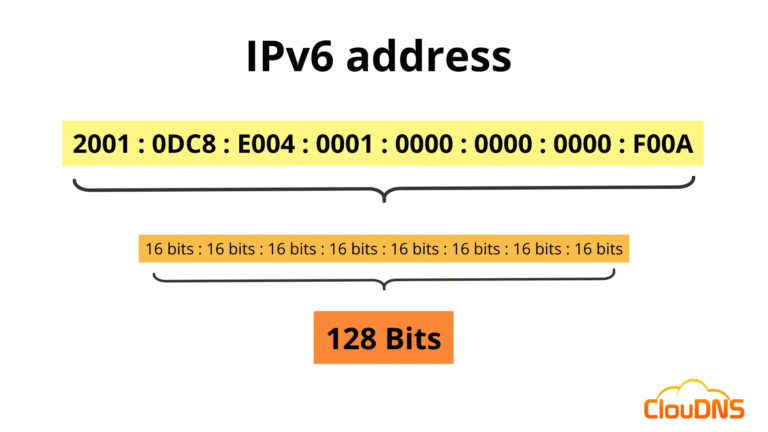
Dual-stack deployment: Running IPv4 and IPv6 simultaneously
Carrier-grade NAT (CGNAT): Extending IPv4 life
Current status: ~40% of users access Google via IPv6
Challenges: Legacy equipment, customer premises devices
Quality of Service and Performance
Latency Reduction:
Edge computing: Moving content/compute closer to users
Protocol improvements: QUIC, HTTP/3
Optimized routing: Better path selection algorithms
5G improvements: <10 ms target latency
Network Slicing:
5G capability: Virtual networks with different characteristics
Applications: Differentiated services for various use cases
Implementation: Early stages in mobile networks
Congestion Management:
Peak vs. off-peak: Traffic shaping policies
Application-aware routing: Different treatment for different applications
Content caching: Netflix Open Connect, Google Global Cache
Security Challenges
Network Security:
DDoS protection: Scrubbing centers, on-net mitigation
Botnet detection: Identifying infected customer devices
Spoofing prevention: BCP38/BCP84 implementation
DNSSEC adoption: Protecting DNS queries
Customer Security:
IoT risks: Vulnerable devices on customer networks
Malware distribution: Infected devices spreading malware
Privacy protection: Securing customer data
Vulnerability notifications: Alerting customers to compromised devices
Physical Security:
Fiber cuts: Accidental and intentional
Equipment theft: Copper theft, battery backups
Natural disasters: Hurricane, flood, fire resilience
Section 7: Market Dynamics and Competition
Competitive Landscape Analysis
Market Concentration Metrics:
HHI Index: Herfindahl-Hirschman Index measures market concentration
US markets: Often duopolies (cable vs. telco) or monopolies
European markets: Generally more competitive due to unbundling
Mobile markets: Typically 3-4 nationwide competitors
Barriers to Entry:
Capital intensity: Billions for nationwide network
Regulatory hurdles: Franchise agreements, pole attachment rights
Incumbent advantages: Existing infrastructure, customer relationships
Economies of scale: Cost advantages for larger providers
Emerging Competitors:
Fixed Wireless Access: 5G home internet (T-Mobile, Verizon)
LEO Satellite: Starlink, Amazon Kuiper
Municipal networks: Community-owned alternatives
Fiber overbuilders: New entrants in established markets
Consumer Experience Metrics
Speed and Performance:
Ookla Speedtest data: Average speeds by provider
FCC Measuring Broadband America: Performance relative to advertised
Bufferbloat issues: Latency under load
Peak vs. non-peak performance: Evening slowdowns
Customer Satisfaction:
American Customer Satisfaction Index (ACSI): Annual rankings
J.D. Power studies: Regional satisfaction surveys
Complaint statistics: FCC, state utility commission data
Social media sentiment: Real-time customer experiences
Pricing Transparency:
Hidden fees: Broadcast TV, regional sports, modem rental
Promotional pricing expiry: Rate increases after 12-24 months
Equipment costs: Buying vs. renting analysis
Data cap economics: Overage fees vs. unlimited plans
Section 8: Social and Ethical Considerations
Digital Divide and Access Equity
Access Disparities:
Urban vs. rural: 98% urban vs. 82% rural broadband access (USA)
Income correlations: Lower adoption in lower-income households
Racial/ethnic gaps: Persistent differences in adoption rates
Age factors: Lower adoption among older populations
Affordability Challenges:
Cost as percentage of income: Higher burden for low-income households
Lifeline program: $9.25 monthly subsidy (often inadequate)
Emergency Broadband Benefit/ACP: $30-75 monthly subsidies (expired/funding limited)
Device access: Computers/tablets needed for meaningful use
Digital Redlining:
Historical underinvestment: In certain neighborhoods
Income-based deployment: Fiber to affluent areas first
Speed disparities: Different offerings in different areas
Regulatory responses: Anti-redlining rules proposed
Privacy and Data Practices
Data Collection:
Usage data: What websites visited, when, for how long
Location data: Especially for mobile providers
Device information: Types of devices connected
Payment/billing data: Financial information
Data Usage:
Targeted advertising: Using customer data for ad targeting
Network optimization: Managing traffic based on usage patterns
Third-party sharing: Selling or sharing data with partners
Law enforcement access: Responding to legal requests
Privacy Regulations:
GDPR (EU): Strict consent requirements
CCPA/CPRA (California): Opt-out rights, data transparency
Sector-specific rules: Telecom-specific privacy regulations
Cross-border complexities: Different rules in different jurisdictions
Environmental Impact
Energy Consumption:
Network equipment: Routers, switches, data centers
Customer premises equipment: 24/7 modem/router power
5G expansion: More cells, potentially more energy use
Cooling requirements: For network facilities
E-waste Generation:
Equipment turnover: Modems, routers, set-top boxes
Technology upgrades: 5G replacing 4G equipment
Recycling challenges: Proper disposal of network equipment
Circular economy initiatives: Refurbishment, reuse programs
Sustainability Initiatives:
Renewable energy: Powering facilities with solar/wind
Energy efficiency: More efficient network equipment
Smart cooling: Reducing data center energy use
Paperless billing: Reducing physical waste
Section 9: Future Trends and Emerging Technologies
Next-Generation Access Technologies
10G Cable Networks:
DOCSIS 4.0: Full Duplex DOCSIS, up to 10 Gbps symmetrical
Extended spectrum: Up to 1.8 GHz, more capacity
Low latency: Improvements for gaming/real-time applications
Timeline: Initial deployments 2023-2025, wider 2025-2030
Advanced Fiber Technologies:
50G PON: Standards development underway
Coherent optics: For access networks, not just backbone
Simplified architectures: Reduced equipment, lower costs
Fiber sensing: Using fiber for security/environmental monitoring
6G Development:
2030+ timeline: Commercial around 2030
Terahertz frequencies: Above 100 GHz
Integrated sensing: Communication and sensing combined
AI-native networks: Built-in intelligence
Network Architecture Evolution
Network Virtualization:
vRAN: Virtualized Radio Access Network
SDN/NFV: Software Defined Networking/Network Functions Virtualization
Cloud-native networks: Built using cloud principles
Benefits: Flexibility, cost reduction, rapid service deployment
Edge Computing Integration:
MEC (Multi-access Edge Computing): Compute at network edge
Low-latency applications: Gaming, AR/VR, industrial automation
Content caching: Even closer to users
Network APIs: Exposing capabilities to developers
AI/ML Network Management:
Predictive maintenance: Identifying issues before failures
Traffic optimization: AI-driven routing decisions
Security enhancement: Anomaly detection, threat prevention
Customer experience: Proactive issue resolution
Business Model Innovations
Network-as-a-Service (NaaS):
Flexible consumption: Pay for what you use
Enterprise focus: Initially, potentially consumer later
API-driven: Programmable networks
Examples: Cisco+, HPE GreenLake for networking
Value-Added Services Expansion:
Security: Managed security services
IoT connectivity: Specialized IoT networks
Edge applications: Hosting edge applications
Blockchain services: Node operation, validation
Partnership Models:
Infrastructure sharing: More common to reduce costs
Content partnerships: Bundling streaming services
Smart home ecosystems: Integration with device manufacturers
Municipal partnerships: Public-private partnerships
Section 10: Strategic Recommendations
For Consumers
Choosing an ISP:
Check actual availability: Not just advertised coverage
Compare real-world speeds: Using third-party testing data
Understand total cost: Including fees, equipment, promotions ending
Consider alternatives: FWA, satellite, municipal options
Negotiate: Especially when promotions expire
Optimizing Service:
Use your own equipment: Avoid rental fees when possible
Proper placement: Optimize WiFi router location
Security practices: Change default passwords, regular updates
Monitor usage: Understand data consumption patterns
Advocacy and Rights:
File complaints: FCC, state commissions for unresolved issues
Support net neutrality: Engage in policy discussions
Digital inclusion: Support programs for universal access
Privacy awareness: Understand and exercise privacy rights
For Policymakers
Competition Promotion:
Infrastructure sharing requirements: Reduce barriers to entry
Municipal broadband enablement: Remove state restrictions
Transparency mandates: Clear pricing, performance data
Spectrum policies: Ensure fair access for competitors
Universal Access Strategies:
Subsidy programs: Well-funded, efficiently administered
Public-private partnerships: Leverage private investment
Community networks: Support local initiatives
Digital literacy: Inclusion requires more than just access
Future-Proof Regulation:
Technology-neutral approaches: Don’t favor specific technologies
Regular review: Update rules as technology evolves
International coordination: Global internet requires global cooperation
Balanced approach: Innovation, competition, consumer protection
For ISPs
Strategic Priorities:
Network investment: Continuous upgrades to meet demand
Customer experience: Beyond just speeds to reliability, support
Operational efficiency: Automation, AI-driven management
New revenue streams: Beyond basic connectivity
Competitive Differentiation:
Performance consistency: Not just peak speeds
Transparency practices: Clear communication with customers
Innovative services: Beyond basic connectivity
Community engagement: Local presence and support
Sustainability Initiatives:
Energy efficiency: Reduce operational costs and environmental impact
Circular economy: Equipment reuse and recycling
Digital inclusion: Programs for underserved communities
Ethical data practices: Respecting customer privacy
Conclusion: The Evolving Role of Connectivity Providers
ISPs have transformed from simple conduits for email and web browsing to essential infrastructure providers supporting virtually every aspect of modern life. As we look to the future, several key themes emerge:
The Paradox of Importance and Invisibility: The most successful internet connectivity becomes, the more it disappears into the background—expected to be always available, always fast, and always affordable. This creates both a business opportunity and a public expectation challenge for ISPs.
The Tension Between Public Utility and Private Enterprise: ISPs operate at the intersection of critical infrastructure and competitive markets. Balancing profit motives with public responsibilities remains an ongoing challenge requiring thoughtful regulation and corporate responsibility.
Technological Convergence: The distinctions between fixed, mobile, and satellite providers are blurring. Successful ISPs will need to offer seamless connectivity across multiple access technologies, managed through intelligent software-defined networks.
The Global-Local Dichotomy: While the internet is global, access is intensely local. ISPs must navigate international standards and content while dealing with local regulations, physical infrastructure, and community relationships.
As we move toward an increasingly connected world—with the Internet of Things, smart cities, autonomous systems, and immersive digital experiences—the role of ISPs will only grow in importance. The providers that succeed will be those that not only deliver faster speeds and broader coverage, but also demonstrate responsibility, transparency, and innovation in how they connect people to the digital world.
The future of connectivity isn’t just about technical capabilities, but about creating an internet that is accessible, affordable, secure, and empowering for all. ISPs, as the gatekeepers of this connectivity, have both an enormous responsibility and opportunity to shape this future. Their evolution from simple service providers to platform operators, security guardians, and community partners will determine not just their own success, but the continued growth and health of the global internet ecosystem.