The Internet Evolution: From ARPANET to the Global Nervous System
Introduction: The Greatest Network in Human History
The internet represents humanity’s most ambitious attempt to create a universal communication network—a system that has evolved from a modest military research project into a global nervous system connecting nearly 5 billion people. This evolution reflects not just technological advancement but fundamental shifts in how we communicate, work, learn, and organize society. This comprehensive guide traces the internet’s remarkable journey through distinct eras of innovation, examines its transformative impacts, and explores emerging frontiers that will define its future.
Section 1: The Pre-Internet Era – Foundations (1940s-1960s)
Theoretical Groundwork
Vannevar Bush’s Memex (1945):
Visionary concept of associative information trails
Foreshadowed hypertext and personal computing
Published in “As We May Think,” Atlantic Monthly
Packet Switching Theory:
Paul Baran (RAND Corporation): Distributed network concept for nuclear survivability
Donald Davies (UK National Physical Laboratory): Coined term “packet switching”
Key insight: Breaking data into packets for robust transmission
Information Theory:
Claude Shannon (1948): Mathematical theory of communication
Foundation for data compression and error correction
Established bits as fundamental information units
Early Networking Experiments
SAGE Air Defense System (1950s):
First large-scale computer network
Connected radar stations across North America
Introduced real-time data processing concepts
Time-Sharing Systems:
CTSS (1961): Compatible Time-Sharing System at MIT
Project MAC (1963): Multiple Access Computer at MIT
Early concepts of resource sharing and remote access
Section 2: The Birth of Internetworking (1969-1983)
ARPANET: The First Internet
Initial Implementation:
First node: UCLA (September 1969)
First four nodes: UCLA, Stanford, UCSB, University of Utah
First message: “LO” (attempted “LOGIN” crashed system)
Initial speed: 50 kbps
Key Technological Breakthroughs:
Interface Message Processors (IMPs): Dedicated mini-computers as network interfaces
Network Control Protocol (NCP): First host-to-host protocol
Email development (1971): Ray Tomlinson introduces @ symbol
Telnet (1973): Remote terminal access protocol
FTP (1973): File Transfer Protocol
Expansion and Diversification:
1971: 15 nodes
1973: First international connections (UK, Norway)
1977: 111 hosts
Parallel networks: ALOHAnet (wireless), SATNET (satellite), PRNET (packet radio)
The Protocol Revolution: TCP/IP
Problems with NCP:
Limited to ARPANET’s infrastructure
No error recovery at network level
Couldn’t handle different network types
TCP/IP Development:
Vinton Cerf and Robert Kahn: “A Protocol for Packet Network Intercommunication” (1974)
Key innovations:
End-to-end principle
Robust error handling
Network agnosticism
January 1, 1983: “Flag Day” transition from NCP to TCP/IP
Architectural Principles:
Layering: Separation of concerns
Best-effort delivery: No guarantees but maximum effort
Stateless routers: Simplified network core
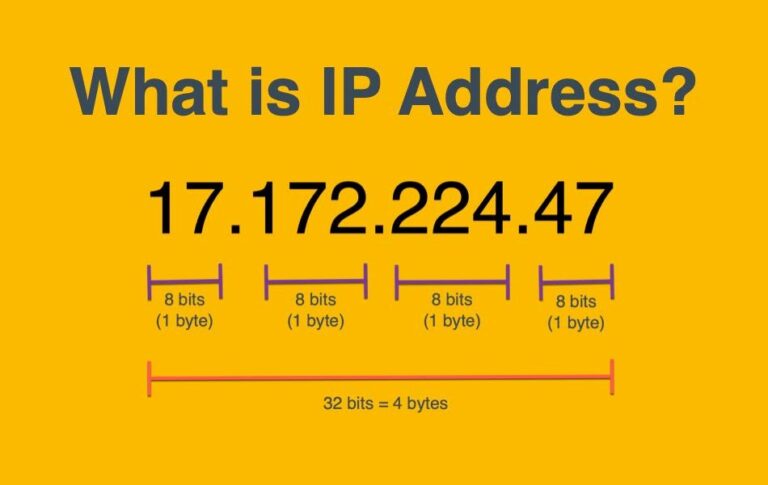
Global addressing: Every device uniquely identifiable
Section 3: The NSFNet Era and Commercialization (1984-1994)
Academic Expansion
NSFNet (1985):
National Science Foundation network
Initial purpose: Connect supercomputing centers
Speed: 56 kbps backbone
Key requirement: “Acceptable Use Policy” restricting commercial traffic
Backbone Upgrades:
1988: T1 (1.5 Mbps) backbone
1991: T3 (45 Mbps) backbone
Growth: From 2,000 hosts (1985) to 2 million (1993)
Regional Networks:
BARRNET, MIDNET, WESTNET, etc.: Regional academic networks
Interconnection: Formed national infrastructure
The Commercial Awakening
Removing Restrictions:
1988: First commercial email service (MCI Mail)
1991: Commercial Internet eXchange (CIX) founded
1992: Scientific American declares “The Internet is for everyone”
1993: AUP modified to allow commercial traffic
Early Commercial Services:
CompuServe, Prodigy, AOL: Walled gardens with internet gateways
ISPs: PSINet, UUNET, Netcom
1994: First online pizza order (Pizza Hut)
Alternative Networks and Convergence
BITNET, FidoNet, UUCP:
Different protocols and cultures
Eventually gatewayed to internet
FidoNet: Distributed bulletin board system (peaked at 45,000 nodes)
The Great Convergence:
Multiple networks merging into internet
Protocol standardization around TCP/IP
Result: Single global network infrastructure
Section 4: The World Wide Web Revolution (1990-2000)
Tim Berners-Lee’s Invention
Context at CERN:
Large organization with information management challenges
High energy physics collaborations across continents
Existing hypertext systems insufficient
Key Components (1990-1991):
HTML: HyperText Markup Language
HTTP: HyperText Transfer Protocol
URL: Uniform Resource Locator
First browser/editor: WorldWideWeb application
First web server: info.cern.ch
Philosophical Foundations:
The Browser Wars
Mosaic (1993):
First graphical browser with images inline
Developed at NCSA (University of Illinois)
Impact: Made web accessible to non-technical users
Downloads: 1 million in first year
Netscape Navigator (1994):
Commercial version of Mosaic
Founders: Marc Andreessen and Jim Clark
Innovations: JavaScript, cookies, progressive rendering
IPO (1995): One of most spectacular in history
Microsoft Internet Explorer (1995):
Bundled with Windows 95
Browser War I: Netscape vs Microsoft
Anti-trust case: United States v. Microsoft
Result: Microsoft dominance (peaked at 95% market share)
The Dot-com Boom and Infrastructure Growth
Exponential Growth Metrics:
Websites: 130 (1993) → 650,000 (1997) → 10 million (2000)
Users: 16 million (1995) → 400 million (2000)
Traffic: Doubling every 3-4 months
Infrastructure Development:
Backbone upgrades: OC-3 (155 Mbps) → OC-48 (2.5 Gbps) → OC-192 (10 Gbps)
Undersea cables: FLAG, SEA-ME-WE 3, etc.
ISPs: Transition from dial-up to DSL/cable
Business Model Evolution:
Early: Content subscription models
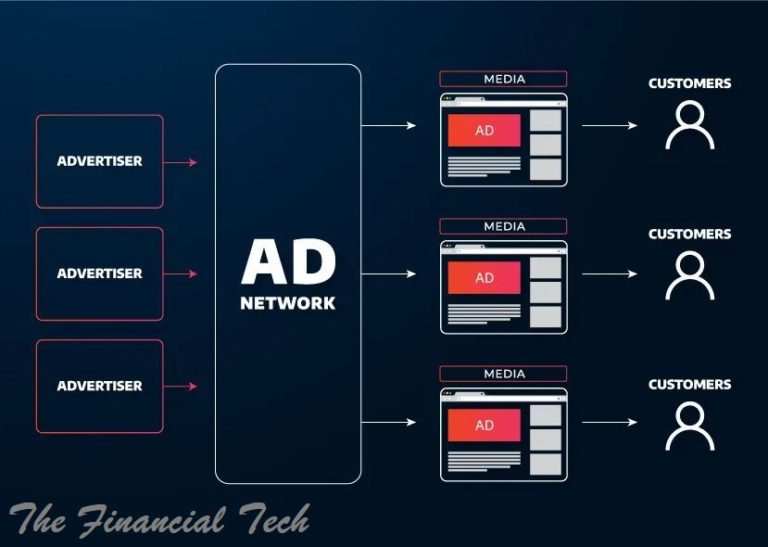
Shift: Advertising-supported free content
E-commerce: Amazon (1994), eBay (1995)
Search: Yahoo! (1994), Google (1998)
Section 5: Web 2.0 and Social Revolution (2001-2010)
Post-Bubble Renaissance
Survivors and Innovators:
Google: AdWords (2000), IPO (2004)
Amazon: AWS launch (2006)
eBay: Continued growth
New entrants: Wikipedia (2001), LinkedIn (2003), Facebook (2004)
Technical Enablers:
AJAX (2005): Asynchronous JavaScript and XML
Broadband penetration: >50% in developed nations
Mobile data: 3G networks
Open source: LAMP stack dominance
The Social Web
Platform Proliferation:
Social networks: MySpace (2003), Facebook (2004), Twitter (2006)
Media sharing: Flickr (2004), YouTube (2005)
Collaboration: Wikipedia (2001), WordPress (2003)
User-Generated Content Explosion:
Blogs: From thousands to hundreds of millions
Video: YouTube serving 100 million videos daily by 2006
Photos: Flickr hosting billions of images
Changing Dynamics:
From consumption to participation
Wisdom of crowds
Network effects as competitive moats
Attention as new currency
The Mobile Internet Dawn
Early Mobile Web:
WAP (1999): Wireless Application Protocol
i-mode (1999): Successful in Japan
Limitations: Slow speeds, limited content
Smartphone Revolution:
BlackBerry (2002): Mobile email
iPhone (2007): Multi-touch interface, App Store (2008)
Android (2008): Open mobile platform
Impact: Always-connected internet access
Section 6: The App Economy and Platform Dominance (2011-2020)
Mobile-First World
App Store Economics:
Apple App Store: $643 billion billings in 2020
Google Play Store: 3.5 million apps
New business models: Freemium, in-app purchases, subscriptions
Technical Advances:
4G LTE: 10-100 Mbps speeds
Responsive design: Single website for all devices
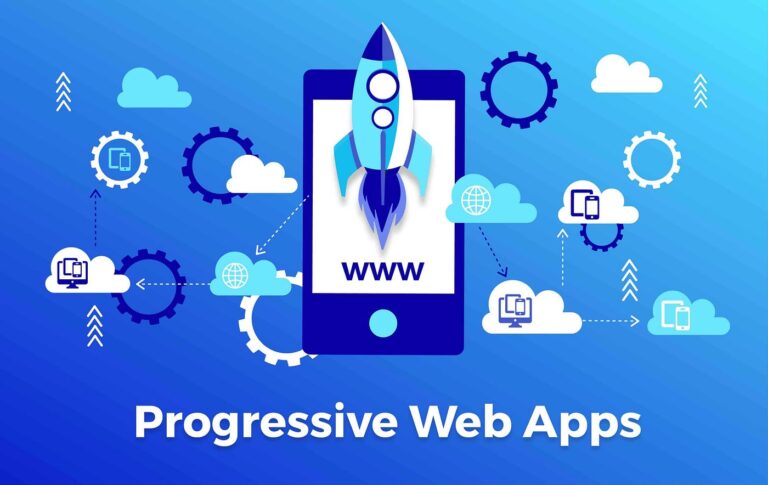
Progressive Web Apps: Web apps with native capabilities
Usage Shifts:
2016: Mobile internet usage surpasses desktop
Developing world: Mobile-only internet users
Super apps: WeChat (China), Grab (Southeast Asia)
Platform Concentration
The “Big Five”:
Google: Search, Android, YouTube
Facebook: Social network, Instagram, WhatsApp
Amazon: E-commerce, AWS, Alexa
Apple: iOS ecosystem, services
Microsoft: Enterprise, Azure, LinkedIn
Economic Power:
Combined market cap: ~$7 trillion (2020)
User bases measured in billions
Network effects: Powerful competitive advantages
Acquisition strategies: Buying potential competitors
Cloud Computing and Data Centralization
Infrastructure Evolution:
AWS (2006): First comprehensive cloud platform
Microsoft Azure (2010), Google Cloud (2011)
Transformation: From buying servers to renting compute
Big Data Era:
Hadoop (2006): Open-source distributed processing
Data volumes: From terabytes to exabytes
Business intelligence: Data-driven decision making
AI/ML Infrastructure:
TensorFlow (2015), PyTorch (2016)
Specialized hardware: TPUs, GPUs for training
Data requirements: Fueling AI advances
Section 7: Current Era – Algorithmic and Decentralized Internet (2021-Present)
AI-First Internet
Generative AI Integration:
ChatGPT (2022): 100 million users in 2 months
Search evolution: From links to answers
Content creation: AI-assisted writing, images, code
Personalization: Hyper-personalized experiences
Technical Infrastructure:
Transformers architecture: Revolutionized NLP
Large Language Models: GPT-4, Claude, Gemini
Edge AI: On-device processing
Specialized chips: Nvidia dominance
Web3 and Decentralization Movement
Blockchain Foundations:
Bitcoin (2009): Decentralized currency
Ethereum (2015): Smart contracts, dApps
NFTs (2017): Digital ownership
Decentralized Web Vision:
IPFS: InterPlanetary File System
Solid (Tim Berners-Lee): Decentralized data pods
DAOs: Decentralized Autonomous Organizations
Current Status:
Connectivity Expansion
Global Access Progress:
2023: 5.3 billion internet users (66% of population)
Digital divides: Urban/rural, developed/developing, age-based
Affordability: Data costs as percentage of income
Next-Generation Networks:
5G deployment: Enhanced mobile broadband
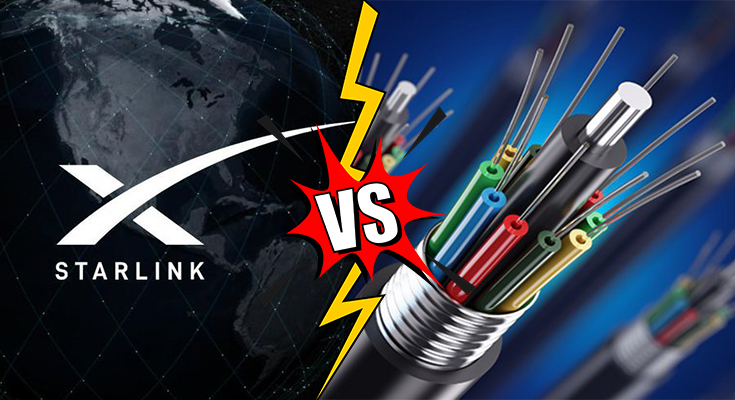
Satellite internet: Starlink, Project Kuiper
IoT expansion: From millions to tens of billions of devices
Section 8: Technical Evolution – Protocols and Architectures
Protocol Stack Evolution
Application Layer:
Early: Telnet, FTP, SMTP
Web era: HTTP/1.0, HTTP/1.1
Modern: HTTP/2, HTTP/3 (QUIC), gRPC, WebSocket
Transport Layer:
TCP improvements: Tahoe, Reno, New Reno, CUBIC
Alternatives: UDP (for real-time), QUIC (UDP-based with TLS)
Security Evolution:
Early: Plaintext protocols
SSL (1995): Secure Sockets Layer
TLS (1999): Transport Layer Security
Modern: TLS 1.3, certificate transparency, HTTPS everywhere
Addressing and Routing
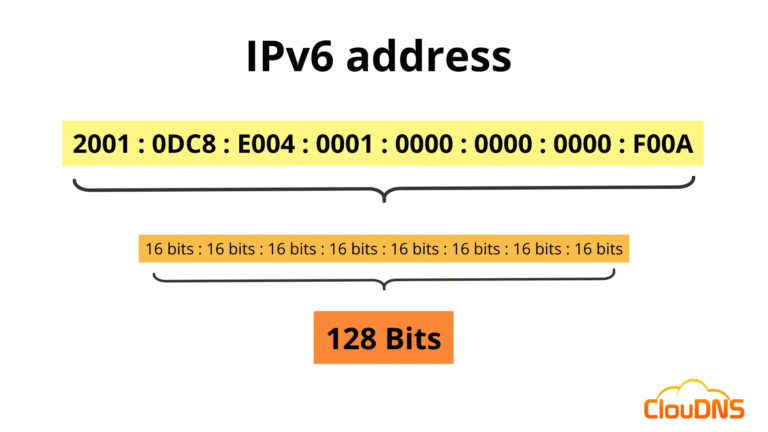
IPv4 to IPv6 Transition:
IPv4 exhaustion (2011): Last /8 blocks allocated
IPv6 deployment: Gradual adoption (~40% in 2023)
Challenges: Legacy equipment, knowledge gaps
Routing Evolution:
Early: Static routes, simple protocols
EGP (1982): Exterior Gateway Protocol
BGP (1989): Border Gateway Protocol (still dominant)
Modern developments: RPKI, BGPsec
Content Delivery Evolution
From Single Server to Global CDNs:
Early: All traffic to origin server
Akamai (1998): First major CDN
Modern: Cloudflare, Fastly, edge computing
Trend: Compute moving to edge
Section 9: Socioeconomic Impacts and Transformations
Economic Restructuring
New Business Models:
Digital platforms: Multi-sided markets
Sharing economy: Uber, Airbnb
Subscription services: Software, media, products
Gig economy: Task-based work platforms
Globalization Acceleration:
Remote work: COVID-19 acceleration
Global talent markets: Upwork, Topcoder
E-commerce: Cross-border trade growth
Measurement Challenges:
GDP underestimation: Free digital services
Productivity paradox: IT investment vs measured output
Digital economy size: 15-20% of global GDP
Cultural Transformations
Information Access:
Democratization: From gatekeepers to everyone publishes
Information overload: Filtering and curation challenges
Misinformation: Scale and speed of spread
Social Dynamics:
Global village: Cross-cultural communication
Identity formation: Online personas and communities
Social movements: Arab Spring, #MeToo, climate activism
Media Consumption:
Political and Governance Impacts
Democratic Engagement:
Governance Models:
Multistakeholder approach: ICANN model
National sovereignty: Great Firewalls, data localization
Regulatory challenges: Jurisdiction in borderless space
Section 10: Future Trajectories and Emerging Frontiers
Next-Generation Technologies
6G and Advanced Connectivity:
Quantum Internet:
Neuromorphic and Biological Computing:
Brain-computer interfaces
Organic computing substrates
Potential integration with internet
Architectural Shifts
Web3 Realization Challenges:
Scalability: Current blockchain limitations
Usability: Complex user experiences
Regulation: Legal frameworks for decentralized systems
Interoperability: Connecting different decentralized networks
Edge Computing Maturation:
Latency reduction: Critical for real-time applications
Privacy enhancement: Data processing closer to source
Bandwidth optimization: Reduced backbone traffic
AI-Native Internet:
Societal Integration
Metaverse Evolution:
Beyond gaming: Work, education, social
Interoperability standards: Open vs walled gardens
Economic systems: Digital asset ownership
Internet of Everything:
Trillions of connected devices
Ambient intelligence environments
Convergence with physical infrastructure
Sustainable Internet:
Energy efficiency: Green data centers, efficient protocols
E-waste reduction: Longer device lifecycles
Carbon-aware computing: Scheduling based on renewable availability
Governance and Policy Futures
Digital Sovereignty Models:
AI Governance:
Universal Access Initiatives:
Conclusion: The Unfinished Revolution
The internet’s evolution represents one of humanity’s most rapid and profound technological transformations—from a network connecting four research institutions to a global system intertwining with nearly every aspect of modern life. This journey reveals several fundamental patterns:
Exponential growth in connectivity, speed, and adoption
Continuous layering of new capabilities on stable foundations
Cycles of centralization and decentralization
Unexpected emergent properties from network effects
Persistent tension between open ideals and commercial realities
As we look forward, the internet faces critical challenges: bridging remaining digital divides, managing platform power, ensuring privacy and security, mitigating environmental impacts, and developing governance models for increasingly autonomous systems. Yet its potential remains extraordinary—to connect the unconnected, to accelerate scientific discovery, to empower marginalized communities, and to create new forms of human collaboration.
The internet’s evolution is far from complete. As AI agents become active participants, as connectivity becomes truly ubiquitous, as virtual and physical spaces merge, we are entering perhaps the most transformative phase yet. The choices we make today—about openness, privacy, accessibility, and governance—will shape not just the internet’s future, but the future of human society itself.
What began as a solution for sharing computing resources has become the infrastructure for sharing human knowledge, culture, and experience. As Tim Berners-Lee envisioned, we continue working toward a web that is truly “for everyone”—more inclusive, more empowering, and more reflective of our shared humanity. The internet’s greatest evolution may still lie ahead, not in faster speeds or new devices, but in fulfilling its original promise: to connect humanity in ways that enhance our collective wisdom, creativity, and wellbeing.