Computer Science: The Foundational Science of the Information Age
Introduction: The Universal Discipline
Computer science is not merely about programming or using computers—it is the systematic study of algorithmic processes, computational systems, and the transformation of information. From the abstract mathematics of computation theory to the practical engineering of software systems, computer science represents one of the most transformative disciplines in human history, shaping every aspect of modern life while continuously redefining its own boundaries.
This comprehensive guide explores computer science as both a theoretical science and applied engineering discipline, tracing its evolution, examining its core principles, and envisioning its future trajectories.
Section 1: Historical Foundations – From Abacus to Quantum
The Pre-Digital Era (Antiquity – 1930s)
Early computation: Abacus (3000 BCE), Antikythera mechanism (100 BCE)
Theoretical foundations: Boolean algebra (George Boole, 1847), Turing machines (Alan Turing, 1936)
Mechanical computers: Babbage’s Difference Engine (1822), Analytical Engine (1837)
Key insight: Computation as a formal, mechanical process separable from human thought
The Computing Revolution (1940s – 1950s)
First electronic computers: ENIAC (1945), Colossus (1943)
Stored-program architecture: Von Neumann architecture (1945)
Programming languages: Assembly, Fortran (1957), LISP (1958)
Institutional recognition: First computer science departments (1960s)
The Age of Abstraction (1960s – 1980s)
Operating systems: UNIX (1969), concept of time-sharing
Software engineering: Emergence as formal discipline (1968 NATO conference)
Personal computing: Altair 8800 (1974), Apple II (1977), IBM PC (1981)
Networking: ARPANET (1969), TCP/IP (1983), birth of internet
The Modern Era (1990s – Present)
World Wide Web: Berners-Lee (1991), browser wars
Open source movement: Linux (1991), Apache, creative commons
Mobile revolution: Smartphones, app ecosystems
Cloud computing: Distributed systems at global scale
AI renaissance: Deep learning, big data, specialized hardware
Section 2: The Core Disciplines of Computer Science
1. Theoretical Computer Science
The mathematics of computation:
Computability theory: What problems can be solved algorithmically?
Complexity theory: What resources (time, space) do solutions require?
Automata theory: Abstract machines and their computational power
Algorithm analysis: Formal characterization of efficiency (Big O notation)
Cryptography: Mathematical foundations of secure communication
Key concepts:
P vs NP problem (the million-dollar question)
Turing completeness (what makes a system computationally universal)
Halting problem (limits of algorithmic decidability)
2. Algorithms and Data Structures
The building blocks of efficient software:
3. Programming Languages and Compilers
From human thought to machine execution:
Language paradigms:
Imperative: C, Python, Java (how to perform tasks)
Functional: Haskell, Lisp, ML (mathematical functions)
Logic: Prolog (declarative relationships)
Object-oriented: Java, C++, Smalltalk (objects and messages)
Concurrent: Go, Erlang (parallel execution)
Compiler architecture:
Virtual machines: JVM, CLR enabling platform independence
Type systems: Static vs dynamic, strong vs weak typing
4. Computer Architecture and Organization
From transistors to systems:
Digital logic gates: AND, OR, NOT → Boolean logic implementation
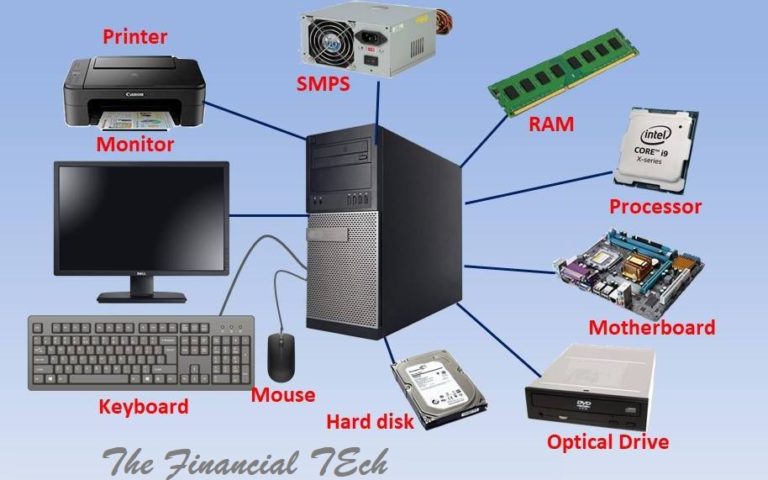
Processor design: ALU, control unit, registers, pipelines
Memory hierarchy: Registers → Cache → RAM → Storage
Instruction set architectures (ISAs): RISC vs CISC
Parallel architectures: SIMD, MIMD, GPUs, TPUs
Quantum computing: Qubits, superposition, entanglement
5. Operating Systems
The resource manager between hardware and software:
Core functions: Process management, memory management, file systems, I/O
Process synchronization: Semaphores, monitors, deadlock handling
Memory management: Paging, segmentation, virtual memory
File systems: FAT, NTFS, ext4, distributed file systems
Security models: Access control, capabilities, sandboxing
6. Databases and Information Systems
Structured data at scale:
Database models: Relational, document, graph, columnar
Query languages: SQL (declarative), NoSQL alternatives
Transaction management: ACID properties (Atomicity, Consistency, Isolation, Durability)
Distributed databases: Consistency models (CAP theorem)
Data warehouses/lakes: OLTP vs OLAP, ETL processes
7. Computer Networks
Systems that communicate:
Protocol stacks: OSI model, TCP/IP suite
Routing algorithms: Distance vector, link state, BGP
Network security: Cryptography, firewalls, intrusion detection
Wireless networks: WiFi, Bluetooth, cellular (4G/5G)
Distributed systems: Consensus (Paxos, Raft), clock synchronization
8. Artificial Intelligence and Machine Learning
Creating intelligent systems:
Symbolic AI: Expert systems, knowledge representation
Machine learning paradigms:
Supervised learning (classification, regression)
Unsupervised learning (clustering, dimensionality reduction)
Reinforcement learning (agent-environment interaction)
Neural networks: Perceptrons, backpropagation, deep architectures
Natural language processing: Syntax, semantics, transformers
Computer vision: Convolutional networks, object detection
9. Human-Computer Interaction (HCI)
Designing for human use:
User-centered design: Prototyping, usability testing
Interaction paradigms: GUI, touch, voice, AR/VR
Accessibility: Designing for diverse abilities
Information visualization: Effective data presentation
10. Software Engineering
Systematic software development:
Development methodologies: Waterfall, Agile, DevOps
Design patterns: Singleton, observer, factory, MVC
Testing strategies: Unit, integration, system, acceptance
Version control: Git, SVN, collaborative workflows
Software metrics: Code quality, maintainability, technical debt
Section 3: The Programming Spectrum
Low-Level Programming
Close to the hardware:
Assembly language: Processor-specific, maximal control
C/C++: Systems programming, performance-critical applications
Memory management: Manual allocation, pointers, memory safety
Use cases: Operating systems, embedded systems, game engines
High-Level Programming
Abstraction from hardware details:
Python: General-purpose, emphasis on readability
Java: “Write once, run anywhere,” enterprise applications
JavaScript: Web development, increasingly server-side (Node.js)
Domain-specific languages: R (statistics), MATLAB (engineering)
Specialized Paradigms
Functional Programming:
Core principles: Immutability, first-class functions, recursion
Benefits: Easier reasoning, parallelization, mathematical rigor
Languages: Haskell (pure), Scala (hybrid), F# (ML heritage)
Logic Programming:
Approach: Declare facts and rules, query for solutions
Applications: Expert systems, natural language parsing
Language: Prolog and derivatives
Concurrent Programming:
Challenges: Race conditions, deadlocks, livelocks
Models: Threads, actors (Erlang/Elixir), channels (Go)
Formal verification: Model checking concurrent systems
Section 4: Key Computational Concepts
Abstraction
Layered abstraction: Digital logic → Microarchitecture → ISA → OS → Applications
Data abstraction: Hide implementation details, expose clean interfaces
Procedural abstraction: Functions as black boxes with defined behavior
The power: Manage complexity through encapsulation
Algorithms as Technology
More important than hardware: Efficient algorithms often outperform faster hardware
Example: QuickSort (O(n log n)) vs Bubble Sort (O(n²)) – million-item difference
Algorithmic thinking: Systematic approach to problem-solving beyond programming
Complexity Analysis
Time complexity: How runtime scales with input size (Big O notation)
Space complexity: Memory usage scaling
Tradeoffs: Often between time and space efficiency
Practical implications: Choosing right algorithm for problem scale
Recursion
Mathematical foundation: Inductive definitions, proof by induction
Divide and conquer: Break problems into smaller self-similar problems
Implementation: Stack frames, base cases, recursive cases
Elegance vs efficiency: Often clearer but may need optimization
State and Side Effects
Pure functions: Same input → same output, no side effects
Stateful computation: Programs that change and respond to change
The challenge: Managing mutable state in concurrent/distributed systems
Trend: Functional programming’s resurgence addressing these challenges
Section 5: Modern Applications and Specializations
Web Development
Frontend: HTML/CSS/JavaScript, frameworks (React, Vue, Angular)
Backend: Server-side logic, databases, APIs (REST, GraphQL)
Full-stack: Integration of both layers
Progressive Web Apps: Native-like web experiences
Mobile Computing
Native development: iOS (Swift), Android (Kotlin/Java)
Cross-platform: React Native, Flutter, Xamarin
Mobile challenges: Battery, connectivity, varied form factors
App ecosystems: Distribution, monetization, privacy concerns
Cloud Computing
Service models: IaaS, PaaS, SaaS, FaaS (serverless)
Deployment models: Public, private, hybrid, multi-cloud
Containerization: Docker, Kubernetes orchestration
Major providers: AWS, Azure, Google Cloud Platform
Data Science and Big Data
Data pipeline: Collection → Storage → Processing → Analysis → Visualization
Big data technologies: Hadoop, Spark, Kafka, data lakes
Machine learning integration: Training models at scale
Ethical considerations: Privacy, bias, algorithmic fairness
Cybersecurity
Attack vectors: Software vulnerabilities, social engineering, insider threats
Defensive measures: Encryption, firewalls, intrusion detection, zero-trust
Cryptography: Symmetric/asymmetric encryption, digital signatures, hashing
Emerging threats: AI-powered attacks, quantum computing risks
Game Development
Game engines: Unity, Unreal, Godot
Graphics programming: Rendering pipelines, shaders, real-time graphics
Game AI: Pathfinding, decision trees, behavior trees
Physics simulation: Collision detection, rigid/soft body dynamics
Embedded Systems and IoT
Resource constraints: Limited memory, processing, power
Real-time requirements: Predictable timing behavior
IoT ecosystem: Sensors → Edge computing → Cloud → Applications
Safety-critical systems: Automotive, medical devices, aerospace
Section 6: The Computer Science Profession
Career Pathways
Industry Roles:
Software engineer: Design, implement, test, maintain software systems
Data scientist: Extract insights from data, build predictive models
DevOps engineer: Bridge development and operations, automation
Security analyst: Protect systems, investigate breaches
UX designer: User research, interface design, usability testing
Research scientist: Advance fundamental knowledge (industry labs)
Academic and Research:
Professor: Teaching, mentoring, conducting research
Research scientist: Focused on advancing specific areas
Interdisciplinary work: Computational biology, digital humanities, computational social science
Skills Beyond Programming
Essential Professional Skills:
Technical communication: Documenting, presenting, collaborating
Team collaboration: Version control, code review, agile methodologies
Continuous learning: Rapidly evolving technologies and paradigms
Ethical reasoning: Considering societal impacts of technological choices
Mathematical Foundations:
Discrete mathematics: Logic, set theory, combinatorics, graph theory
Calculus and linear algebra: Essential for graphics, machine learning
Probability and statistics: Data analysis, algorithm analysis, AI
Formal methods: Proof techniques, program verification
Section 7: Emerging Frontiers and Future Directions
Quantum Computing
Quantum advantage: Problems intractable for classical computers
Potential applications: Cryptography, drug discovery, optimization
Current state: Noisy intermediate-scale quantum (NISQ) era
Challenges: Qubit stability, error correction, algorithm development
Artificial General Intelligence (AGI)
Beyond narrow AI: Systems with human-like general intelligence
Approaches: Cognitive architectures, whole brain emulation, emergent approaches
Ethical considerations: Alignment problem, consciousness, rights
Timeline debates: Decades vs centuries to achievement
Bio-Inspired Computing
Neuromorphic computing: Hardware mimicking neural architectures
DNA computing: Using biological molecules for computation
Evolutionary algorithms: Optimization inspired by natural selection
Swarm intelligence: Distributed systems modeled on insect colonies
Human-Computer Integration
Brain-computer interfaces: Direct neural communication with computers
Augmented reality: Seamless overlay of digital information on physical world
Wearable computing: Technology integrated into clothing, accessories
Ambient intelligence: Environments responsive to human presence and needs
Ethical and Social Computing
Algorithmic fairness: Detecting and mitigating bias in automated systems
Privacy-preserving computation: Homomorphic encryption, differential privacy
Digital wellness: Designing technology that supports human flourishing
Sustainable computing: Energy efficiency, e-waste reduction, green data centers
Section 8: Learning Computer Science
Educational Pathways
Traditional University Degrees:
Bachelor’s: Foundation in theory and practice, often with specializations
Master’s: Advanced topics, research, or professional preparation
Ph.D.: Original research contributions, academic careers
Alternative Pathways:
Bootcamps: Intensive, practical training for specific roles
Online courses: MOOCs (Coursera, edX), self-paced learning
Self-directed learning: Open source contributions, personal projects
Apprenticeships: Learning while working under experienced mentors
Building a Strong Foundation
Recommended Learning Progression:
Programming fundamentals: One language in depth
Discrete mathematics: Logic, proofs, data structures
Computer architecture: From logic gates to processors
Algorithms: Design and analysis techniques
Systems: Operating systems, networks, databases
Specialization: Choose area based on interests
The Importance of Projects:
Portfolio development: Demonstrating skills beyond coursework
Open source contribution: Learning collaborative development
Competitive programming: Sharpening algorithmic skills
Research experience: For academically inclined students
Lifelong Learning in a Rapidly Changing Field
Follow research: Major conferences, arXiv preprints
Engage with community: Local meetups, online forums, conferences
Experiment with new technologies: Personal sandbox projects
Mentorship: Both seeking and providing guidance
Section 9: The Social Impact and Ethical Dimensions
Transformative Effects on Society
Positive Impacts:
Global connectivity: Communication across geographical boundaries
Information access: Democratization of knowledge
Automation: Reducing dangerous/dreary work
Scientific advancement: Computational modeling and analysis
Healthcare innovation: Medical imaging, personalized medicine, telemedicine
Challenges and Concerns:
Digital divide: Unequal access to technology and its benefits
Job displacement: Automation affecting employment landscapes
Privacy erosion: Surveillance capitalism, data collection
Algorithmic bias: Reinforcing societal prejudices
Addiction and mental health: Social media, gaming, constant connectivity
The Computer Scientist’s Ethical Responsibility
Professional Ethics:
ACM/IEEE Code of Ethics: Guidelines for professional conduct
Considering unintended consequences: Second-order effects of systems
Transparency: Making algorithmic decisions explainable
Accountability: Taking responsibility for created systems
Social Justice Considerations:
Inclusive design: Technology accessible to diverse populations
Digital literacy: Empowering users to understand and control technology
Environmental impact: Sustainable computing practices
Global perspective: Considering needs beyond Western contexts
Conclusion: The Ever-Evolving Science of Computation
Computer science stands uniquely at the intersection of mathematics, engineering, and creative design—a discipline that is simultaneously deeply theoretical and immediately practical. Its history is brief but extraordinarily impactful, its present is ubiquitous but often invisible, and its future holds both extraordinary promise and profound responsibility.
What began as the study of mechanical computation has grown to encompass everything from the quantum realm to global networks, from individual thought processes to societal transformations. The core insight—that information can be formalized, processed, and transformed algorithmically—has proven to be one of the most powerful ideas in human history.
As we move forward, computer science continues to reinvent itself while spreading into nearly every other discipline. The most exciting developments increasingly happen at the boundaries: computational biology, digital humanities, quantum machine learning, ethical AI. The field’s greatest strength may be its ability to absorb new ideas while providing rigorous frameworks for understanding complex systems.
For students and practitioners, computer science offers not just technical skills but a way of thinking—systematic, analytical, creative, and relentlessly focused on solving problems efficiently and elegantly. It teaches both the power of abstraction and the importance of concrete implementation, both individual creativity and collaborative development.
As we create increasingly intelligent systems and more interconnected worlds, computer scientists bear particular responsibility to consider the human implications of their work. The most successful future developments will be those that combine technical excellence with ethical consideration, innovation with inclusivity, and capability with wisdom.
The journey through computer science is ultimately a journey toward understanding how we can create tools that extend human capabilities while preserving human values—a challenge as profound as any in science or engineering, and one that will define our technological future.