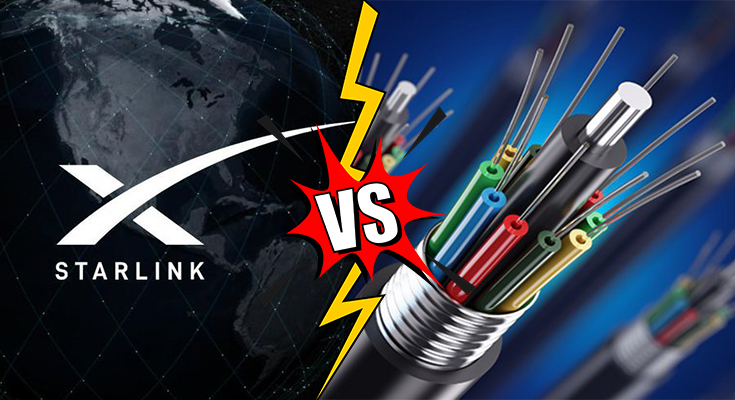
5G vs. Fiber vs. Starlink: The future of internet connectivity
5G vs. Fiber vs. Starlink: The Battle for the Future of Internet Connectivity
Introduction: The Connectivity Trilemma
In the global race to deliver faster, more reliable internet, three distinct technologies have emerged as contenders for the future of connectivity: 5G’s wireless promise, fiber’s proven performance, and Starlink’s satellite revolution. This isn’t merely a technical comparison—it’s a battle of philosophies about how humanity should connect, with profound implications for economics, geography, and social equity. Each technology represents a different answer to the fundamental question: How do we bridge the digital divide while meeting exponentially growing demand?
As Vint Cerf, one of the internet’s fathers, observed: “The future of connectivity isn’t about one technology winning. It’s about the right technology for the right place at the right time.” This article provides a comprehensive examination of these three connectivity paradigms, their technical realities, economic models, and the converging future they’re creating together.
1. Fiber Optics: The Gold Standard
1.1 Technical Foundations
How Fiber Works:
Light pulses through glass fibers thinner than human hair
Single-mode vs. multi-mode: Long-distance vs. short-distance applications
Wavelength Division Multiplexing (WDM): Multiple light colors = multiple data streams
Current lab records: 1.84 petabits per second over single fiber (2022, Japan’s NICT)
Infrastructure Requirements:
FTTX hierarchy:
FTTH (Fiber to the Home): Direct fiber connection
FTTB (Fiber to the Building): To building basement
FTTC (Fiber to the Curb): To neighborhood cabinet
FTTN (Fiber to the Node): To neighborhood node
Last-mile challenges: Cost of deployment: $20,000-$50,000 per mile
Trenching vs. aerial: 70% of cost is civil works, not the fiber itself
1.2 Current Global Status
Deployment Statistics:
Global FTTH subscribers: ~750 million (2024)
Leading nations: UAE (99.9% coverage), Singapore (99.5%), South Korea (89%)
United States: ~50% of homes have fiber access available
European Union: 56% of households passed by fiber (2023)
Performance Metrics:
Latency: 1-5 milliseconds (round-trip)
Symmetrical speeds: Residential: 1-10 Gbps; Enterprise: 100 Gbps-1 Tbps
Reliability: 99.99%+ uptime
Lifespan: 25-40 years (glass doesn’t degrade like copper)
1.3 Economic and Deployment Models
Public vs. Private Investment:
Municipal fiber: Chattanooga EPB (110,000 subscribers, $2.8B economic impact)
Public-private partnerships: UK’s Project Gigabit (£5B government subsidy)
Private investment: Google Fiber (initially, now scaled back), AT&T Fiber
The Economics of Density:
Urban deployment: $500-$800 per household passed
Suburban deployment: $1,000-$3,000 per household
Rural deployment: $5,000-$20,000+ per household
Break-even: Typically 3-7 years in dense markets
Innovations Reducing Costs:
Micro-trenching: 4-inch deep cuts vs. 36-inch traditional trenches
Directional boring: Less disruptive than open trenching
Aerial fiber: Utilizing existing utility poles
Conduit sharing: “Dig once” policies for multiple utilities
2. 5G: The Wireless Revolution
2.1 5G Technical Architecture
Three Spectrum Layers:
Low-band (Sub-1 GHz): Coverage layer (5-50 Mbps, miles of range)
Mid-band (1-6 GHz): Capacity layer (100-900 Mbps, ~1 mile range)
High-band/mmWave (24-100 GHz): Speed layer (1-10 Gbps, ~1,500 ft range)
Key Technologies:
Massive MIMO: 64-256 antennas per tower
Beamforming: Directing signals to users, not broadcasting
Network slicing: Virtual networks for different applications
Edge computing: Processing data closer to users
Performance Reality vs. Marketing:
Theoretical maximum: 20 Gbps download
Real-world average: 100-400 Mbps (mmWave), 50-200 Mbps (mid-band)
Latency: 5-20 ms (improving with standalone 5G core)
User experience: Highly variable based on location, device, network load
2.2 Global Deployment Status
Coverage Statistics:
Global 5G connections: ~2 billion (2024)
Nation leaders: South Korea (95% population coverage), China (88%), US (80%)
Urban vs. rural gap: Major cities have mmWave, rural areas often only low-band
Different National Approaches:
China: State-driven, Huawei-dominated, rapid deployment
United States: Carrier competition, spectrum auction-driven
Europe: More regulated, slower rollout, vendor diversity concerns
Developing nations: Leapfrogging 4G directly to 5G in some cases
The Standalone (SA) vs. Non-Standalone (NSA) Reality:
NSA (2020-2023): 5G radio on 4G core (limited benefits)
SA (2024+): True 5G core enabling network slicing, ultra-low latency
Current status: ~40% of 5G networks are SA (growing rapidly)
2.3 Use Cases Beyond Smartphones
Fixed Wireless Access (FWA):
Verizon/AT&T/T-Mobile: 7+ million FWA subscribers in US
Performance: 100-300 Mbps for ~$50/month
Market impact: Taking share from cable in suburban areas
Private 5G Networks:
Factories: BMW, Bosch deploying for industrial IoT
Ports: Rotterdam using for automated cranes
Campuses: Universities, corporate facilities
Advantages: Security, control, reliability over Wi-Fi
Mission Critical Communications:
Public safety: FirstNet in US (band 14 priority)
Vehicle-to-everything (V2X): Future autonomous car infrastructure
Remote surgery: Demonstrated but not yet commercial
3. Starlink: The Satellite Disruptor
3.1 Technical Architecture
Low Earth Orbit (LEO) Advantage:
Altitude: 340-570 km vs. 35,786 km for traditional GEO satellites
Latency: 20-40 ms vs. 600+ ms for GEO
Constellation scale: Planned 42,000 satellites (Gen2)
Satellite Design Evolution:
Version 1.0: 260 kg, 1 Gbps capacity, laser inter-satellite links on some
Version 2.0 Mini: Current launch model, improved capabilities
Version 3.0 (Planned): Larger, more powerful, Starship-launched
Ground Infrastructure:
User terminals: Gen 1 ($599), Gen 2 ($599), Gen 3 (announced)
Gateways: ~100+ globally with fiber backhaul
Network operations: Redundancy across multiple ground stations
3.2 Performance and Coverage Reality
Current Performance Metrics:
Download speeds: 50-200 Mbps (rural), 100-300 Mbps (optimal)
Upload speeds: 10-40 Mbps
Latency: 25-50 ms (improving with laser links)
Data caps: “Fair use” policy after 1 TB/month (priority access)
Global Coverage Progress:
Active satellites: ~5,000 (as of early 2024)
Coverage: Land coverage of ~60+ countries, ocean coverage growing
User growth: ~2.3 million subscribers (Q1 2024)
Waiting lists: Mostly eliminated in developed markets
Specialized Services:
Starlink Maritime: $250-5,000/month for ships
Starlink Aviation: For commercial and business jets
Starlink Mobility: For RVs and moving vehicles
Starlink Business: Higher performance for enterprises
3.3 Economic Model and Challenges
Cost Structure:
Satellite manufacturing: ~$250,000 per satellite (target)
Launch costs: ~$15-20 million per Falcon 9 (60 satellites)
User terminal cost: Manufacturing at ~$1,500, selling at $599 (subsidized)
Target ARPU: $99-500/month depending on service tier
The Path to Profitability:
Current status: SpaceX claims operational profitability for Starlink
Break-even estimate: 5-10 million subscribers needed
Future revenue streams: Backhaul for mobile networks, government contracts
Regulatory Challenges:
Spectrum allocation: Battles with astronomers, other satellite operators
Orbital debris concerns: Automated collision avoidance systems
National sovereignty: Some countries blocking or regulating service
4. Comparative Analysis: Head-to-Head-to-Head
4.1 Performance Comparison
| Metric | Fiber | 5G (mmWave) | 5G (Mid-band) | Starlink |
|---|---|---|---|---|
| Max Speed | 10 Gbps-1 Tbps | 1-10 Gbps | 100-900 Mbps | 50-300 Mbps |
| Typical Speed | 300 Mbps-2 Gbps | 1-4 Gbps | 50-200 Mbps | 100-200 Mbps |
| Latency | 1-5 ms | 5-10 ms | 10-20 ms | 20-40 ms |
| Jitter | <1 ms | 1-5 ms | 2-10 ms | 5-20 ms |
| Availability | 99.99% | 99.9% | 99.9% | 99.5%+ |
| Symmetry | 1:1 | 10:1-5:1 | 10:1-5:1 | 5:1-10:1 |
4.2 Economic Comparison
Deployment Cost Per Household Served:
Fiber (urban): $500-$800
Fiber (rural): $5,000-$20,000+
5G (dense urban): $100-$300 (leveraging existing towers)
5G (greenfield rural): $2,000-$5,000 (new towers needed)
Starlink: $1,500 terminal cost (no infrastructure per household)
Monthly Cost to Consumer:
Fiber: $50-$120 (1 Gbps typical)
5G FWA: $40-$80 (100-300 Mbps typical)
Starlink: $99-$250 (50-300 Mbps, varies by plan)
Operational Costs:
Fiber: Low OPEX, high initial CAPEX
5G: Medium-high OPEX (power, site rental, backhaul)
Starlink: Very high OPEX (satellite replacement, launches)
4.3 Geographic Suitability
Urban Dense Areas:
Winner: Fiber (supplemented by 5G mmWave)
Why: Density justifies fiber cost, 5G complements mobility
Example: New York City, Tokyo, London
Suburban Areas:
Competitive: Fiber vs. 5G FWA
Decision factors: Existing infrastructure, population density
Trend: 5G FWA taking share where fiber isn’t deployed
Rural Areas:
Traditional solution: Satellite (GEO) or fixed wireless
New solution: Starlink (changing the game)
Future solution: 5G may become viable with subsidies
Reality: Hybrid approaches often needed
Remote/Extreme Locations:
Clear winner: Starlink
Use cases: Ships, islands, research stations, emergency response
Limitations: Cost, regulatory approval
4.4 Use Case Suitability
High-Frequency Trading:
Only choice: Fiber (with microwave for extreme low latency)
Requirements: Sub-millisecond latency, extreme reliability
Gaming/Cloud Gaming:
Best: Fiber
Acceptable: 5G (with good signal), Starlink (improving)
Critical: Latency <20 ms, low jitter
4K/8K Video Streaming:
All can work: Depending on bandwidth
Best experience: Fiber (no data caps, consistent bandwidth)
Starlink consideration: Data caps during peak times
Telemedicine/Remote Surgery:
Requires: Fiber or dedicated 5G slice
Critical: Reliability, latency, symmetrical bandwidth
IoT/Industrial Applications:
5G advantage: Network slicing, mobility, density
Niche cases: Satellite IoT for remote sensors
5. Convergence and Hybrid Futures
5.1 Fiber-5G Symbiosis
Fiber as 5G Backhaul:
Every 5G tower needs fiber (mmWave needs fiber every few blocks)
Statistics: 80% of 5G deployment cost is fiber backhaul
Emerging standard: xHaul (integrated transport for fronthaul/midhaul/backhaul)
5G as Fiber Extension:
FWA extending reach: Last few miles where fiber uneconomical
Business model: Fiber to neighborhood + 5G to homes
Example: Verizon deploying fiber to cellsites then FWA to nearby homes
Converged Access:
Fixed-mobile convergence: Single subscription for home/mobile
Seamless handoff: Wi-Fi to 5G to fiber-backed Ethernet
Industry trend: AT&T, Verizon offering bundles
5.2 Satellite-Terrestrial Integration
3GPP Non-Terrestrial Networks (NTN):
Standardization: Satellite integration into 5G standards
Direct-to-device: Future smartphones connecting to satellites
Apple/Globalstar: Emergency SOS via satellite
Starlink/T-Mobile: Planned direct-to-cell service (2024+)
Backhaul and Redundancy:
Starlink for cellular backhaul: In remote tower locations
Disaster recovery: When terrestrial networks fail
Content delivery: Cache popular content at edge with satellite updates
Hybrid User Terminals:
Future devices: Automatically select best available network
Intelligent routing: Based on cost, performance, application needs
Example: Maritime terminals using 5G near shore, satellite at sea
5.3 The Multi-Connectivity Future
Device-Level Aggregation:
Simultaneous multi-link: Using 5G + Wi-Fi + satellite simultaneously
Speed aggregation: Combining bandwidth from multiple sources
Reliability enhancement: Automatic failover
Network-Level Intelligence:
AI-driven network selection: Based on real-time conditions
Application-aware routing: Different paths for different apps
Example: Video streaming via 5G, gaming via fiber, backup via satellite
6. Market Dynamics and Competitive Landscape
6.1 The ISP Transformation
Traditional Cable Companies:
Response: Accelerating fiber upgrades (Comcast, Charter)
Threat: 5G FWA eating into broadband market share
Strategy: Mobile offerings using MVNO agreements
Telecom Operators:
AT&T/Verizon: Betting on fiber + 5G convergence
T-Mobile: Aggressive on 5G FWA as primary broadband play
International: Varies by regulatory environment, existing infrastructure
New Entrants:
Starlink: Disrupting rural markets globally
Amazon’s Project Kuiper: Planned 3,236 satellite constellation (2024 launches)
OneWeb: 648 satellites, focused on enterprise/government
Rocket Lab, AST SpaceMobile: Other satellite approaches
6.2 Geopolitical Dimensions
US-China Competition:
Huawei exclusion: Affecting 5G deployment in many countries
Satellite competition: China’s GuoWang planned 13,000 satellite constellation
Fiber manufacturing: Chinese dominance in fiber production
Digital Sovereignty Concerns:
Starlink in conflict zones: Ukraine reliance, potential control issues
Data routing concerns: Satellite bypassing national infrastructure
Regulatory responses: Some countries banning or restricting Starlink
Subsidy Battles:
US Broadband Equity Access and Deployment (BEAD): $42.5B for broadband
EU Digital Decade: Goal for all households with gigabit by 2030
Developing world: World Bank, IMF funding for connectivity
6.3 Investment Trends
Venture Capital Focus:
Terrestrial wireless: Open RAN, private 5G networks
Satellite technology: Ground segment innovation, terminal manufacturing
Network software: AI-driven optimization, security
Public Market Valuations:
Fiber-focused companies: Trading at 8-12x EBITDA
Wireless carriers: 6-8x EBITDA, facing margin pressure
SpaceX valuation: ~$150B (including Starlink potential)
Infrastructure Funds:
Digital infrastructure: Becoming separate asset class
Fiber networks: Attracting long-term capital (pension funds, sovereign wealth)
Tower companies: American Tower, Crown Castle trading as infrastructure plays
7. Future Technology Roadmaps
7.1 Fiber Evolution
Next-Generation Fiber:
Hollow-core fiber: 50% faster signal propagation (reducing latency)
Multi-core fiber: Multiple cores in single strand (increasing capacity)
Plastic optical fiber: Cheaper, more flexible for last-meter applications
Coherent Technology Advances:
Higher baud rates: From 90 GBaud to 140+ GBaud
Advanced modulation: Probabilistic constellation shaping
Silicon photonics: Cheaper, integrated transceivers
Deployment Innovations:
Robotic fiber placement: Automated trenching and splicing
Smart fiber monitoring: Real-time fault detection via embedded sensors
Quantum key distribution: Ultra-secure communications over existing fiber
7.2 5G-Advanced and 6G
5G-Advanced (3GPP Release 18-20):
AI/ML integration: For network optimization
RedCap devices: Reduced capability for IoT efficiency
Improved positioning: Centimeter-level accuracy
Time-sensitive networking: For industrial control
6G Vision (2030+):
THz frequencies: 100 GHz-10 THz for extreme capacity
Integrated sensing/communication: Radar-like capabilities
Holographic communications: Ultra-high bandwidth for 3D video
Sustainability focus: Energy efficiency as key metric
7.3 Satellite Evolution
Starlink Generation 3+:
Starship-enabled: Larger satellites, cheaper launch costs
Laser link density: Full mesh network in space
Direct-to-cellphone: Competing with terrestrial networks
In-space manufacturing: Potential for assembly in orbit
Competitor Advancements:
Amazon Kuiper: Lower-cost terminals, AWS integration
OneWeb Gen 2: Planned with inter-satellite links
Specialized constellations: IoT-focused (Swarm, Lacuna)
Orbital Infrastructure:
In-space refueling: Extending satellite life
Servicing missions: Repair, upgrade, deorbit capabilities
Debris mitigation: Active removal, sustainable designs
8. Sustainability Considerations
8.1 Energy Consumption
Comparative Analysis:
Fiber: ~0.1-0.3 kWh/GB (most efficient)
5G: ~0.5-1 kWh/GB (improving with efficiency gains)
Satellite: ~2-4 kWh/GB (highest, but improving)
Context: Global data centers use ~1% of world electricity
Improvement Trajectories:
Fiber: Already near theoretical minimum
5G: 90% efficiency improvement from 4G to 5G, further gains expected
Starlink: Solar-powered in space, but launches and ground stations significant
8.2 E-Waste and Lifecycle
Terminal Devices:
Starlink dishes: ~3-5 year lifespan, recycling programs developing
5G routers: 2-4 year replacement cycles
Fiber ONTs: 5-7 year lifespans typically
Infrastructure Sustainability:
Satellite deorbiting: Starlink designed for atmospheric burn-up
Tower sharing: Reducing redundant 5G infrastructure
Fiber durability: 25+ year lifespan, minimal maintenance
8.3 Raw Material Requirements
Rare Earth Elements:
5G dependency: For antennas, power amplifiers
Satellite needs: For solar panels, propulsion systems
Supply chain concerns: Chinese dominance in processing
Copper vs. Fiber:
Copper scarcity: Driving fiber adoption
Silicon abundance: Fiber made from sand
Recycling potential: Fiber has limited recyclable materials
Conclusion: The Right Tool for the Right Job
The future of internet connectivity isn’t a winner-take-all battle between fiber, 5G, and Starlink. Instead, we’re evolving toward a multi-layered, intelligent connectivity fabric where each technology plays to its strengths:
Fiber remains the foundation—the high-capacity, low-latency backbone for everything else, economically justified wherever density allows.
5G provides the mobility layer—not just for phones but for fixed wireless, IoT, and specialized industrial applications, increasingly integrated with fiber backhaul.
Starlink and LEO satellites fill the gaps—serving the uneconomic extremes of geography and providing redundancy for critical communications.
The most significant trend is convergence: fiber and 5G infrastructure becoming interdependent, satellites integrating with terrestrial networks, and intelligent systems dynamically routing traffic across available mediums based on application needs, cost, and performance requirements.
As we look toward 2030, several key developments will shape this landscape:
Cost reductions in satellite and 5G infrastructure making them competitive in more scenarios
AI-driven network management optimizing across multiple connectivity layers
Policy and subsidy decisions determining which technologies reach which communities
New applications (metaverse, autonomous systems, ubiquitous AI) driving demand for all three
The ultimate measure of success won’t be which technology “wins” but how effectively they combine to deliver what Marian Croak, VP of Engineering at Google, calls “meaningful connectivity”—not just technical capability but accessibility, affordability, and appropriateness for human needs.
In this connected future, the most successful providers will be those that master hybrid architectures, the most innovative applications will be those designed for heterogeneous networks, and the most connected societies will be those that strategically deploy all available tools to ensure no one is left offline.
Key Decision Framework for Stakeholders
For Consumers:
Urban/Suburban: Fiber if available, 5G FWA as competitive alternative
Rural: Starlink as immediate solution, monitor fiber/5G expansion
Mobile-heavy: 5G with good coverage, satellite phone as backup
Performance-critical: Fiber, with 5G backup
For Businesses:
Office/retail: Fiber primary, 5G backup
Multi-location: SD-WAN across whatever connectivity available at each site
Remote operations: Starlink Maritime/Aviation for mobility needs
IoT deployments: Choose based on location density, power availability
For Policymakers:
Urban investment: Fiber for future-proofing
Suburban support: Technology-neutral, incentivize competition
Rural strategy: Subsidize hybrid solutions (fiber to community + wireless last mile)
Universal service: Include satellite as qualified technology
For Investors:
Fiber: Stable returns in competitive markets
5G infrastructure: Growth in emerging markets, private networks
Satellite: High-risk, potentially high-reward disruption
Convergence plays: Companies bridging multiple technologies
The connectivity future is pluralistic—a tapestry woven from glass threads, radio waves, and orbital pathways, each strengthening where others are weak, together creating a resilient global network that transcends the limitations of any single technology.