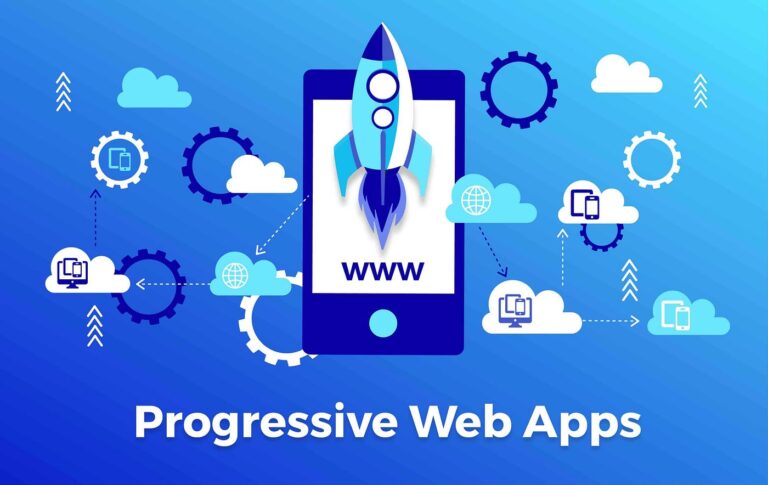
Progressive Web Apps (PWAs): Do they still matter in the native app era?
Progressive Web Apps: The Resilient Evolution of Web Applications in a Native-Dominated World
Introduction: The Crossroads of Web and Native
In the ever-evolving landscape of digital experiences, Progressive Web Apps (PWAs) represent one of the most fascinating and enduring experiments in cross-platform development. Born from Google’s 2015 proposal to bridge the gap between web and native apps, PWAs promised a “best of both worlds” approach: the reach of the web combined with the capabilities of native applications. Nearly a decade later, as native platforms have solidified their dominance through powerful ecosystems and deep device integration, the question emerges: Do PWAs still matter, or are they merely a transitional technology being eclipsed by native supremacy?
This comprehensive examination explores the current state of PWAs, their surprising resilience in specific domains, technical evolution, platform politics, and where they fit in today’s fragmented digital ecosystem.
1. What PWAs Actually Are: Beyond the Buzzword
1.1 Core Principles Revisited
PWAs aren’t a specific technology but a set of principles and capabilities that enable web applications to behave more like native apps:
The Technical Trinity:
Service Workers: JavaScript workers that run independently of web pages, enabling background sync, push notifications, and offline functionality
Web App Manifests: JSON files that define how the app appears to users (icons, splash screens, display modes)
HTTPS: Required for service workers, ensuring secure connections
Progressive Enhancement in Practice:
Baseline: Works as a regular website in any browser
Enhanced: Offers app-like experience on supporting browsers
Installable: Can be “added to home screen” on compatible devices
1.2 The 2024 PWA Feature Set
Modern PWAs have evolved far beyond the 2015 specification:
Advanced Capabilities Now Standard:
File System Access: Reading/writing files via the File System Access API
Web Share: Native sharing dialogs
Badging: App icon badges for notifications
Periodic Background Sync: Updating content even when app isn’t open
Web Bluetooth/NFC: Hardware interaction capabilities
Web Assembly: Near-native performance for compute-intensive tasks
Installation Experience Evolution:
Early: Browser prompt requiring user action
2023+: App Discovery API enables streamlined installation
Digital Goods API: In-app purchases on Android
Shortcuts API: App-like quick actions from home screen
2. The State of PWA Adoption: Success Stories and Silent Revolutions
2.1 Where PWAs Thrive
E-commerce Dominance:
Starbucks: PWA handles 99% of all mobile orders in some markets, 2x faster than previous app
Pinterest: 60% increase in user-generated ad revenue, 44% increase in user engagement
Uber: Lightweight PWA works on any device with any connection (critical for emerging markets)
Tinder: “Tinder Lite” PWA uses 90% less data than native app
Media and Publishing:
Washington Post: 23% increase in mobile search users, 88% faster load times
Forbes: 100% increase in engagement, 43% higher sessions per user
Spotify Web Player: Essentially a PWA that competes with native apps
Enterprise and Internal Tools:
Microsoft Office Web Apps: Essentially PWAs with deep integration
Salesforce Mobile: Hybrid approach for field workers
Google Workspace: Increasingly PWA-driven experience
2.2 The Silent Majority: Hybrid Approaches
Many “Native” Apps Are Actually WebViews:
Cordova/PhoneGap: Still powers thousands of enterprise apps
React Native/Flutter Web: Enable PWA outputs from native-focused frameworks
Capacitor/Ionic: Build once, deploy as PWA and native
Platform-Specific Enhancements:
Microsoft Store: PWAs can be packaged and distributed as Windows apps
Google Play: PWAs accepted via Trusted Web Activities (TWA)
Mac App Store: WebKit-based PWAs can be packaged for distribution
3. Native App Dominance: Why the App Stores Still Rule
3.1 The Unmatched Advantages of Native
Performance Where It Matters:
60 FPS animations: Still more reliable native
Heavy computation: Better threading and memory management
Large file handling: More direct filesystem access
Background processing: More predictable on iOS/Android
Deep Platform Integration:
Biometric authentication: Face ID/Touch ID with better APIs
Health data: Apple HealthKit, Google Fit integration
Payment systems: Apple Pay, Google Pay with one-tap checkout
Hardware access: Full camera controls, sensor data, AR capabilities
Discovery and Monetization:
App Store optimization: Still drives massive discovery
In-app purchase systems: 30% cut but frictionless payment flow
Subscription management: Built-in renewal systems
Enterprise distribution: MDM solutions for business apps
3.2 The Ecosystem Lock-In
Apple’s Walled Garden:
WebKit requirement: All iOS browsers use Apple’s engine
Limited PWA capabilities: Service worker restrictions, no push notifications
Installation friction: No “Add to Home Screen” prompts allowed
2024 development: Apple adding more PWA capabilities but maintaining control
Google’s Dual Strategy:
Android leadership: Best PWA support in Chrome
Play Store integration: TWAs bring PWAs into app ecosystem
Business reality: Native apps still drive Play Store revenue
4. The Technical Evolution: PWAs in 2024 and Beyond
4.1 Capability Projections
2024 Baseline Expectations:
Cross-platform: Work on desktop, mobile, tablets
Offline-first: Robust offline capabilities
Installable: Can be added to home screen/app drawers
Push notifications: On Android and desktop
2025+ Advanced Capabilities (Projected):
WebGPU: High-performance graphics for games and AR
WebNN: Native-like machine learning inference
WebAssembly threads: True parallel processing
Project Fugu APIs: Advanced hardware access (led by Google and Microsoft)
4.2 The Performance Gap Is Narrowing
Speed Comparisons:
Task                    PWA (2024)      Native (2024)
App Launch              1.2-2.5s        0.8-1.5s
60 FPS Animation        ✓ (most)        ✓ (all)
Large List Scrolling    45-55 FPS       55-60 FPS
Image Processing        85% native      100% native
Tools Closing the Gap:
Next.js, Nuxt, SvelteKit: Frameworks with PWA optimization
VitePWA: Automatic service worker generation
Workbox: Advanced caching strategies
Partytown: Moving third-party scripts off main thread
5. The Business Case: When PWAs Make Financial Sense
5.1 Cost and Time Analysis
Development Cost Comparison:
                         PWA             Native (2 platforms)
Initial Development     $50-100K        $150-300K
Annual Maintenance      $20-40K         $60-120K
Time to Market          3-6 months      6-12 months
Update Deployment       Instant         Days (review process)
Total Addressable Market Impact:
PWA: 100% of web users immediately
Native: Requires download, storage space, permissions
Conversion rates: PWAs see 50-70% higher installation than app store downloads
5.2 Specific Business Scenarios Where PWAs Excel
Emerging Markets Strategy:
Data constraints: PWAs can be <1MB vs. native apps 30-100MB
Device limitations: Work on low-end Android devices
Network conditions: Offline-first design crucial for intermittent connectivity
Example: JioMart (India) PWA serves millions with 2G connections
Temporary or Event-Based Applications:
Conferences/Events: Single-use apps not worth app store submission
Marketing campaigns: Short-lived interactive experiences
Elections/polls: Time-bound applications with broad reach needs
Internal Enterprise Tools:
No app store distribution: Bypass MDM and approval processes
Rapid iteration: Update all users instantly
Cross-platform: Work on employee devices regardless of OS
Security: Deploy behind corporate VPN without public exposure
6. Platform Politics: The Battle for Control
6.1 Apple’s Calculated Resistance
The Business Reality:
App Store generated $85.1B in 2023 (services revenue)
30% commission on digital goods
Strategic approach: Slowly adding PWA capabilities while maintaining control
iOS PWA Limitations (2024):
No push notifications (except via Safari)
Limited background sync
No access to some hardware features
Maximum 50MB storage (vs. effectively unlimited for native)
The EU’s Digital Markets Act Impact:
Forcing Apple to allow alternative browser engines
May lead to better PWA support through Chrome/Firefox on iOS
Current status: Apple implementing minimal compliance
6.2 Google’s Progressive Embrace
Android Leadership:
Best PWA support across all platforms
Integration with Google Play via TWA
Business model: Search/ad-driven, not app-store dependent
Microsoft’s Strategic Play:
PWAs in Microsoft Store (1,000+ available)
Edge browser with excellent PWA support
Enterprise focus: PWAs as modern desktop application model
7. Developer Experience and Tooling Evolution
7.1 Modern PWA Development Stack
2024 Recommended Stack:
Framework: Next.js / Nuxt / SvelteKit
PWA Tools: VitePWA / Workbox / PWA Builder
State: TanStack Query / Zustand / Valtio
UI: Tailwind + Headless UI / MUI / Chakra UI
Deployment: Vercel / Netlify / Cloudflare Pages
Analytics: Plausible / Fathom (privacy-focused)
Development Experience Improvements:
Hot reload: Instant updates during development
Testing tools: Cypress, Playwright with PWA support
DevTools: Chrome/Edge have dedicated PWA debugging panels
Audit tools: Lighthouse PWA score (automatic validation)
7.2 The Learning Curve Reality
Web Developer Accessibility:
Frontend developers: Can build PWAs with existing skills
Native developers: Need to learn web technologies
Full-stack advantage: One codebase for web and mobile
Common Pitfalls:
Caching complexity: Service worker strategies can be complex
Cross-browser differences: Especially iOS vs. Android
Storage limitations: Need careful management
Background sync: Implementation varies by platform
8. User Experience: Perception vs. Reality
8.1 The Installation Paradox
User Psychology:
App stores imply quality: Users trust curated stores
“Add to Home Screen” feels ephemeral: Less commitment than download
Discovery problem: How do users find PWAs?
Improving Discoverability:
App-like installation prompts: When engagement thresholds met
Share targets: Can be installed via sharing menu
Search engine integration: Google surfaces installable PWAs in results
QR codes: Physical-to-digital installation triggers
8.2 Performance Perception
The “Good Enough” Threshold:
Most users can’t distinguish between well-optimized PWA and native app
Critical factors: Launch time < 3 seconds, responsive interactions
Network conditions: Offline capability changes perception dramatically
Brand Trust Implications:
Major brands: Users assume quality regardless of technology
Smaller companies: Native apps sometimes perceived as more legitimate
Progressive enhancement: Start as website, offer installation after engagement
9. The Future Trajectory: Three Possible Scenarios
9.1 Scenario 1: Convergence (Most Likely)
The Hybrid Future:
Frameworks like React Native, Flutter output PWAs and native from same codebase
Capacitor/Cordova evolution: Bridge web and native capabilities
Web standards: Continue expanding to match native APIs
Result: Distinction blurs further, choice becomes implementation detail
9.2 Scenario 2: Specialization
Each Finds Its Niche:
PWAs: Broad-reach applications, emerging markets, enterprise tools
Native: Performance-critical apps, hardware-intensive use cases, games
Web: Content consumption, discovery, first touchpoint
Result: Technology choice driven by specific requirements
9.3 Scenario 3: Platform Revolution
Regulatory or Market Shifts:
DMA enforcement: Forces Apple to allow competing browser engines
Market saturation: App store growth slows, alternatives emerge
Web standards leapfrog: Project Fugu delivers parity with native
Result: PWAs become primary mobile application model
10. Strategic Recommendations for 2024-2025
10.1 When to Choose PWAs
Strong PWA Candidates:
Content-first applications: News, media, blogs
E-commerce platforms: Especially with broad target demographics
Enterprise/internal tools: Where control and rapid iteration matter
Emerging market focus: Limited data, diverse devices
Cross-platform minimum viable products: Test market before native investment
PWA Success Checklist:
Target users primarily on Android/desktop
Content updates frequently
Broad accessibility more important than deep platform integration
Development resources favor web expertise
App store presence not critical for discovery
10.2 When Native Still Wins
Native-First Scenarios:
Performance-critical applications: Games, AR, video processing
Deep hardware integration: Health sensors, advanced camera usage
iOS-primary audiences: Especially in developed markets
App store-centric discovery: Games, lifestyle categories
Complex offline requirements: Large database sync, extensive local processing
10.3 The Hybrid Approach
Modern Best Practice:
Start with PWA: Reach all users immediately
Measure engagement: Identify power users
Add native selectively: For features requiring platform capabilities
Share codebase: Use React Native/Flutter for shared logic
Progressive enhancement: PWA as baseline, native as premium experience
Conclusion: PWAs as Resilient, Evolving Solution
Progressive Web Apps have not just survived the native app era—they’ve evolved into a sophisticated, capable platform that addresses specific but significant segments of the application market. Rather than being eclipsed by native apps, PWAs have found their equilibrium: not as a replacement for native, but as a complementary technology that excels in particular contexts.
The 2024 reality is that PWAs matter tremendously for:
Businesses prioritizing reach over depth
Markets constrained by data, device, or connectivity limitations
Enterprise environments requiring control and rapid iteration
Applications where the web’s linkability and searchability provide strategic advantages
As Alex Russell, who coined the term “Progressive Web App,” reflects: “PWAs were never about replacing native apps. They’re about extending the reach of the web to app-like use cases, particularly where native apps fail—in emerging markets, for ephemeral needs, for enterprises that need to move fast.”
The most successful digital strategies in 2024 don’t choose between PWA and native—they understand how to deploy each where it excels. The Starbucks approach (PWA for ordering, native for loyalty features) represents this sophisticated understanding: using technology strategically based on user needs and business objectives rather than ideological purity.
For developers, the PWA landscape offers exciting opportunities: the chance to build applications that work everywhere while leveraging constantly improving capabilities. For businesses, PWAs provide a cost-effective way to reach broad audiences with quality experiences. For users, PWAs offer lightweight, instantly accessible applications that respect their device storage and data plans.
The question isn’t whether PWAs still matter, but where they matter most. In an increasingly fragmented digital world where no single technology dominates all use cases, PWAs have secured their place as a vital tool in the application development toolbox—not the only tool, but an essential one for specific, important jobs.
As web capabilities continue their rapid advancement and platform politics evolve through regulatory pressure, PWAs will likely gain even more ground in the coming years. But their true victory isn’t in “beating” native apps—it’s in creating a web that can do more, for more people, in more contexts than ever before.
2024 PWA Decision Framework
Choose PWA When:
Target includes emerging markets
Development resources favor web technologies
Rapid iteration is critical
App store distribution isn’t primary discovery channel
Offline capability is valuable but complex sync isn’t required
Choose Native When:
Deep iOS integration needed
Performance is critical competitive advantage
App store discovery is primary user acquisition channel
Complex background processing required
AR/VR or advanced gaming features needed
Consider Hybrid When:
Audience spans both sophisticated and emerging markets
Both broad reach and deep engagement matter
Development team has both web and native expertise
Budget allows for phased feature development
Some features require native capabilities while others don’t
Resources for 2024 PWA Development
Official Documentation:
pwafire.org (curated resources)
Tools and Frameworks:
VitePWA: vite-plugin-pwa
Workbox: Google’s service worker library
PWA Builder: Microsoft’s toolchain
Bubblewrap: TWA generator for Play Store
Community and Support:
Stack Overflow #progressive-web-apps
Fugu API Tracker: chromestatus.com/features
Testing and Auditing:
Lighthouse PWA audits
PageSpeed Insights
WebPageTest with PWA analysis
PWAs represent the web’s enduring adaptability—not a revolution that failed, but an evolution that succeeded precisely by finding its niche rather than claiming the whole territory.