AMD vs. Intel: The State of the CPU Battle in 2024
From Monopoly to Duel: How Competition Reshaped Computing
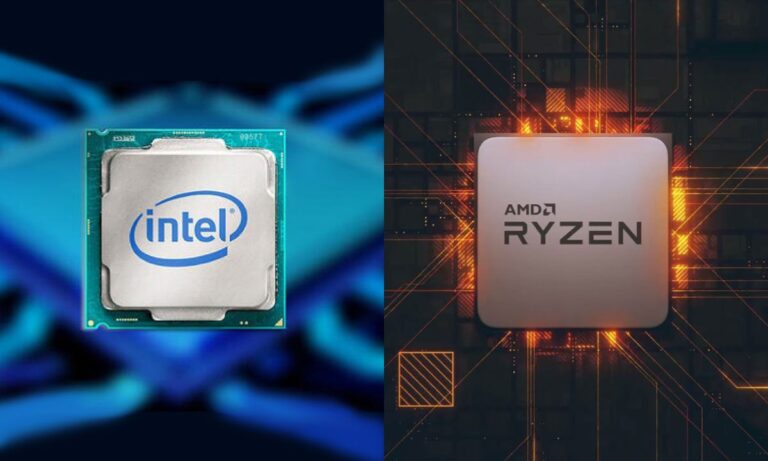
For decades, the central processing unit (CPU) landscape was a predictable, one-sided affair. Intel held a near-monopoly, setting the pace for performance and commanding premium prices. AMD was the perennial underdog, often playing catch-up. This dynamic has been completely upended. Starting with its revolutionary Zen architecture in 2017, AMD began a relentless climb, forcing Intel—for the first time in years—to truly innovate and compete on both performance and price.
Today, we are in a golden age of processor competition. The question is no longer “Which company is better?” but “Which company’s philosophy and specific product is better for my needs?” This guide cuts through the marketing to analyze the current state of the AMD vs. Intel rivalry, examining their architectures, product stacks, and ideal use cases to help you make an informed decision.
Core Philosophies: Two Different Paths to Performance
Understanding the fundamental strategies of each company is key to decoding their product lines.
AMD’s “Chiplet” Design (Zen 4 Architecture):
AMD pioneered the chiplet approach for consumer CPUs. Instead of building one large, monolithic piece of silicon, they create smaller, optimized “chiplets.”
Core Compute Dies (CCDs): These contain the CPU cores and their cache. AMD can connect multiple CCDs to one processor, efficiently scaling core counts (as seen in the Ryzen 9 7950X with its 16 cores).
I/O Die: A separate chiplet handles communication with memory, PCIe lanes, and other system components.
Advantages: More cost-effective manufacturing, easier scalability to high core counts, and potential for mixing different chiplet technologies in the future.
Platform: AM5 socket (new for Ryzen 7000/8000 series), requiring DDR5 memory and PCIe 5.0 support as a baseline.
Intel’s “Performance Hybrid” Architecture (Raptor Lake & Meteor Lake):
Intel’s response focuses on a hybrid design within a monolithic die, reminiscent of smartphone CPUs.
Performance Cores (P-cores): These are traditional, high-powered cores designed for heavy lifting in gaming, content creation, and single-threaded tasks.
Efficiency Cores (E-cores): These are smaller, lower-power cores designed to handle background tasks and multi-threaded workloads efficiently, freeing up P-cores for priority work.
Advantages: Intelligent thread scheduling via the Thread Director (in Windows 11), potentially better power efficiency in mixed workloads, and strong single-threaded performance from the P-cores.
Platform: LGA 1700 socket for 13th/14th Gen Core; new LGA 1851 for upcoming Core Ultra. Supports both DDR4 and DDR5 (depending on motherboard).
The Desktop Battlefield: Segment by Segment
1. Mainstream Gaming & Performance (Ryzen 5/7 vs. Core i5/i7)
This is the fiercest battleground, encompassing most PC builders.
AMD’s Play: The Ryzen 7 7800X3D is the uncontested king of pure gaming performance. Its secret weapon is 3D V-Cache—a massive pool of L3 cache stacked directly on the chip—which dramatically accelerates game engines. For generalists, the Ryzen 5 7600 offers superb gaming and multi-threading at a great price, with a clear upgrade path on the AM5 platform for years.
Intel’s Play: The Core i7-14700K is a multi-threading monster, offering 20 cores (8P+12E) that excel in productivity tasks like video editing, coding, and streaming while still delivering top-tier gaming fps. The Core i5-13600K/14600K remains one of the best all-around value CPUs, blending strong gaming with excellent multi-core performance.
Verdict: For a dedicated gaming rig, the 7800X3D is untouchable. For a hybrid gaming/streaming/productivity workstation, the 14700K has a compelling core count advantage.
2. High-End Desktop & Content Creation (Ryzen 9 vs. Core i9)
Here, core counts and raw multi-threaded throughput are paramount.
AMD’s Play: The Ryzen 9 7950X offers 16 high-performance Zen 4 cores in a traditional layout. It excels in heavily multi-threaded professional applications like Blender, Handbrake, and software compilation. Its platform (AM5) is newer and promises longer-term support.
Intel’s Play: The Core i9-14900K pushes clock speeds to the extreme, currently holding the title for highest single-threaded performance. Its hybrid design gives it a high total thread count (24 cores: 8P+16E), making it highly competitive in many multi-threaded apps, though its E-cores are less powerful than AMD’s full cores.
Verdict: Extremely close. The 7950X often runs cooler and more efficiently. The 14900K can edge it out in some applications but consumes significantly more power. Platform longevity favors AMD; raw peak performance in some tasks favors Intel.
3. Budget & Entry-Level (Ryzen 5/3 vs. Core i3)
AMD’s Play: The Ryzen 5 5600 (on previous-gen AM4) is the legendary budget king. With a cheap motherboard and DDR4 RAM, it delivers phenomenal 1080p gaming performance for minimal cost.
Intel’s Play: The Core i3-14100 offers excellent single-threaded performance for its class. However, the value of the older AM4 platform from AMD is very hard to beat for a true budget build.
Verdict: AMD’s AM4 platform (Ryzen 5000 series) dominates the budget segment due to its mature, inexpensive ecosystem.
The Laptop Landscape: Efficiency Meets AI
In laptops, the dynamics shift toward power efficiency and integrated graphics.
AMD Ryzen 7040/8040 Series: Famous for excellent battery life and a powerful integrated Radeon GPU (RDNA 3 architecture), which is superior for light gaming without a discrete graphics card. Its Ryzen AI engine (in select models) is a first for x86 laptops.
Intel Core Ultra (Meteor Lake): This is Intel’s major architectural shift for 2024 laptops. It emphasizes AI acceleration (via a dedicated NPU), dramatically improved Arc-integrated graphics (competitive with AMD’s), and a focus on power efficiency to challenge AMD’s battery life lead. It represents Intel’s most complete response to AMD’s mobile advantages.
Verdict: For traditional CPU performance and battery life, AMD still holds an edge. For the latest AI capabilities and a well-rounded package with much-improved graphics, Intel Core Ultra is a compelling new option. The laptop space is now more competitive than ever.
The Platform & Ecosystem Factor
Motherboard & Upgrade Path: AMD wins on platform stability. Their AM5 socket is new and will support future Ryzen CPUs for years, offering a clear upgrade path. Intel’s LGA 1700 socket is at its end with the 14th Gen, requiring a new motherboard for the next upgrade.
Overclocking: Both offer unlocked “K” (Intel) and “X” (AMD) processors for overclocking. Intel traditionally has more headroom for manual tuning, while AMD’s Precision Boost Overdrive (PBO) is a very effective automated overclock.
Power & Heat: AMD’s 5nm process node (for Ryzen 7000) is generally more efficient than Intel’s Intel 7 process. High-end Intel CPUs (i9, i7) can consume vastly more power under load, requiring robust cooling solutions.
Summary & Recommendation Table
Conclusion: A Victory for Consumers
The greatest takeaway from the current CPU war is that there are no bad choices, only different optimal choices. AMD holds leads in gaming specialization (X3D), platform longevity, and power efficiency. Intel counters with blistering single-threaded speed, compelling hybrid core counts in the mid-range, and a bold new mobile architecture.
Your decision should hinge on your specific workflow, budget, and plans for future upgrades. For the first time in a long while, you can choose based on your needs, not brand loyalty, knowing that fierce competition will keep both companies innovating and prices in check for the foreseeable future. This is the new, healthy normal—and the consumer is the ultimate winner.