Header Bidding Explained: How It Works and Why It Increases Revenue
Introduction: The Auction That Changed Digital Advertising
Imagine you are a publisher with valuable ad space on your website. In the traditional way of doing things, you would approach potential buyers one at a time, in a fixed order. You ask your preferred partner first. If they pass or offer too low, you move to the next. And the next. By the time you reach the fifth buyer, they might have paid a premium price—but you never gave them the chance because you ran out of inventory before getting to them.
This was the reality of digital advertising before header bidding. Publishers left millions of dollars on the table simply because of the order in which they asked buyers to bid .
Header bidding—also known as “advance bidding” or “pre-bidding”—emerged around 2015 as a revolutionary solution to this inefficiency . It allows publishers to offer their ad inventory to multiple demand sources simultaneously, creating a unified auction where all buyers compete in real-time . The result? Higher revenue, better fill rates, and a level playing field for advertisers of all sizes.
This guide provides a complete, in-depth explanation of header bidding: how it works, why it increases revenue, the technical implementation options, and what publishers need to know to succeed in 2026.
Part 1: The Problem That Header Bidding Solved
1.1 The Waterfall Model: Sequential and Inefficient
Before header bidding, publishers used a method called the waterfall model (also known as daisy-chaining) to sell their ad inventory . This approach worked like this:
Publishers ranked their demand partners (ad networks, exchanges, DSPs) in a priority order based on historical performance or negotiated rates
When a user visited a page, the publisher sent an ad request to the highest-priority partner first
If that partner declined or bid below the publisher’s floor price, the request “cascaded” down to the next partner
This continued until a buyer took the impression or the list was exhausted
The cupcake analogy: Imagine you have a tray of cupcakes to sell. You offer them to your favorite shop first. They say no. You lower the price and move to your second favorite. They also say no. You keep lowering the price and moving down the list. Eventually, your fifth-choice shop buys them—but they would have paid a higher price had you gone to them first. The waterfall ensured you never found out .
1.2 The Three-Body Problem: Why Waterfalls Fail
The waterfall model had fundamental flaws that cost publishers dearly:
Studies indicate that over 70% of digital publishers have now shifted away from pure waterfall approaches to capture the revenue benefits of header bidding . The inefficiency was simply too costly to ignore.
Part 2: What Is Header Bidding? The Core Concept
2.1 A Simple Definition
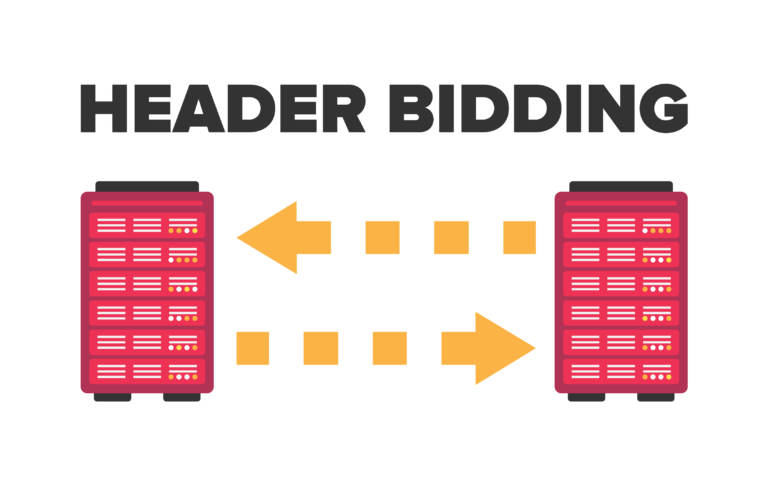
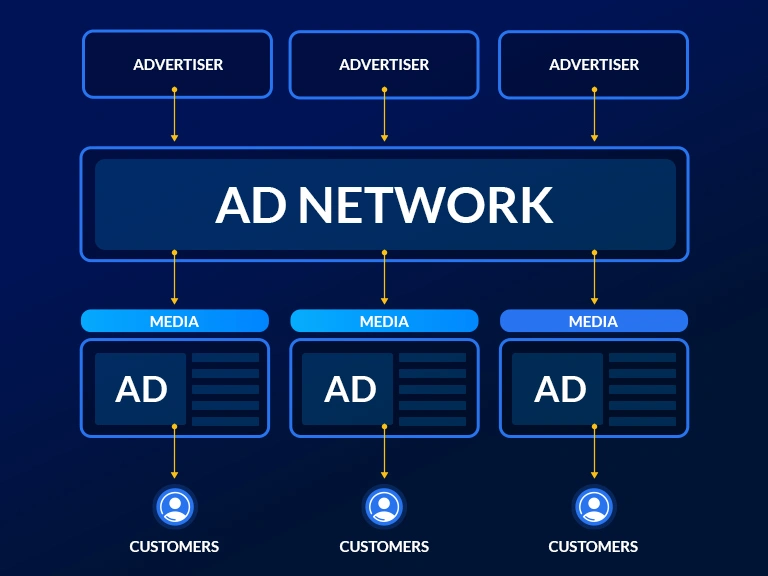
Header bidding is a programmatic advertising technique that allows publishers to offer their ad inventory to multiple demand sources simultaneously, before calling their primary ad server . All buyers compete for each impression in a single, unified auction that runs in milliseconds.
The name comes from the technical implementation: the auction code is placed in the header of a webpage, where it executes before the page content fully loads . For mobile apps, the concept is the same—it’s become a catch-all term for any process that gets simultaneous bids from multiple advertisers, even though apps don’t have traditional “headers” .
2.2 The Auction House Analogy
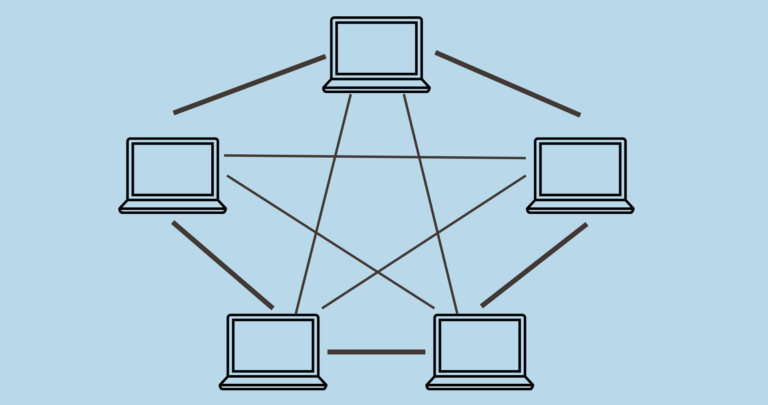
Think of a real-time auction house where everyone shouts their bids at once. Unlike a traditional auction where bids are taken one by one, header bidding allows all participants to place their offers simultaneously. The highest bid wins instantly, ensuring the seller gets the best possible price .
This is the fundamental shift: from sequential, “ask-one-at-a-time” selling to parallel, “ask-everyone-at-once” competition.
2.3 Key Terminology
Before diving deeper, here are essential terms every publisher should know :
Part 3: How Header Bidding Works – A Step-by-Step Walkthrough
3.1 The Technical Flow
When a user loads a page with header bidding implemented, the following sequence occurs in milliseconds :
Step 1: User requests the website
The user’s browser sends a request to the publisher’s server for the webpage.
Step 2: Page loads, header bidding script activates
The HTML response includes a header bidding wrapper (often Prebid.js) in the <head> section. As the browser parses the page, this script executes .
Step 3: Simultaneous bid requests
The wrapper sends bid requests to multiple demand partners simultaneously—including SSPs, DSPs, ad exchanges, and ad networks .
Step 4: Partners evaluate and return bids
Each demand partner evaluates the impression opportunity (considering the user, page context, targeting parameters, etc.) and returns a bid. This typically happens within a configured timeout window of 500–2000 milliseconds .
Step 5: Auction within the wrapper
The header bidding wrapper collects all incoming bids, compares them, and identifies the highest bidder .
Step 6: Bid passed to ad server
The winning bid information (price and partner) is passed to the publisher’s primary ad server (e.g., Google Ad Manager) as part of the regular ad call .
Step 7: Final auction with direct demand
The ad server now runs its own auction, comparing the header bidding winner against:
Direct-sold campaigns (highest priority)
Guaranteed deals
Private marketplace (PMP) deals
The ad server’s own exchange (e.g., AdX)
Step 8: Winning ad served
The highest overall value wins, and the corresponding creative is served to the user.
3.2 Visualizing the Process
User → Page Request → Header Bidding Wrapper Activates
                              ↓
              ┌──────────────┼──────────────┐
              ↓              ↓              ↓
         SSP/DSP 1      SSP/DSP 2      SSP/DSP 3
              ↓              ↓              ↓
              └──────────────┼──────────────┘
                              ↓
                    Highest Bid Identified
                              ↓
                    Bid Passed to Ad Server
                              ↓
            Compete with Direct/Guaranteed Demand
                              ↓
                    Winning Ad Served to User
3.3 The Critical Timing: Pre-Ad Server
The defining characteristic of header bidding is that it happens before the call to the primary ad server . This “pre-bid” placement is what gives the technique its power. By gathering real bids from multiple sources upfront, publishers ensure their ad server makes decisions with complete market information, not just a single prioritized offer.
Part 4: Types of Header Bidding – Client-Side, Server-Side, and Hybrid
Publishers can implement header bidding in three primary ways, each with distinct trade-offs.
4.1 Client-Side Header Bidding
How it works: The auction runs directly in the user’s browser using JavaScript (typically Prebid.js) .
Advantages:
✅ Transparency: Full access to all bid data and responses
✅ Control: Direct management of which partners participate
✅ Data richness: Access to browser cookies and user context for targeting
✅ Simplicity: Easier to set up initially for technical teams
Disadvantages:
❌ Latency impact: Multiple browser connections can slow page load
❌ Browser limitations: Concurrent connection limits restrict how many partners can bid
❌ User experience risk: Poorly configured auctions can delay content rendering
4.2 Server-Side Header Bidding (S2S)
How it works: The auction takes place on an external server, not the user’s browser. The publisher sends a single request to a centralized system that handles communication with all demand partners .
Advantages:
✅ Speed: Reduced browser workload, faster page loads
✅ Scalability: No browser connection limits—can include unlimited partners
✅ Mobile-friendly: Ideal for in-app and mobile web environments
✅ Performance: Server-side processing can be 200ms faster than client-side
Disadvantages:
❌ Limited data: No access to browser cookies, potentially reducing bid values
❌ Less transparency: Reduced visibility into auction details
❌ Dependency: Greater reliance on the server provider
4.3 Hybrid Header Bidding
How it works: A combination approach where some partners bid client-side while others participate server-side .
Advantages:
✅ Best of both worlds: Balance transparency with speed
✅ Flexibility: Assign partners based on their needs (data-rich client-side, performance-focused server-side)
✅ Optimization potential: Run complex scenarios efficiently
Disadvantages:
Current trend: As of 2026, hybrid approaches are increasingly popular, particularly for large publishers who can manage the complexity . Server-side header bidding is also gaining traction for mobile, CTV, and OTT inventory where performance is critical .
Part 5: Why Header Bidding Increases Revenue – The Mechanisms
This is the core question for every publisher. The revenue increase from header bidding is not hypothetical—it is consistently documented and substantial.
5.1 The Revenue Impact Numbers
5.2 The Seven Drivers of Higher Revenue
1. Simultaneous Competition Creates True Market Value
In a waterfall, advertisers in later positions never get to bid. In header bidding, every demand source sees every impression . This means the true highest bidder always has an opportunity to win, rather than only the first in line.
The math: If you have 10 demand partners and the highest bidder is #8 in your waterfall, you never see their bid. Header bidding ensures you capture that value .
2. Advertisers Bid Their Best Price
When advertisers know they’re competing in a simultaneous auction, they bid their true maximum. In waterfalls, savvy advertisers learned to bid low early, knowing they’d get cheaper opportunities later . Header bidding eliminates this gaming.
3. Elimination of “Passbacks” and Waste
In waterfall setups, impressions often went unsold after working through a long chain of partners—each “passback” consuming time and ad server resources. Header bidding’s simultaneous approach dramatically improves fill rates because multiple partners can bid on every impression .
4. Flattening the Waterfall Solves the Pricing Blindness Problem
Consider this scenario from Ad Ops Insider :
An SSP bids between $0.50 and $5.00 per impression, averaging $2.00
In a waterfall, AdX (your ad server’s exchange) wins every impression over $2.00
But what if the SSP would have paid $4.50 for some of those impressions? You’ll never know
Similarly, impressions where AdX would pay $1.50 but the SSP would pay nothing—or far below their average—are also mismanaged
Header bidding solves this by revealing the true bid for every impression .
5. Reduced Dependency on Any Single Partner
Waterfall setups create unhealthy dependence on top partners. If your primary demand source reduces spending or underperforms, revenue drops sharply . Header bidding diversifies demand across multiple partners, creating stability and reducing risk.
6. Better Data for Optimization
Every header bidding auction generates valuable data: which partners bid, how much they bid, how often they win, and how quickly they respond . Publishers can use this data to:
Remove underperforming partners
Adjust timeout settings for optimal balance
Set strategic price floors
Negotiate better terms with high-performing partners
7. Price Floor Optimization
With full visibility into bid distributions, publishers can set unified price floors that reflect true market value . Dynamic floors—adjusted by device, geography, or time of day—further maximize yield.
Part 6: Implementation Considerations and Challenges
6.1 Technical Complexity
Header bidding requires significant technical investment, particularly for initial setup .
Setup requirements:
Integrating wrapper code (e.g., Prebid.js)
Configuring demand partner connections
Setting timeout parameters (typically 1,000–2,000ms)
Establishing price floors
Testing and quality assurance
For large publishers, this may require dedicated ad operations and engineering resources. Smaller publishers often rely on managed services or platform partnerships .
6.2 Latency Management
The trade-off: Longer timeouts allow more bids but slow page loads. Shorter timeouts improve user experience but may miss valuable bids .
Best practices:
Start with 1,500ms and adjust based on response rate data
Monitor page load metrics (Core Web Vitals)
Implement asynchronous loading so ads don’t block content
Consider server-side or hybrid approaches for high-traffic properties
Server-side optimization can reduce response times by up to 200ms, significantly improving user experience .
6.3 Partner Management
More demand partners mean more complexity. Each partner requires configuration, testing, and ongoing optimization .
Optimal partner count: Most publishers see best results with 5–12 demand partners . Quality matters more than quantity—focus on partners with strong fill rates and competitive bids.
6.4 The Duplicate Bid Request Problem
Header bidding created an unexpected side effect: bid duplication. When publishers ping multiple SSPs simultaneously, the same impression can generate multiple identical requests across the ecosystem .
The scale: PubMatic processed 56 trillion impressions in Q3 2022 alone—approximately 7,000 ads for every person on Earth—indicating massive duplication .
Publisher responses:
Bid throttling: Limiting requests when an ad slot receives 20+ “no bids”
Inventory throttling: Deciding which ad slots even enter programmatic auctions
Server-side wrappers: Managing traffic and demand rotation internally
6.5 Fraud Exposure and Prevention
Header bidding increases fraud exposure because every impression generates bid requests to multiple exchanges. If publishers don’t filter invalid traffic before auctions, fraudulent impressions multiply across all demand partners .
Pre-bid filtering is essential. Solutions like Programmatic IVT Detection identify and block:
Implementing pre-bid protection ensures only legitimate impressions reach demand partners, protecting both revenue and advertiser relationships .
Part 7: Benefits for Advertisers (Not Just Publishers)
While header bidding is primarily a publisher technology, advertisers gain significant advantages from its transparent, competitive structure .
7.1 Access to Premium Inventory
In waterfall systems, many high-value placements were reserved for direct deals or preferred partners. Header bidding opens this inventory to all buyers, giving advertisers equal access to valuable impressions .
7.2 Fair Competition
Since all bidders enter the auction simultaneously, no single demand source receives priority. Advertisers compete based on bid strength and targeting strategy, not platform bias .
7.3 AI-Powered Targeting
Modern advertising platforms use custom algorithms to analyze impression data instantly—user behavior, context, historical performance—and adjust bids for maximum efficiency .
7.4 Granular Reporting and Visibility
Every auction produces detailed data about bids, win rates, and performance metrics. Advertisers can analyze this data to refine future strategies and improve decision-making precision .
7.5 The Buyer’s Risk: Bidding Against Yourself
One caution: because the same impression may be available through multiple marketplaces simultaneously, advertisers could theoretically bid against themselves if not careful . Sophisticated buyers manage this through deduplication strategies.
Part 8: The Future of Header Bidding – 2026 and Beyond
8.1 Server-Side Expansion
Server-side header bidding is gaining significant traction, particularly for:
8.2 Identity Solutions
With third-party cookies deprecated, header bidding must adapt. Publishers are implementing:
Identity hubs that support multiple ID solutions
First-party data strategies
Unified ID solutions (UID2, LiveRamp RampID)
8.3 Hybrid Models Dominate
Most sophisticated publishers now use hybrid configurations—client-side for partners needing rich data, server-side for performance and scale .
8.4 AI and Machine Learning Integration
AI technologies are increasingly integrated with header bidding for :
Real-time yield optimization
Predictive bidder behavior analysis
Dynamic partner inclusion
Automated price floor adjustments
8.5 Continued Coexistence with Waterfall
Header bidding won’t completely replace waterfalls. Many publishers maintain compressed waterfalls for :
The most effective strategies combine both approaches—using waterfalls for predictable, high-value relationships while header bidding maximizes yield on remaining inventory.
Part 9: Publisher’s Decision Framework – Is Header Bidding Right for You?
9.1 When Header Bidding Makes Sense
9.2 Implementation Approaches by Publisher Size
9.3 Best Practices Summary
Start small – Begin with 3–5 trusted partners, expand as you optimize
Optimize timeouts – Balance revenue and user experience through testing
Set strategic price floors – Use historical data; consider dynamic floors
Monitor relentlessly – Track partner performance, bid rates, win rates
Implement pre-bid filtering – Protect against invalid traffic
Test new partners incrementally – Don’t add many at once
Part 10: Conclusion – The Auction That Levels the Playing Field
Header bidding transformed digital advertising by solving a fundamental inefficiency: sequential auctions that left money on the table. By enabling simultaneous competition among all demand sources, it ensures that every impression reaches its true market value.
For publishers, header bidding delivers:
20–50% revenue increases
Better fill rates and reduced waste
Transparency into true demand
Independence from single-platform dependence
For advertisers, it provides:
Equal access to premium inventory
Fair competition based on bid strength
Granular data for optimization
The technology continues to evolve. Server-side implementations reduce latency. Identity solutions adapt to a cookieless world. AI optimizes auctions in real-time. Hybrid models balance transparency with performance.
Header bidding is no longer experimental—it is an essential strategy for any serious publisher . The question is not whether to implement it, but how to implement it optimally for your specific audience, resources, and goals.
In the end, header bidding does something rare in advertising technology: it creates a win-win-win. Publishers earn more. Advertisers compete fairly. Users see more relevant ads faster. And the entire ecosystem operates with greater transparency and efficiency.
The auction is open. Everyone bids at once. The highest offer wins. That’s header bidding.