Ad Networks for Mobile Apps: Comparing AdMob, Unity Ads, and ironSource in 2026
Introduction: The Three Pillars of Mobile Monetization
If you are developing a mobile app in 2026, your monetization strategy will almost certainly involve one of three names: Google AdMob, Unity Ads, or ironSource. These platforms dominate the mobile advertising landscape, but they serve fundamentally different purposes and excel in different contexts.
Consider the data: among gaming apps, 72.95% integrate AdMob, 53.37% use Unity Ads, and 28.15% have adopted ironSource . In non-gaming apps, AdMob’s lead grows even larger at 79.41% , while Unity Ads drops to 14.5% and ironSource to 8.02% . These adoption rates tell a story of specialization—AdMob as the universal foundation, Unity Ads as the gaming specialist, and ironSource as the mediation powerhouse.
But adoption alone doesn’t determine the right choice for your app. Each platform offers distinct advantages, technical requirements, and optimal use cases. This guide provides a comprehensive, data-driven comparison of AdMob, Unity Ads, and ironSource in 2026, helping you understand their strengths, limitations, and how they can work together in a modern mediation stack.
Part 1: The Mobile Ad Network Landscape in 2026
1.1 Why These Three Dominate
The mobile advertising ecosystem has matured significantly. While dozens of networks exist, AdMob, Unity Ads, and ironSource consistently rank as the top choices for developers . Their dominance stems from three factors:
1.2 Market Share and Mindshare
According to PeerSpot’s App Monetization Platforms category, current mindshare breaks down as :
This distribution reflects AdMob’s position as the default choice for most developers, Unity’s strength in gaming, and ironSource’s specialized role in advanced mediation strategies.
Part 2: Google AdMob – The Universal Foundation
2.1 Overview and Market Position
Google AdMob is the mobile advertising platform built specifically for app developers, backed by Google’s massive advertising ecosystem . Unlike general ad networks, AdMob is designed from the ground up for in-app monetization, supporting a comprehensive range of ad formats and integration options.
Key differentiator: AdMob leverages Google’s machine learning algorithms to optimize ad serving based on user behavior, automatically adjusting which ads are shown to maximize revenue potential .
2.2 Supported Ad Formats
AdMob offers the full spectrum of mobile ad formats :
2.3 Technical Integration
AdMob supports both Android and iOS platforms, enabling cross-platform monetization through a single Google account . For developers already using AdSense for web monetization, AdMob offers seamless integration and consolidated earnings management.
Key technical features:
Smart AI placement detection: Automatically identifies optimal ad positions
Real-time bidding across Google’s advertiser network
Detailed analytics through Google Analytics integration
Ad mediation support for linking other networks
2.4 Strengths and Limitations
2.5 Who Should Choose AdMob
AdMob is ideal for:
New developers seeking a reliable, easy-to-implement foundation
Non-gaming apps (utilities, lifestyle, entertainment)
Global apps requiring broad geographical fill rates
Developers already in Google’s ecosystem (Firebase, Analytics, AdSense)
Real-world adoption: AdMob’s 72.95% penetration in gaming apps and 79.41% in non-gaming apps demonstrates its role as the universal starting point .
Part 3: Unity Ads – The Gaming Specialist
3.1 Overview and Market Position
Unity Ads was purpose-built for monetizing mobile games, with deep integration into the Unity game development engine . Despite developer frustrations in 2023–2024, Unity Ads retains its central role in hybrid-casual and mid-core game monetization .
Key differentiator: Unity Ads understands game flow intrinsically, enabling ad placements that feel like natural extensions of gameplay rather than interruptions.
3.2 Supported Ad Formats
Unity Ads focuses on formats that complement gaming experiences :
3.3 The 2026 Transition: From Waterfall to Bidding
Critical update for 2026: As of January 31, 2026, Unity Ads now only supports bidding, with waterfall instances fully deprecated . This transition is mandatory—after this date, remaining waterfall instances will no longer deliver ads.
The results of this transition have been dramatic :
Migration requirements:
SDK version 4.11.3 or later (recommended: 4.16.5)
Direct conversion from Unity Dashboard
Supports interstitial, rewarded, and banner formats
3.4 Technical Integration
Unity Ads is compatible with iOS and Android platforms, and supports all major game engines including Adobe Air, Marmalade, and Corona . The SDK provides near-instantaneous reporting through an easy-to-view dashboard.
Recent SDK improvements (2025-2026):
3.5 Strengths and Limitations
3.6 Who Should Choose Unity Ads
Unity Ads is ideal for:
Unity-based game developers seeking seamless integration
Hybrid-casual and mid-core games where rewarded video drives revenue
Developers willing to adopt bidding for maximum performance
Games targeting engaged player monetization rather than broad reach
Real-world adoption: Unity Ads maintains 53.37% penetration in gaming apps, second only to AdMob .
Part 4: ironSource – The Mediation Powerhouse
4.1 Overview and Market Position
ironSource (now part of Unity’s LevelPlay platform) is not just an ad network—it’s a mediation platform designed to maximize yield by aggregating demand from multiple sources . Its strength lies in sophisticated optimization for developers running aggressive user acquisition cycles .
Key differentiator: ironSource LevelPlay enables integration of multiple ad networks under one roof, with real-time analytics and A/B testing to optimize performance across demand sources .
4.2 The LevelPlay Platform
ironSource has evolved into Unity LevelPlay, a comprehensive mediation solution that combines :
4.3 Recent Technical Developments
The ironSource SDK (now LevelPlay SDK) has seen continuous improvements :
Important branding note: All public-facing APIs have been refactored from IronSource to LevelPlay for enhanced clarity and consistency .
4.4 Developer Community Feedback
The Unity Discussions forum reveals real-world experiences with ironSource/LevelPlay :
These community insights highlight that while ironSource offers powerful tools, implementation and account management require careful attention.
4.5 Strengths and Limitations
4.6 Who Should Choose ironSource
ironSource is ideal for:
Established game studios with multiple titles
Developers running aggressive UA cycles needing maximum yield
Apps with significant traffic volume (mediation requires scale)
Teams with dedicated ad operations resources
Developers wanting to diversify demand beyond single networks
Real-world adoption: ironSource maintains 28.15% penetration in gaming apps, concentrated among studios built around aggressive user acquisition .
Part 5: Side-by-Side Comparison
Part 6: Strategic Integration – Why You Need All Three
The most sophisticated mobile app monetization strategies do not choose between these platforms—they combine them through mediation.
6.1 The Mediation Advantage
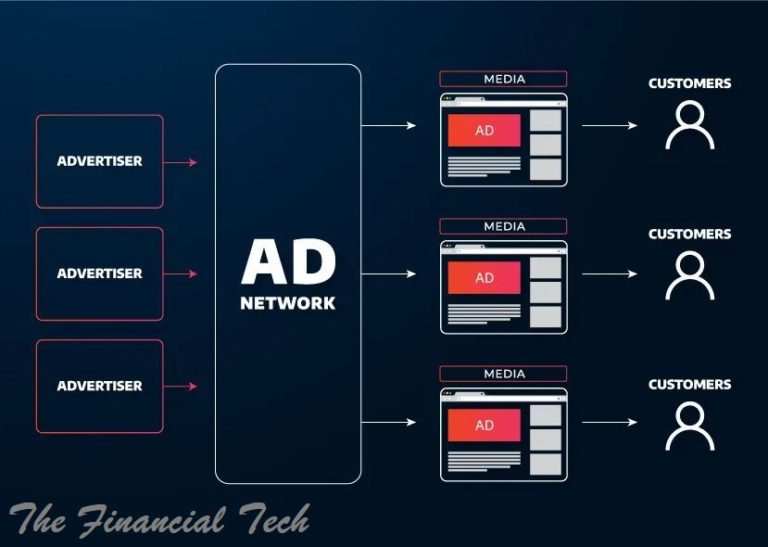
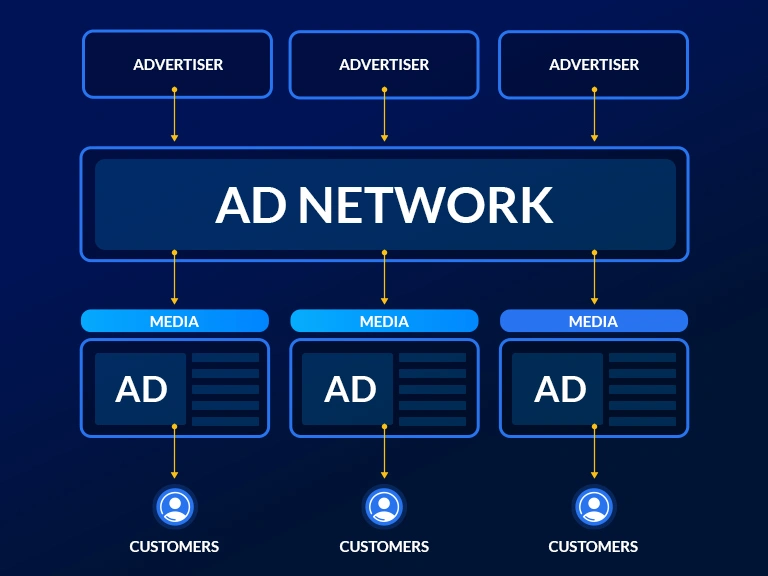
Relying on a single ad network caps your revenue potential. Mediation platforms like ironSource LevelPlay, AppLovin MAX, or AdMob Mediation allow you to integrate multiple networks and let them compete for each impression .
How mediation works:
Your app sends a single ad request to the mediation platform
The platform requests bids from all integrated networks simultaneously
The highest bid wins the impression
Competition drives up eCPMs across all demand sources
6.2 Building Your Optimal Stack
Based on adoption data and platform strengths, an optimal mobile app monetization stack might look like:
This layered approach—using AdMob for scale, Unity Ads for gaming performance, and ironSource for mediation—represents the strategy of top-performing apps .
6.3 The 20-35% Revenue Opportunity
The Unity Ads bidding migration data illustrates the power of competition: moving from waterfall to bidding (where networks compete in real-time) generated 20% average daily revenue growth and 35% higher eCPMs for US apps . Mediation through ironSource extends this competitive dynamic across multiple networks, amplifying the effect.
Part 7: Strategic Recommendations by App Type
7.1 New Apps and Beginners
Recommended approach: Start with AdMob alone.
AdMob’s ease of implementation, comprehensive documentation, and reliable payments make it the ideal starting point . Focus on:
Properly implementing ad placements
Understanding your user behavior
Building a baseline revenue stream
Once you have consistent traffic and baseline data, add mediation.
7.2 Unity-Based Games
Recommended approach: AdMob + Unity Ads + Mediation.
Unity Ads’ deep engine integration and superior rewarded video performance make it essential for Unity games . However, don’t stop there:
Implement AdMob for broad demand
Add Unity Ads for gaming-optimized formats
Use ironSource LevelPlay to create competition
Critical action: If you use Unity Ads, ensure you have migrated from waterfall to bidding before January 31, 2026 .
7.3 Non-Gaming Apps
Recommended approach: AdMob + supplemental networks.
For utilities, lifestyle, entertainment, and other non-gaming apps, AdMob’s 79.41% penetration reflects its dominance . Consider:
7.4 Established Studios with Multiple Titles
Recommended approach: Full mediation stack.
Studios with significant traffic and dedicated ad ops resources should :
Implement ironSource LevelPlay as the central mediation layer
Integrate AdMob, Unity Ads, AppLovin, and Meta Audience Network
Use A/B testing to optimize placements across titles
Leverage cross-promotion tools for studio-owned games
Monitor performance daily and adjust based on real-time data
7.5 Regional Considerations
Part 8: Implementation Best Practices
8.1 Testing Before Scaling
Never launch with full traffic on an untested configuration. Use A/B testing to :
Compare different ad placements within your app
Test network performance across regions
Experiment with frequency caps
Measure retention impact alongside revenue
8.2 Monitor Community Feedback
Platform performance isn’t just about vendor claims. Developer communities reveal real-world issues :
ironSource payment delays
Unity Ads eCPM fluctuations
Integration challenges with specific SDK versions
Stay connected to forums and adjust your strategy based on peer experiences.
8.3 Keep SDKs Updated
Regular SDK updates are essential for :
Security patches (e.g., Unity Ads Protobuf vulnerability fix in 4.14.1)
Performance improvements
New feature access
Platform compliance (privacy manifests, etc.)
8.4 Prepare for Privacy Changes
All platforms are adapting to privacy regulations :
Support for Apple’s Privacy Manifest
Google Consent Management Platform integration
Server-side parameter passing for rewarded ads
Reduced reliance on device identifiers
Part 9: The Future – 2026 and Beyond
9.1 AI-Powered Optimization
AdMob’s machine learning, Unity’s bidding algorithms, and ironSource’s mediation intelligence will continue to evolve. The platforms that best leverage AI to predict user behavior and optimize in real-time will win .
9.2 Consolidation and Integration
The ironSource-Union (Unity) merger reflects broader consolidation trends . Developers should expect:
Tighter integration between previously separate tools
Simplified SDK footprints (fewer distinct codebases)
Unified dashboards across platforms
9.3 Format Innovation
Video and playable formats will continue to dominate gaming monetization . Expect:
More interactive ad formats
Deeper integration with gameplay mechanics
Enhanced rewarded video capabilities
9.4 Privacy-First Targeting
With continued platform restrictions, the value of first-party data and contextual targeting will grow . Platforms that help developers monetize without compromising privacy will lead.
Conclusion: Choose Based on Your App, Not Popularity
AdMob, Unity Ads, and ironSource are not mutually exclusive choices—they are complementary tools for different aspects of mobile monetization.
AdMob is your foundation. Its scale, reliability, and machine learning make it the right starting point for virtually every app .
Unity Ads is your gaming specialist. Its deep integration with the Unity engine and superior rewarded video performance make it essential for game developers .
ironSource (LevelPlay) is your optimization layer. Its mediation capabilities transform multiple networks into a competitive marketplace, maximizing yield for apps with sufficient volume .
The winning strategy for 2026:
Start with AdMob to establish baseline revenue
Add Unity Ads if you have gaming content
Implement ironSource LevelPlay once you have scale
Test continuously—placements, formats, and network mixes
Stay current with SDK updates and industry transitions (like Unity’s bidding migration)
The data is clear: two similar apps with identical traffic can earn dramatically different revenue based on their ad stack choices . By understanding the distinct strengths of AdMob, Unity Ads, and ironSource—and combining them strategically—you can build a monetization system that maximizes revenue while maintaining excellent user experience.
Your app deserves more than a single network. Build a stack that competes.