 The Browser Wars Returned: Chrome’s Dominance, Firefox’s Fight, and the New Challengers Reshaping the Web
The Unfinished Revolution
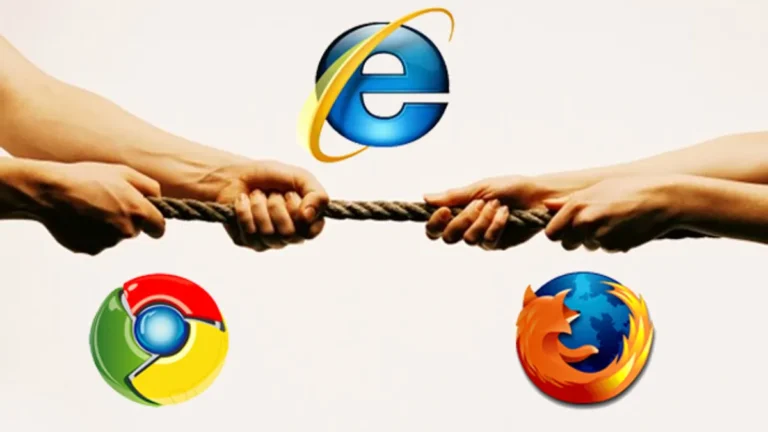
If you think the browser wars ended with Internet Explorer’s defeat, look again. The digital battlefield has reignited. While Google Chrome commands a staggering 65% global market share, its dominance is no longer unchallenged or unscrutinized. A new, multi-front conflict is underway, driven by urgent concerns over user privacy, browser engine monopolies, and the very soul of the open web. This isn’t just about speed tests anymore; it’s a fight over who controls the gateway to the internet.
The Battlefields of the New War
Three seismic shifts have ended Chrome’s quiet reign and brought competition roaring back:
The Privacy Uprising: The ad-tech backlash and legislation like GDPR have made tracking protection a primary feature, not an afterthought. Browsers are now defined by their stance on user data.
The Engine Monopoly Concern: With Apple’s WebKit (Safari) and Google’s Blink (Chrome, Edge, Opera) effectively powering nearly all browsers, critics warn of stagnant innovation and corporate control over web standards. The call for a truly independent engine is growing.
The AI Integration Race: The sudden explosion of generative AI has created a new arms race. Browsers are scrambling to integrate AI assistants for summarization, writing, and coding directly into the sidebar, aiming to become an intelligent layer over the web itself.
The Major Powers: Strategies and Stakes
Google Chrome: The Hegemonic Efficiency Engine
Chrome remains the undisputed king, prized for its seamless sync across devices, vast extension ecosystem, and relentless performance improvements via the Blink engine.
Strategy: Leverage its market dominance to shape web standards (like the Privacy Sandbox) and deeply integrate with Google’s ecosystem (Search, Drive, Gemini AI). Its goal is to be the fastest, most convenient, and now most intelligent portal.
Vulnerability: Its identity as part of the world’s largest advertising company creates an irreconcilable conflict for privacy-focused users. Its massive resource consumption (“RAM hog” reputation) and potential for anti-competitive behavior are constant critiques.
Mozilla Firefox: The Independent Defender
Firefox is the last major browser built on an independent, non-profit-backed engine (Gecko). It has successfully pivoted to become the privacy-by-default choice for the conscious user.
Strategy: Differentiate on principles. Features like Enhanced Tracking Protection (blocking cross-site cookies by default), strict anti-fingerprinting, and a commitment to open web standards are core to its identity. It is investing in a more modern, compact UI (Proton) and performance (the speed-boosting WebRender engine).
Challenge: With a single-digit market share (around 3%), its influence on web standards is limited. It faces the perpetual challenge of balancing its non-profit, pro-user mission with the need for revenue (still largely from search partnerships).
Apple Safari: The Ecosystem Gatekeeper
Safari is a powerhouse not by choice, but by default—it is the only browser allowed on iOS devices without a competing engine. This gives it a massive, captive share of mobile users.
Strategy: Prioritize battery life, performance integration within the Apple ecosystem, and aggressive privacy fencing like Intelligent Tracking Prevention (ITP). Apple uses Safari to enforce its vision of user privacy and to control the in-app browsing experience on its platform.
Controversy: Its kitchen sink approach to privacy features has been criticized for breaking the web for legitimate publishers and developers. Most critically, its iOS browser engine monopoly (until recently, all browsers on iOS were forced to use Safari’s WebKit) is a major antitrust concern, now being challenged by the EU’s Digital Markets Act (DMA).
Microsoft Edge: The Silent Contender
The once-derided browser has staged a remarkable comeback by pragmatically adopting Chrome’s Blink engine and layering on superior features.
Strategy: Offer “Chrome, but better integrated with Windows.” Features like vertical tabs, immersive reader mode, efficiency boosts, and direct Copilot AI integration provide genuine utility. Its built-in “Sleeping Tabs” to reduce memory use directly tackles a key Chrome complaint.
Position: It has successfully reclaimed second place on the desktop by being a pre-installed, low-friction, and often superior alternative to Chrome for Windows users.
The New Challengers: Niche Innovation and Disruption
The new front is populated by bold, opinionated browsers carving out specific niches:
A critical development is the EU’s Digital Markets Act (DMA), which is forcing Apple to allow rival browser engines on iOS. This could break Safari’s mobile stranglehold and finally give Firefox (Gecko) and Chrome (Blink) a true fighting chance on the world’s most valuable platform.
The Verdict: Which Browser is Right for You?
Choosing a browser is now a conscious value proposition:
Choose Chrome if: You live within Google’s ecosystem, need absolute website compatibility, rely on specific extensions, and want the deepest AI integration first.
Choose Firefox if: You value privacy as a default, supporting an independent web, and a non-corporate vision for the internet’s future. It’s the ethical choice with teeth.
Choose Safari if: You are deeply invested in Apple devices, prioritize unmatched battery life on macOS/iOS, and appreciate its system-level privacy features.
Choose Edge if: You are a Windows user wanting a more efficient, feature-rich Chromium experience with native OS integration and Copilot AI.
Choose a newcomer (Arc, Brave, Vivaldi) if: A specific philosophy (workspace organization, radical privacy, deep customization) resonates with your workflow more than mainstream appeal.
Conclusion: A Healthier Web for Everyone
The return of the browser wars is the best thing that could happen to internet users. For years, Chrome’s dominance risked making the web a monoculture. Today, the intense competition is driving rapid innovation in privacy, user interface design, performance, and AI integration.
This new era is defined by a clear tension: the convenience of ecosystems (Google, Apple) versus the principles of independence (Firefox, Brave). The outcome will determine whether the web remains a dynamic, open platform or fractures into a few corporate-controlled gardens.
Ultimately, the user wins. You now have a meaningful choice that reflects your priorities. Your browser is no longer just a tool; it’s a statement about the kind of web you want to use—and the kind of web you want to survive. The war is back, and its prize is the future of the internet itself.