Geolocation and Starlink: The Satellite Internet Revolution’s Impact on Digital Location Services
Introduction: The New Space-Based Geopositioning Challenge
The advent of Starlink, SpaceX’s ambitious low Earth orbit (LEO) satellite constellation, represents not just a breakthrough in global internet connectivity but also a fundamental disruption to traditional geolocation technologies and practices. As thousands of satellites create a mesh network blanketing the Earth, they’re redefining how devices are located, how internet traffic is routed, and how geographic restrictions are enforced in the digital realm. This comprehensive guide explores the complex relationship between geolocation services and Starlink’s rapidly expanding satellite internet system.
Section 1: Starlink Architecture – Understanding the New Network Topology
Starlink’s Technical Foundation
Orbital Characteristics:
Altitude: 340-550 km (LEO vs. traditional GEO at 35,786 km)
Constellation size: Planned 12,000-42,000 satellites across multiple shells
Orbital shells: Varying inclinations (53°, 70°, 97.6°) for global coverage
Satellite lifetime: 5-7 years with controlled deorbiting
Ground Infrastructure:
User terminals: Phased-array antennas (“Dishy McFlatface”)
Gateways/ground stations: ~100+ globally, connecting to terrestrial internet
Laser inter-satellite links: ~5,000 currently equipped, enabling space-based routing
Network Operations Centers: Primary in Redmond, Washington
Network Architecture Innovations:
Dynamic beamforming: Satellites steer beams to users
Handover management: Seamless switching between satellites every ~4 minutes
Network slicing: Different service classes (residential, maritime, aviation, government)
Low latency advantage: 20-40ms vs. 600ms+ for traditional satellite internet
Starlink’s Growth Timeline and Current Status
Deployment Milestones:
2020: Beta testing begins (“Better Than Nothing Beta”)
2021: 100,000+ users, global expansion beyond US
2022: 500,000+ users, maritime and aviation services launch
2023: 1.5M+ users, direct-to-cell phone service announced
2024: 2M+ users, global roaming expands
Projected 2027: Full constellation deployment
Service Tiers:
Residential: 50-200 Mbps, $90-120/month
Business: 150-350 Mbps, higher priority
Roam/Mobile: Global mobility, higher cost
Maritime: Ocean coverage, $5,000/month
Aviation: In-flight connectivity
Government/Military: Secured services
Section 2: Traditional Geolocation Technologies – The Pre-Starlink Paradigm
IP-Based Geolocation Methods
Database-Driven Approaches:
ISP allocation data: IP blocks assigned to geographic regions
WHOIS records: Registration information from RIRs
BGP routing tables: Analyze internet backbone paths
Commercial databases: MaxMind, IP2Location, etc.
Typical accuracy: Country 95-99%, City 70-85%, Coordinates 50-80%
Limitations with Traditional Satellite Internet:
GEO satellite internet: IPs often map to teleport/gateway location
Example: HughesNet user in Texas shows as Virginia (gateway location)
Accuracy radius: Often 100+ km from actual user location
Workarounds: Limited success with latency measurements
GPS and Assisted-GPS (A-GPS)
Standard Positioning:
Accuracy: 3-5 meters with clear sky view
Limitations: Indoor penetration, urban canyons, startup time
Dependency: U.S. government-controlled system
A-GPS Enhancements:
Cellular network assistance: Faster time-to-first-fix
WiFi positioning: MAC address to location databases
Bluetooth beacons: Indoor positioning
Cellular Network Geolocation
Triangulation Methods:
Cell ID: Tower location ± few hundred meters to kilometers
Time Difference of Arrival (TDOA): Multiple towers calculate position
Enhanced Cell ID: Combined with timing advance, angle of arrival
5G improvements: <1 meter accuracy potential
Section 3: The Starlink Geolocation Challenge – Why Traditional Methods Fail
IP Address Anomalies with Starlink
Dynamic IP Assignment Characteristics:
Geographic dissociation: IP addresses not tied to user location
Pool-based allocation: Users may get IPs from different geographic pools
Example: User in California shows as New York, then Colorado, then Texas
Subnet mobility: Entire blocks appear to move geographically
Routing Complexity:
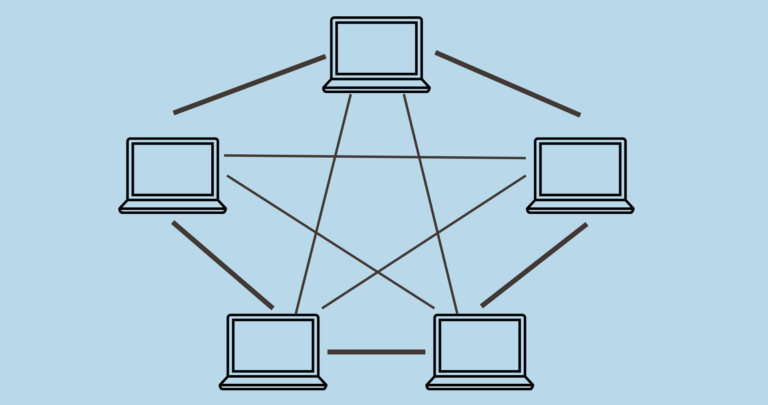
Multiple possible paths: User → Satellite → Various gateways → Internet
Load balancing: Dynamic gateway selection
Laser inter-satellite links: Traffic may route through space before reaching ground
Result: Traditional traceroute/tracerpath tools show confusing paths
Current Geolocation Database Inaccuracies:
{
  "starlink_ip": "136.22.19.45",
  "traditional_geoip": {
    "country": "United States",
    "region": "California",
    "city": "Los Angeles",
    "lat": 34.0522,
    "lon": -118.2437,
    "accuracy_radius": 50
  },
  "actual_user_location": {
    "country": "Canada",
    "region": "Ontario",
    "city": "Toronto",
    "lat": 43.6532,
    "lon": -79.3832
  },
  "error_distance": "3500+ km"
}
Technical Reasons for Geolocation Failure
1. Anycast Routing Implementation:
Multiple ground stations advertise same IP blocks
BGP routing selects “closest” (network-wise, not geographic) gateway
User traffic may egress far from actual location
2. Network Address Translation (NAT) at Scale:
Carrier-grade NAT (CGNAT) implementation
Thousands of users share single public IP
Port-based differentiation only
3. Mobile Nature of Service:
Starlink Roam/Mobile: Terminal moves, IP may not change
Maritime/Aviation: Continuous movement while connected
Fixed location ambiguity: Even “fixed” terminals can be moved
4. Lack of ISP Cooperation:
Starlink doesn’t provide precise subscriber location data to geoIP companies
Rapid network expansion outpaces database updates
Proprietary routing algorithms opaque to third parties
Section 4: Novel Geolocation Approaches for Starlink Networks
Signal-Based Geolocation Methods
Satellite Positioning via Starlink Signals:
Time synchronization analysis: Measuring signal arrival times from multiple satellites
Doppler shift measurement: Satellite movement creates frequency shifts
Angle of arrival: Using phased array antenna characteristics
Research status: Experimental, requires specialized equipment
Reverse Geolocation Attempts:
Analyze which satellites serve the terminal: Constellation geometry reveals approximate location
Gateway connection patterns: Which ground stations are used when
Latency measurements: Round-trip times to known locations
Current limitations: ~100 km accuracy at best
Hybrid Approaches
Combining Multiple Signals:
Weak GPS signals: Starlink terminal may receive degraded GPS
Cellular fallback: Many users have cellular as backup
WiFi scanning: Nearby networks when available
Statistical correlation: Aggregate data from many users
Machine Learning Models:
Pattern recognition: Learning typical routing behaviors
Anomaly detection: Identifying Starlink vs. terrestrial connections
Probabilistic mapping: Statistical likelihood of actual locations
Training data challenge: Limited ground truth for supervised learning
Starlink’s Own Positioning Capabilities
Terminal Self-Location:
GPS receivers: Built into user terminals for pointing accuracy
Gyroscopes/accelerometers: Orientation and movement detection
Potential access: Currently not exposed to users or applications
Future possibility: API for approved applications
Network-Based Location Services:
SpaceX knowledge: Knows terminal location for beam steering
Regulatory requirements: Must provide location for emergency services (911/E911)
Commercial applications: Could offer location-as-a-service
Privacy considerations: Significant concerns about access
Section 5: Real-World Implications and Applications
Content Geo-restriction and Licensing
Streaming Media Challenges:
Netflix, Hulu, Disney+: Region-locked content bypassed
Sports blackouts: Local restrictions circumvented
International licensing: Territorial rights enforcement complicated
Current solutions: Some services blocking known Starlink IP ranges
Digital Rights Management (DRM):
Widevine, PlayReady, FairPlay: Often include geographic restrictions
HDCP: Content protection potentially bypassed
Industry responses: Developing new location verification methods
E-commerce and Regulatory Compliance
Tax Jurisdiction Issues:
Sales tax/VAT: Based on customer location
Digital goods taxation: Varies by country/state
Current problem: Cannot determine user location accurately
Potential solutions: User-declared location with verification
Export Controls and Sanctions:
Technology restrictions: Certain software/hardware cannot be exported
Sanctioned countries: Restrictions on services to certain nations
Enforcement challenges: Users may appear in permitted locations
Compliance requirements: Due diligence obligations for companies
Cybersecurity and Fraud Prevention
Anomaly Detection Difficulties:
Impossible travel alerts: Login from Japan, then Brazil minutes later
Geographic profiling: User behavior patterns based on location
VPN/proxy detection: Starlink often classified as VPN
Current state: Many security systems flag Starlink connections as suspicious
Financial Services Impact:
Credit card fraud detection: Location mismatch triggers declines
Banking security: Unusual location triggers additional verification
Cryptocurrency exchanges: Geolocation for regulatory compliance
Insurance underwriting: Location-based risk assessment
Emergency Services and Public Safety
E911 Challenges:
Traditional PSAPs: Rely on location from telecom providers
Starlink VoIP: Emergency calls possible but location accuracy uncertain
Current solution: Users must provide address during setup
Future requirements: FCC considering new rules for satellite providers
Disaster Response Implications:
First responders: Need accurate location for emergency internet users
Temporary deployments: Starlink units deployed after disasters
Location reporting: Critical for coordinating relief efforts
Technical solutions: Possible emergency override for precise location
Section 6: Privacy and Surveillance Implications
Enhanced Privacy Benefits
Location Obfuscation:
Journalists/activists: Protected from location tracking
Domestic violence victims: Harder for abusers to track
Political dissidents: Avoid government surveillance
General privacy: Reduced corporate location tracking
Comparison with Traditional ISPs:
Terrestrial ISPs: Know precise address, often share data
Cellular providers: Track location continuously
Starlink: Currently less precise, less data sharing
Note: SpaceX still collects location data for network operations
Surveillance and Law Enforcement Concerns
Government Access:
Legal requests: SpaceX receiving subpoenas for user information
Location data: What can be provided to authorities
Transparency reports: Limited disclosure currently
International variations: Different legal frameworks globally
Potential for Abuse:
Authoritarian regimes: Attempting to track dissidents
Corporate espionage: Competitors seeking location intelligence
Stalking/harassment: Despite obfuscation, potential vulnerabilities
Balance: Privacy vs. legitimate law enforcement needs
Data Protection Regulations
GDPR Compliance:
Location data as personal data: Requires legal basis for processing
User consent: Must be informed and specific
Data minimization: Collect only what’s necessary
Starlink’s approach: Still evolving as service expands
Other Regulations:
CCPA/CPRA: California privacy rights
LGPD: Brazil’s similar framework
Sector-specific rules: Healthcare, finance, education
Cross-border data flows: Particularly complex with satellite networks
Section 7: Technical Solutions and Workarounds
Improved Geolocation Databases
Starlink-Specific Database Approaches:
Crowdsourced data: Users opt-in to share accurate location
Pattern analysis: Learning from known location samples
Multiple source correlation: Combining various signals
Commercial solutions: Emerging specialized services
Example Database Enhancement:
class StarlinkGeolocationEnhancer:
def __init__(self):
self.terrestrial_db = MaxMindReader()
self.starlink_patterns = self.load_starlink_patterns()
self.crowdsourced_data = self.load_crowdsourced_locations()
def locate_starlink_ip(self, ip_address):
traditional = self.terrestrial_db.lookup(ip)
if self.is_starlink_ip(ip):
correction = self.calculate_starlink_correction(ip, traditional)
return self.apply_correction(traditional, correction)
return traditional
def is_starlink_ip(self, ip):
return ip in self.starlink_ranges
def calculate_starlink_correction(self, ip, traditional_guess):
return correction_vectorApplication-Level Solutions
User-Provided Location:
Manual entry: Users enter location, with verification steps
GPS sharing: Browser/device GPS if available and permitted
Multi-factor verification: Corroborating evidence of location
Trust scoring: Confidence levels in user-provided data
Blockchain-Based Verification:
Zero-knowledge proofs: Verify location without revealing it
Decentralized attestation: Multiple parties verify location
Selective disclosure: Share only necessary precision
Early stage: Conceptual, not yet practical
Network-Level Approaches
Enhanced Protocol Support:
IP geolocation headers: Standardized headers indicating location
Trusted platform module: Hardware-based location attestation
ISP cooperation: Starlink providing anonymized location data
Standards development: IETF/ITU working groups addressing issue
CDN and Edge Computing Adaptations:
Anycast optimization: Better mapping of users to optimal edge nodes
Latency-based routing: Rather than geography-based
Dynamic configuration: CDNs learning Starlink traffic patterns
Performance impact: Ensuring quality of service despite location uncertainty
Section 8: Case Studies and Real-World Examples
Streaming Media Adaptation
Netflix’s Approach:
Initial response: Some Starlink IPs blocked or restricted
Current strategy: Enhanced location verification prompts
Technical details: Combining IP, device characteristics, payment location
User experience: Additional verification steps for some users
Live Sports Broadcasting:
NBA, NFL, MLB: Blackout enforcement challenges
International rights: Premier League, UEFA competitions
Solutions attempted: VPN detection, credit card address verification
Ongoing issues: Cat-and-mouse game with technically savvy users
Financial Services Adaptation
Bank of America Case Study:
Problem: Legitimate transactions flagged as fraudulent
Solution: Created Starlink-specific risk scoring
Implementation: Separate rules for satellite internet users
Results: Reduced false positives while maintaining security
Cryptocurrency Exchange Response (Coinbase Example):
KYC/AML requirements: Must verify customer location
Starlink challenges: IP location unreliable
Current solution: Additional document verification
Future direction: Exploring alternative verification methods
Government and Regulatory Responses
FCC Proceedings:
E911 rules for satellite providers: Ongoing rulemaking
Broadband labeling: Accuracy of coverage maps
Universal service fund: Support for satellite internet
Spectrum allocation: Coordination with other services
European Union Approach:
GDPR enforcement: Location data protection
Digital Services Act: Platform responsibilities
Copyright directive: Territoriality in digital age
Starlink-specific considerations: Emerging discussions
Section 9: Future Developments and Trends
Starlink’s Evolving Architecture
Generation 2 Satellites:
Increased capabilities: More bandwidth, laser links on all satellites
Direct-to-cell service: Partnership with T-Mobile, others
Improved positioning: Potential for better location services
Regulatory implications: New capabilities requiring new rules
Larger Constellation Plans:
Second generation: 30,000 additional satellites approved
Denser coverage: Better service, more complex routing
Inter-satellite links: Creating space-based internet backbone
Geolocation impact: Even more dynamic IP assignment patterns
Competitor Systems
Other LEO Constellations:
Amazon’s Project Kuiper: 3,236 satellites planned
OneWeb: 648 satellites (partial deployment)
Telesat Lightspeed: 298 satellites planned
Chinese constellations: GuoWang, others in development
Common challenges: Similar geolocation issues across all LEO systems
Technological Convergence
Integration with 5G/6G:
Non-terrestrial networks (NTN): 3GPP standards include satellite
Seamless handoff: Between terrestrial and satellite networks
Location services: Unified approach across network types
Timeline: Initial integration 2024-2025, mature 2030+
Quantum Technologies:
Quantum key distribution: Enhanced security for location verification
Quantum sensing: More precise timing for positioning
Quantum internet: Long-term vision including satellite components
Impact on geolocation: Potential paradigm shift in 2030s
Regulatory Evolution
International Coordination:
ITU role: Spectrum coordination, technical standards
National security concerns: Borderless networks challenge sovereignty
Data localization laws: Conflict with satellite internet architecture
Global governance: Need for new frameworks
Privacy-Enhancing Technologies:
Differential privacy: Statistical location without identifying individuals
Homomorphic encryption: Processing encrypted location data
Federated learning: Training models without centralizing data
Implementation challenges: Performance, complexity, adoption
Section 10: Recommendations and Best Practices
For Service Providers and Websites
Adaptive Geolocation Strategies:
Detect Starlink connections: ASN, IP range, network characteristics
Implement graduated verification: More evidence for higher-stakes actions
User experience considerations: Clear explanations, not just blocks
Continuous adaptation: As Starlink network evolves
Technical Implementation:
async function adaptiveLocationCheck(userIP, actionRiskLevel) {
const isStarlink = await checkIfStarlink(userIP);
const baseLocation = await getIPLocation(userIP);
if (!isStarlink) {
return {location: baseLocation, confidence: 'high'};
}
if (actionRiskLevel === 'low') {
return {location: baseLocation, confidence: 'low'};
} else if (actionRiskLevel === 'medium') {
const additionalData = await getUserProvidedLocation();
return calculateProbabilisticLocation(baseLocation, additionalData);
} else {
const verifiedLocation = await performStrongVerification();
return {location: verifiedLocation, confidence: 'verified'};
}
}For Starlink Users
Managing Location Expectations:
Understand limitations: Some services may not work correctly
Proactive communication: Inform services of your actual location
Technical workarounds: When necessary and appropriate
Privacy awareness: Benefits and risks of location obfuscation
Emergency Preparedness:
Register accurate address: For E911 services
Alternative communication: Backup options when location critical
First responder information: How to provide location in emergencies
Travel considerations: Different rules in different countries
For Policymakers and Regulators
Balancing Objectives:
Privacy protection: Without enabling illegal activity
Innovation encouragement: While ensuring public safety
International harmony: Coordinated approaches across borders
Future-proof regulations: Adaptable to technological change
Specific Policy Considerations:
Emergency services: Mandate reliable location for 911/equivalent
Law enforcement: Clear rules for access to location data
Consumer protection: Transparency about location capabilities
Competition policy: Ensure multiple providers, prevent abuse
International cooperation: Harmonize approaches where possible
Conclusion: Navigating the New Location Landscape
The relationship between geolocation and Starlink represents a microcosm of larger tensions in our digitally connected world: between privacy and security, between innovation and regulation, between global connectivity and local control. As Starlink and similar satellite constellations continue to expand, they’re forcing a reevaluation of fundamental assumptions about how location works on the internet.
For the foreseeable future, we’ll likely see a coexistence of multiple approaches:
Technical adaptations from service providers dealing with imperfect location data
Regulatory developments attempting to balance competing priorities
User behavior changes as people navigate this new landscape
Ongoing innovation in location technologies themselves
The ultimate resolution won’t be a return to the simplicity of terrestrial ISP geolocation, but rather the development of more sophisticated, nuanced systems that can handle the complexity of satellite networks while respecting diverse needs for privacy, security, and functionality.
What’s clear is that the era of easy, accurate IP-based geolocation is ending for a significant portion of internet users. In its place, we’re entering an era of probabilistic location, multiple verification methods, and context-aware systems. Successfully navigating this transition will require collaboration between technologists, policymakers, businesses, and users—all working toward an internet that remains both globally connected and locally relevant.
As satellite internet moves from niche to mainstream, its impact on geolocation will ripple through countless applications and services. Those who understand this relationship—its challenges, its opportunities, and its evolving nature—will be best positioned to thrive in the new world of connectivity that Starlink is helping to create.