The Human Firewall: A Practical Guide to Spotting Phishing Emails Before It’s Too Late
The One Click That Changes Everything
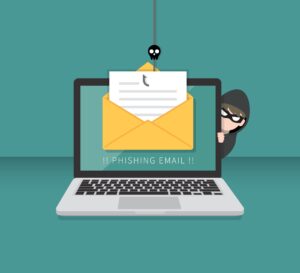
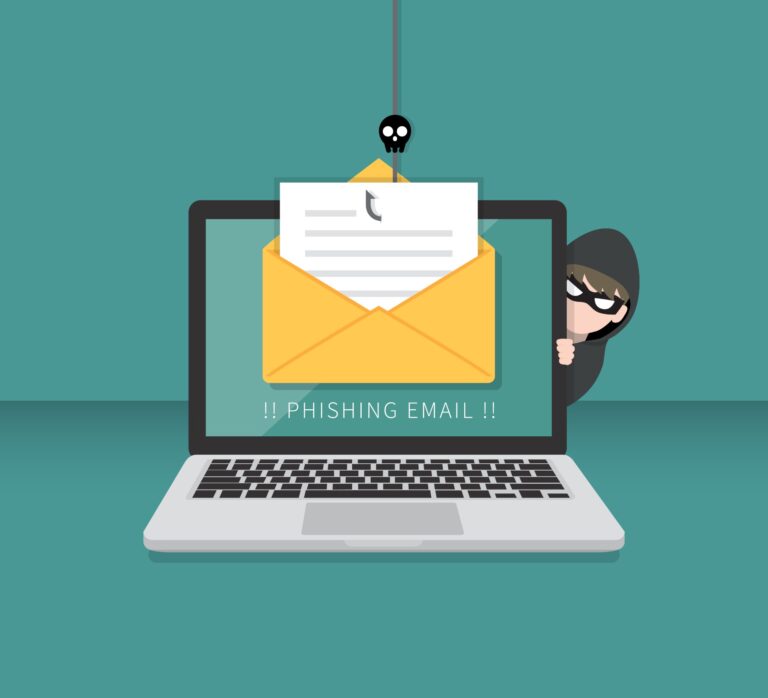
It happens thousands of times every day. A busy professional, distracted by notifications and deadlines, glances at an email that appears to be from their bank, their CEO, or a familiar vendor. The branding looks right. The urgency feels real. They click the link, enter their credentials, and just like that—the keys to the kingdom are surrendered.
Phishing is not a technology problem. It is a psychology problem.
While spam filters block billions of malicious emails annually, the ones that reach your inbox succeed because they exploit human cognition, not technical vulnerabilities. The most sophisticated phishing attack doesn’t need zero-day exploits; it needs you to be tired, trusting, or rushed.
This guide will transform how you look at every email. You will learn not just the obvious red flags, but the subtle psychological manipulation techniques attackers use. You will develop a systematic method for evaluating suspicious messages. And you will understand exactly what to do when you spot a phish—whether you’ve only opened it or, in the worst case, already clicked.
Part 1: The Attacker’s Playbook—Why Phishing Works
Before learning to spot phishing, you must understand why your brain is vulnerable to it.
Cognitive load is the attacker’s greatest ally. The average knowledge worker receives over 120 emails daily. Processing each one with full analytical rigor is impossible. Your brain takes shortcuts—it relies on pattern recognition, authority cues, and emotional heuristics. Phishing emails are engineered to exploit these shortcuts.
The four psychological triggers of effective phishing:
The most dangerous phishing emails do not look suspicious. They look expected. A password reset email after you actually requested one. A shipping notification when you’re awaiting a package. A document from a colleague you collaborate with daily. Context is the attacker’s ultimate camouflage.
Part 2: The Systematic Inspection—A Four-Layer Defense
Do not rely on intuition alone. Train yourself to perform a structured, methodical examination of every unexpected or sensitive email.
Layer 1: The Sender’s True Identity
Never trust the display name. This is the simplest and most effective phishing technique. An attacker can set their display name to “PayPal” or “CEO John Smith” while the actual email address is paypal-support-8392@gmail.com.
What to check:
Hover over the sender name. Most email clients reveal the actual email address.
Examine the domain carefully. Not just the name—the actual domain.
paypa1.com (L replaced with 1)
paypal-security.com (legitimate PayPal emails come from @paypal.com, not subdomains of unrelated domains)
microsoft-support.net (Microsoft uses @microsoft.com)
Check for typosquatting. Attackers register domains that look nearly identical to legitimate ones, substituting characters or adding hyphens.
The domain validation rule: If the email claims to be from a major organization, the sending domain should exactly match the organization’s primary domain. Not a variant. Not a subdomain of a different domain. Exactly.
Layer 2: The Emotional Temperature
Phishing emails are designed to make you feel something before you think.
High-risk emotional signals:
Fear: “Unauthorized login attempt detected.”
Greed: “You’ve won $1,000,000!”
Curiosity: “Someone mentioned you in this document.”
Obligation: “Please review the attached invoice.”
Legitimate organizations do not manufacture urgency. They do not threaten immediate account closure. They do not demand action within 24 hours unless you have actually initiated a security process. When you encounter urgency, stop. This is the attacker’s most powerful weapon.
The emotional pause: When an email provokes a strong emotional reaction, do not act. Close the email. Wait five minutes. Reopen it with analytical detachment. If the urgency is genuine, waiting five minutes will not cause catastrophe. If it is phishing, you have saved yourself.
Layer 3: The Link Destination
Never click to verify. Hover to verify.
Before clicking any link, hover your mouse cursor over it (without clicking). A small popup or status bar will display the actual destination URL.
What to look for:
Mismatched text and URL. The link text says “https://www.amazon.com” but the hover URL is http://amazon-secure-verify.net/login.
Encryption does not mean legitimacy. Attackers use HTTPS too. The padlock icon only indicates the connection is encrypted, not that the destination is trustworthy.
URL shorteners. Services like bit.ly, tinyurl, and ow.ly obscure the true destination. If you cannot see where a link goes, do not click it.
The manual navigation rule: If an email claims to be from your bank, do not click their link. Open a new browser tab, type your bank’s URL manually, and log in. If there is a genuine issue, it will appear in your account dashboard.
Layer 4: The Language and Craftsmanship
Professional organizations employ copy editors. Phishing emails often contain subtle (and not-so-subtle) linguistic errors.
Red flags in language:
Awkward phrasing: “Dear valued customer” rather than your actual name.
Grammatical errors: Missing articles, incorrect verb tenses.
Unusual word choices: Vocabulary that doesn’t match the purported sender’s typical communication style.
Excessive formality or informality: An overly stiff email from a usually casual colleague, or overly casual language from a bank.
The salutation test: Does the email address you by name? If not, why would a legitimate organization that already has your account information not use it? Generic greetings are a strong indicator of mass-phishing campaigns.
But caution: Spear-phishing (targeted attacks) often includes your correct name, title, and even personal information harvested from social media. Personalized salutation does not equal legitimacy.
Part 3: The Phishing Taxonomy—Common Attack Patterns
Pattern 1: The Credential Harvest
Appearance: Security alert, password expiration, unusual login attempt, document share notification.
Goal: Trick you into entering your username and password on a fraudulent login page.
Tell: The destination URL is a near-match to the legitimate site, but not exact.
Pattern 2: The Invoice Scam
Appearance: Overdue invoice, purchase confirmation, shipping notification.
Goal: Either credential harvesting or malware attachment.
Tell: You don’t recognize the vendor, or the amount seems wrong. Legitimate companies do not send unsolicited invoices via email with clickable payment links.
Pattern 3: The CEO Fraud (Business Email Compromise)
Appearance: An urgent email from a senior executive requesting a wire transfer, gift cards, or sensitive employee information.
Goal: Direct financial theft or data exfiltration.
Tell: The request bypasses normal approval processes. The tone is unusually urgent and secretive (“I’m in a meeting, please handle this immediately”).
The verification imperative: Any financial request received via email, even from a known executive, must be verified through a separate communication channel (phone call, in-person, or internal chat). Attackers spoof email addresses and display names with ease.
Pattern 4: The Malware Dropper
Appearance: Invoice, voicemail, fax, or scanned document attached as a file.
Goal: Install ransomware, keyloggers, or remote access trojans.
Tell: Unexpected attachments, especially with extensions like .zip, .exe, .scr, or even .docm (macro-enabled documents).
The attachment rule: If you were not expecting an attachment from this sender, do not open it. Contact the sender via another channel to verify.
Part 4: Technical Safeguards—Your Secondary Defense
Human detection is primary, but technical controls provide essential backup.
Email Authentication Protocols
Legitimate organizations implement three technical standards that make their emails verifiable. You, as a recipient, can check these:
SPF (Sender Policy Framework): Authorizes which servers can send email for a domain.
DKIM (DomainKeys Identified Mail): Digitally signs emails, proving they haven’t been tampered with.
DMARC (Domain-based Message Authentication, Reporting & Conformance): Tells receiving servers what to do with emails that fail SPF/DKIM checks.
How to check: In Gmail, click the three dots next to Reply, select “Show original.” Look for “spf=pass” and “dkim=pass.” If either fails, the email is almost certainly fraudulent.
Browser Warnings
Modern browsers maintain constantly updated blocklists of known phishing sites. If your browser displays a warning, do not proceed. This is not an overprotective nanny; it is a genuine security signal.
Password Managers
A well-implemented password manager (Bitwarden, 1Password, KeePass) will not autofill credentials on fraudulent domains, even if they look identical to the legitimate site. If your password manager does not recognize the domain, consider this definitive proof of phishing.
Part 5: The Incident Response Protocol—You’ve Already Clicked
Despite all precautions, you may realize—moments or hours later—that you clicked a phishing link or entered credentials on a fraudulent site.
Immediate steps:
Disconnect from the internet. If malware was downloaded, this prevents it from communicating with its command-and-control server.
Change compromised passwords immediately. Use a different, known-secure device. Do not reuse passwords.
Enable multi-factor authentication (MFA) on all accounts that support it. MFA is the single most effective control against credential theft. If you had MFA enabled and still entered credentials on a phishing site, the attacker may have captured your session cookie (see below).
Scan your device for malware. Use a reputable security tool (Malwarebytes, Windows Defender, or your organization’s approved solution).
Notify relevant parties. Your IT security team, the actual organization being impersonated, and—if financial information was compromised—your bank.
If you suspect session cookie theft: Modern phishing kits don’t just steal passwords; they intercept session cookies, allowing attackers to bypass MFA entirely. If you entered credentials on a phishing site, log out of all sessions from the legitimate site’s security settings. This invalidates the stolen cookies.
Part 6: The Phishing Quiz—Test Your Detection Skills
Email A:
From: "Apple Security" <security@apple-id-alerts.net>
Subject: Your Apple ID has been locked

Dear Customer,

We detected unusual activity on your Apple ID. Your account has been temporarily locked.

Please verify your identity immediately:
[VERIFY YOUR ACCOUNT]

Failure to verify within 48 hours will result in permanent account suspension.

Apple Support
Red flags:
Email B:
From: "Sarah Chen" <schen@company.com>
Subject: Quick question

Hi,

Can you let me know if you're free to review the Q3 projections? I've attached the draft.

Thanks,
Sarah
This could be legitimate OR a spear-phish. The domain is correct, the colleague is real. The verification step here is out-of-band communication. Call Sarah, or message her on Slack/Teams, and ask if she sent this attachment. Do not open the attachment until you confirm.
Part 7: The Organizational Imperative—Building a Human Firewall
Individual vigilance is necessary but insufficient. Organizations must create a culture where reporting phishing is rewarded, not punished.
What effective organizations do:
Run continuous simulated phishing campaigns. Not punitive “gotcha” exercises, but training opportunities.
Provide clear, simple reporting mechanisms. A single button in the email client.
Celebrate reporters. Public recognition of employees who identify and report real or simulated phishing attempts.
Never shame victims. Phishing is an attack, not a character flaw. Punishing victims drives reporting underground.
Conclusion: The Attentive Mind as the Ultimate Control
Anti-phishing technology improves every year. DMARC adoption increases. Browser warnings become more prominent. Password managers grow smarter.
But the attacker will never stop targeting the human.
The most sophisticated phishing campaign ever devised—one that perfectly spoofed every technical authentication, flawlessly replicated branding, and used contextually appropriate language—would still fail against a recipient who follows one simple rule:
Verify before you trust.
Not once. Every time. Not with a click, but with deliberate, structured examination. This is not paranoia; it is the appropriate threat model for a world where a single email can empty a bank account, encrypt a hospital’s patient records, or compromise a nation’s critical infrastructure.
The tools described in this guide—the hover test, the domain inspection, the emotional pause, the separate-channel verification—are not complicated. They require no technical expertise. They require only the willingness to slow down, to question, and to recognize that in the digital world, trust is not a default state. It is a decision, made deliberately, with evidence.
The email in your inbox is not your friend. It is a suspect. Treat it accordingly.
tool is only the beginning.