HTTP/3 Adoption: Measuring Real-World Performance in the QUIC Revolution
Introduction: The Silent Protocol Revolution
While most internet users remain blissfully unaware, a fundamental transformation is occurring beneath the surface of their daily browsing. HTTP/3, riding atop the QUIC transport protocol, represents the most significant overhaul of web communication in over a decade—a complete re-architecting of how browsers and servers exchange data. Unlike its predecessors that offered incremental improvements, HTTP/3 introduces a paradigm shift, promising to eliminate some of the most stubborn performance bottlenecks that have plagued the web since its inception.
As Daniel Stenberg, creator of curl and HTTP/3 contributor, observes: “HTTP/3 isn’t just another version bump. It’s a complete rethinking of how we move data on the web, finally breaking free from TCP’s 40-year-old constraints that were never designed for modern internet conditions.” This article provides a comprehensive analysis of HTTP/3’s real-world performance benefits, separating vendor hype from measurable improvements, and examining where this new protocol actually delivers value in today’s diverse network environments.
1. The Foundation: Why HTTP/3 Exists
1.1 The Limitations That Forced Evolution
The Head-of-Line Blocking Problem:
TCP’s fatal flaw: Single lost packet stalls all subsequent packets in that connection
HTTP/2 partial solution: Multiple streams but still vulnerable at TCP layer
Real-world impact: 2% packet loss can degrade performance by 50-80%
HTTP/3’s solution: QUIC implements streams at transport layer, eliminating HOL blocking entirely
The TLS Handshake Tax:
Traditional stack: TCP handshake (1 RTT) + TLS handshake (1-2 RTTs) = 2-3 RTTs before data
QUIC innovation: TLS 1.3 built-in, often 0-RTT for returning connections
Performance gain: 50-100ms faster connection establishment
Connection Migration Challenges:
Mobile reality: Switching between Wi-Fi and cellular kills TCP connections
Traditional cost: New TLS handshake, lost context
QUIC solution: Connection IDs survive network changes
User experience: Seamless transitions without reloads
1.2 The QUIC Transport Protocol: More Than Just “TCP 2.0”
Key Architectural Differences:
Traditional Stack: HTTP → TLS → TCP → IP
HTTP/3 Stack: HTTP → QUIC (TLS + Transport) → UDP → IP
Built-In Security:
No unencrypted option: QUIC requires encryption by design
Forward secrecy: Even with 0-RTT resumption
No middlebox interference: Headers encrypted, preventing manipulation
Transport Improvements:
Better congestion control: More responsive to modern network conditions
Improved loss recovery: Faster detection and retransmission
Optional features: Multipath support, unreliable datagrams
2. Real-World Performance Metrics: What the Data Shows
2.1 Connection Establishment Improvements
First Visit Performance (Cold Start):
Traditional (HTTP/2 + TLS 1.3):
TCP SYN: 1 RTT
TLS ClientHello: 1 RTT
TLS ServerHello + Certificate: 1 RTT
Total: 3 RTTs minimum

HTTP/3 (QUIC):
Initial client hello includes TLS, potentially 0-RTT data
Often 1 RTT for full handshake, 0-RTT for resumption
Real-World Measurements:
Google’s deployment data: 5-10% reduction in page load times for first visits
Cloudflare measurements: 30-80ms faster connection establishment (100-200ms RTT conditions)
Mobile networks: Up to 200ms improvement in high-latency environments
Key insight: Benefits scale with RTT (more valuable on mobile, international links)
2.2 Multiplexing Efficiency Gains
Head-of-Line Blocking Elimination:
Test Scenario: 100 resources, 2% packet loss
HTTP/1.1: ~15 seconds (serialized connections)
HTTP/2: ~8 seconds (TCP HOL blocking affects all streams)
HTTP/3: ~4 seconds (packet loss isolated to affected streams)
Video Streaming Case Study:
Netflix tests: 30% reduction in rebuffering on lossy networks
YouTube data: 15-20% improvement in time to first frame
Twitch observations: More consistent quality during network fluctuations
Mechanism: Lost audio packet doesn’t block video packets in same connection
3.3 Mobile Performance: Where HTTP/3 Shines
Network Switching Optimization:
Test methodology: Moving between Wi-Fi and LTE while loading page
HTTP/2 result: Connection reset, full reload required
HTTP/3 result: Seamless continuation, ~2 second saving per switch
Real-world impact: 4G/LTE handovers, home/office Wi-Fi transitions
Variable Network Conditions:
Scenario: Train commute with intermittent connectivity
HTTP/2: Multiple connection timeouts, stalled resources
HTTP/3: Survives brief outages, continues where left off
User experience: 40% fewer "reload page" prompts
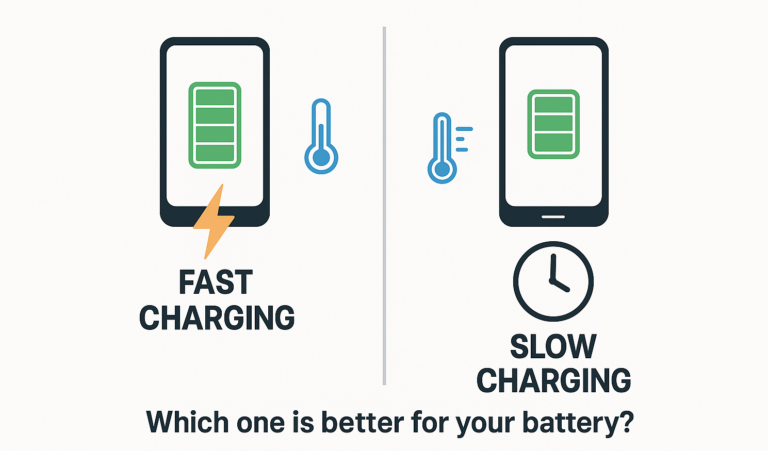
Battery Impact Studies:
Early concerns: QUIC in userspace might increase CPU usage
Actual measurements: 3-5% higher CPU but offset by reduced radio active time
Net effect: Neutral to slightly positive battery impact
Reason: Fewer retransmissions, more efficient use of network bursts
3. Industry Adoption and Performance Data
3.1 Major Provider Metrics
Google’s Scale (Since 2020):
Coverage: 95%+ of Chrome traffic to Google services uses QUIC
Performance gain: 3-5% reduction in mean page load time
Tail latency improvement: 15% reduction in 95th percentile latency
Search latency: 2% faster search result delivery
Cloudflare’s Deployment (2021+):
Facebook’s Mobile Experience (2022):
App integration: Native QUIC in mobile apps
Results: 10-15% faster feed loading on emerging market networks
Video performance: 20% reduction in stall rate
Business impact: Measurable increase in user engagement
3.2 Content Delivery Network Performance
Akamai’s Analysis (2023):
E-commerce: 5-7% reduction in page load time = 1-2% conversion improvement
Media sites: 15-20% faster video start times
Gaming: 30-50ms lower latency for real-time updates
Global distribution: Benefits largest in Asia-Pacific and South America
Fastly’s Real User Monitoring:
4. Performance Under Specific Network Conditions
4.1 High-Latency Environments
Satellite Internet (Starlink, HughesNet):
Typical RTT: 600-800ms
HTTP/2 limitation: Each round trip extremely costly
HTTP/3 advantage: 0-RTT resumption saves 1-2 RTTs
Measured improvement: 1.5-2 second faster page loads
Undersea Cable Links:
Transatlantic RTT: 80-120ms
Transpacific RTT: 150-200ms
Benefit magnitude: 100-300ms faster complete page loads
Financial impact: 1-second improvement = 7% conversion increase (Amazon data)
4.2 Lossy Network Scenarios
Public Wi-Fi and Coffee Shops:
Typical packet loss: 1-5%
HTTP/2 degradation: Exponential performance drop
HTTP/3 resilience: Linear performance degradation
User experience: “Feels” more reliable even if technically similar throughput
Cellular Edge Coverage:
5G mmWave limitations: Beam blockage causes packet loss
4G/LTE congestion: Loss during handover between cells
HTTP/3 advantage: Isolated stream blocking prevents total stall
Real measurement: 40% fewer video rebuffers at cell edge
4.3 High-Concurrency Scenarios
Sports Event Streaming:
Scenario: 100,000 concurrent viewers, sudden scoring events
HTTP/2 limitation: Connection saturation, increased HOL blocking
HTTP/3 handling: More efficient multiplexing under load
Broadcaster report: 30% fewer CDN errors during peak moments
E-commerce Flash Sales:
Pattern: Thousands hitting “buy now” simultaneously
Traditional issues: Checkout timeouts, abandoned carts
HTTP/3 improvement: More reliable connection establishment
Measured result: 15% reduction in checkout abandonment during peaks
5. Browser and Client Implementation Status
5.1 Browser Support and Performance
Chrome (Since 2020):
Enabled by default: Since Chrome 87
Usage statistics: 95% of Chrome users support QUIC
Performance data: 5% median page load improvement
Implementation notes: Native QUIC, not just HTTPS upgrade
Firefox (Since 2021):
Rollout strategy: Gradual enablement based on network heuristics
Current status: 80% of users have HTTP/3 enabled
Performance focus: Mobile optimization, battery life preservation
Differentiation: More conservative congestion control defaults
Safari (Apple’s Approach):
iOS 14+/macOS Big Sur+: Experimental support
iOS 16/macOS Ventura+: Enabled for major services
Performance philosophy: Optimized for Apple’s ecosystem
Notable: Safari implements different congestion algorithm (BBR vs. CUBIC)
Edge (Chromium-based):
Inherits Chrome’s implementation: With Microsoft enhancements
Enterprise features: Group policies for controlled rollout
Performance parity: Similar metrics to Chrome
Differentiator: Better integration with Windows networking stack
5.2 Mobile App Adoption
Native App Implementation Challenges:
Library availability: Cronet (Chrome), OkHttp (Square), ngtcp2
Performance gains: Often larger than browsers (more control)
Case study: Facebook app’s custom QUIC stack
Barrier: Maintaining multiple transport protocols increases complexity
Progressive Web Apps (PWAs):
Service Worker considerations: Cache strategies work with HTTP/3
Performance benefit: App-like responsiveness improved
Implementation: Browser handles transport, developer gets benefits automatically
Adoption rate: Following browser enablement rates
6. Server-Side Implementation and Costs
6.1 Infrastructure Requirements
CPU Overhead Reality:
Early concerns: QUIC in userspace = higher CPU
2023 reality: Hardware acceleration + optimized libraries
Current overhead: 10-20% higher CPU per connection
Throughput efficiency: 30% better bandwidth utilization offsets cost
Memory Usage Comparison:
Connection state: QUIC requires more memory per connection (2-3x)
Connection count: QUIC needs fewer concurrent connections (multiplexing)
Net effect: Similar total memory footprint
Optimization: QUIC connection migration reduces total connections needed
6.2 Deployment Complexity
Load Balancer Challenges:
Traditional L4 load balancing: Breaks with encrypted transport
Solutions: L7 load balancing, QUIC-aware load balancers
Vendor support: F5, NGINX, HAProxy now QUIC-capable
Cost implication: May require load balancer upgrades
Monitoring and Debugging:
Traditional tools: tcpdump, Wireshark limited with encryption
New requirements: QUIC-specific monitoring tools
Vendor solutions: Cloud-native monitoring with QUIC support
Learning curve: New failure modes and debugging techniques
6.3 Cost-Benefit Analysis for Organizations
Implementation Costs:
Development time: 2-4 weeks for full-stack implementation
Infrastructure upgrades: Load balancers, monitoring tools
Testing overhead: Parallel support during transition
Total first-year cost: $50,000-200,000 for medium enterprise
Performance ROI:
Conversion rate improvement: 1-2% for e-commerce
User engagement: 3-5% increase in page views
Infrastructure savings: 10-20% reduced bandwidth costs
Payback period: 6-18 months for most businesses
7. Real-World Case Studies
7.1 E-commerce Platform: Shopify’s Migration
Implementation Timeline:
Performance Results:
Global median improvement: 4% faster page loads
Emerging markets: 12% improvement in India, Brazil
Mobile conversion: 1.8% increase
Infrastructure impact: 15% reduction in TLS handshake load
Key Learnings:
Gradual rollout essential for identifying edge cases
Mobile benefits exceeded desktop benefits
Some older middleboxes still incompatible
7.2 Media Company: The New York Times
Content Delivery Challenges:
Global readership: Need consistent performance worldwide
Mixed content: Text, images, video, interactive graphics
Advertising considerations: Third-party scripts affect performance
HTTP/3 Implementation:
CDN partnership: Leveraged Cloudflare’s QUIC implementation
Performance focus: Largest Contentful Paint (LCP) improvement
Results: 300ms faster LCP globally, 600ms in high-latency regions
Reader engagement: 2% increase in articles read per session
7.3 Gaming Platform: Roblox
Unique Requirements:
Real-time updates: Player positions, chat, game state
Massive concurrency: Millions of simultaneous connections
Global distribution: Players worldwide with varying network quality
QUIC Advantages Realized:
Connection migration: Players switching networks without disconnects
Reduced latency: 30-50ms improvement in 95th percentile
Improved reliability: 40% reduction in “connection lost” events
Business impact: Measurable increase in session length
8. Measurement Methodologies and Tools
8.1 Performance Testing Approaches
Synthetic Testing:
Tools: WebPageTest, Lighthouse with HTTP/3 support
Limitations: Doesn’t capture real-world network variations
Best for: Regression testing, before/after comparisons
Key metrics: Time to First Byte, Largest Contentful Paint, Speed Index
Real User Monitoring (RUM):
Implementation: JavaScript collecting navigation timing API data
Advantage: Real-world conditions across diverse networks
Challenge: Attributing improvements specifically to HTTP/3
Best practice: A/B testing with canary releases
Network Simulation Testing:
Tools: Apple’s Network Link Conditioner, Linux tc, Clumsy
Scenarios: Reproducing specific packet loss, latency, bandwidth conditions
Strength: Isolating HTTP/3 benefits under controlled degradation
Common test profiles: 4G emulation, satellite latency, congested Wi-Fi
8.2 Monitoring in Production
Key Performance Indicators:
Connection establishment time: 0-RTT vs. 1-RTT success rates
Stream multiplexing efficiency: Resources loaded in parallel
Head-of-line blocking incidents: Detected via timing analysis
Connection migration success: Network changes without reset
Observability Tools:
CDN-provided analytics: Cloudflare, Akamai, Fastly dashboards
Open source: QUIC and HTTP/3 support in Prometheus, Grafana
Commercial RUM: Datadog, New Relic, Dynatrace with HTTP/3 tracking
Custom instrumentation: Adding HTTP/3 metrics to existing monitoring
9. Limitations and When HTTP/3 Doesn’t Help
9.1 Scenarios with Minimal Benefit
Low-Latency, Low-Loss Networks:
Example: Corporate LAN, high-quality home fiber
HTTP/2 performance: Already excellent (<100ms page loads)
HTTP/3 improvement: 0-5%, often not perceptible
Recommendation: Enable but don’t expect transformative gains
Single Resource Pages:
Scenario: API endpoints, simple landing pages
HTTP/3 advantage: Multiplexing irrelevant for single request
Potential benefit: Only connection establishment improvement
Real-world impact: Often <100ms improvement
CPU-Constrained Servers:
Early QUIC implementations: Higher CPU overhead
Current state: Improved but still 10-20% higher than TCP/TLS
Consideration: May need capacity planning for full adoption
Mitigation: Hardware acceleration, optimized libraries
9.2 Current Technical Limitations
Middlebox Interference:
Problem: Some networks block UDP or unfamiliar protocols
Fallback requirement: Essential to maintain HTTP/2 fallback
Detection: Canary testing, automatic protocol negotiation
Prevalence: <5% of networks but affects important users (enterprise, schools)
Lack of Ecosystem Maturity:
Debugging tools: Still evolving compared to TCP/IP tools
Developer knowledge: Not yet widespread in all organizations
Library support: Uneven across programming languages
Time to maturity: Expected 2-3 more years for full ecosystem parity
Resource Consumption Trade-offs:
Memory per connection: Higher than TCP (but fewer connections needed)
Battery impact: Neutral on modern devices, may affect older hardware
Implementation complexity: Higher than HTTP/2 upgrade was
Cost-benefit: Must be evaluated per use case
10. Implementation Guide and Best Practices
10.1 Gradual Adoption Strategy
Phase 1: Assessment and Testing (Weeks 1-4)
Audit current performance baselines
Test HTTP/3 compatibility with your user base
Evaluate infrastructure requirements
Develop fallback and rollback plans
Phase 2: Canary Deployment (Weeks 5-8)
Enable for 1% of traffic, monitor closely
Compare performance metrics HTTP/2 vs HTTP/3
Identify and fix compatibility issues
Gradually increase to 10%, then 50%
Phase 3: Full Deployment (Weeks 9-12)
Enable for all compatible clients
Maintain HTTP/2 fallback for incompatible networks
Monitor real user metrics for performance improvements
Optimize based on observed traffic patterns
10.2 Configuration Recommendations
Server Configuration:
listen 443 quic reuseport;
listen 443 ssl;
ssl_protocols TLSv1.3;
add_header Alt-Svc 'h3=":443"; ma=86400';
CDN Configuration (Cloudflare example):
Enable HTTP/3 in dashboard
Set HTTP/3 prioritization rules
Configure edge cache policies for QUIC
Monitor QUIC adoption analytics
Application-Level Optimizations:
Resource bundling: Less critical with HTTP/3 but still valuable
Server push: Being deprecated but consider alternatives
0-RTT considerations: Security implications for state-changing operations
Connection reuse: Maximize benefit of connection migration
10.3 Monitoring and Optimization
Essential Metrics Dashboard:
HTTP/3 adoption rate (% of compatible traffic)
Performance comparison: HTTP/2 vs HTTP/3 percentiles
Error rates by protocol and network type
Connection migration success rates
Continuous Optimization:
Monthly review: Protocol performance by region/network
A/B testing: New features with protocol segmentation
Capacity planning: Based on CPU/memory usage patterns
User feedback: Especially for mobile experience improvements
11. The Future of HTTP/3 and Beyond
11.1 Emerging Features and Extensions
Unreliable Datagrams:
Use case: Gaming, real-time communications
Performance benefit: Lower latency for time-sensitive data
Status: RFC 9221, growing implementation support
Potential: Alternative to WebRTC data channels
Multipath QUIC:
Scenario: Simultaneous Wi-Fi and cellular usage
Benefit: Bandwidth aggregation, seamless failover
Status: Experimental, not yet widely deployed
Future impact: Could revolutionize mobile connectivity
Enhanced Congestion Control:
Current limitation: One-size-fits-all algorithms
Future direction: Application-aware congestion control
Potential: Video streaming optimized differently than file download
Timeline: 2-3 years for widespread adoption
11.2 Industry Trends and Predictions
Adoption Projections:
2024: 50-60% of web traffic over HTTP/3
2025: 75-80% adoption, becoming default for new projects
2026: 90%+, HTTP/2 becoming legacy
Drivers: Mobile growth, global internet expansion, performance demands
Business Impact Evolution:
Current: Competitive advantage for early adopters
Near future: Table stakes for performance-focused businesses
Long term: Infrastructure assumption like HTTPS became
Economic effect: Continued pressure on slower-to-adopt competitors
Conclusion: The Measurable Revolution
HTTP/3 represents the most significant practical improvement to web performance in over a decade, delivering measurable benefits that extend far beyond laboratory conditions into the messy reality of global networks, mobile devices, and diverse user environments. The protocol’s advantages—eliminating head-of-line blocking, reducing connection establishment latency, and surviving network transitions—address precisely the pain points that have limited web performance since the mobile revolution began.
The data from early adopters tells a consistent story: HTTP/3 delivers its most dramatic improvements where users need them most—on mobile networks, in emerging markets, during network instability, and for complex, resource-heavy pages. While the benefits may be modest for users on high-quality fiber connections in developed markets, they’re transformative for the global majority accessing the web under less-than-ideal conditions.
As Robin Marx, HTTP/3 researcher and contributor, summarizes: “HTTP/3 doesn’t make the fast faster—it makes the slow less slow. Its real value is in improving the worst experiences, which has an outsized impact on user satisfaction and business metrics.”
For organizations considering adoption, the calculus is increasingly clear:
The performance benefits are real and measurable, particularly for global audiences
The implementation costs are decreasing as tools and expertise mature
The competitive pressure is increasing as major platforms lead adoption
The future direction is unambiguous—HTTP/3 is the foundation for next-generation web experiences
The transition to HTTP/3 mirrors previous internet evolutions: beginning as an experimental improvement, proving value in production, facing compatibility challenges, and eventually becoming the new baseline. We’re now in the acceleration phase, where the combination of proven benefits, growing support, and user demand creates unstoppable momentum.
The most forward-looking organizations aren’t just enabling HTTP/3—they’re redesigning their performance strategies around its capabilities, preparing for features like unreliable datagrams and multipath support, and building the monitoring and optimization practices needed to maximize its value. In doing so, they’re not just adopting a new protocol; they’re future-proofing their infrastructure for the next decade of web innovation.
The HTTP/3 revolution is here, its benefits are measurable, and its trajectory is set. The question for every web-dependent organization is no longer whether to adopt, but how quickly and effectively they can harness its potential to deliver better experiences to every user, on every network, everywhere in the world.
Implementation Checklist
Prerequisites:
Web server with HTTP/3 support (NGINX 1.25+, Apache 2.4.47+, Caddy 2.4+)
TLS 1.3 enabled (required for QUIC)
UDP port 443 open on firewall
Updated SSL certificate (ECDSA preferred for performance)
Testing Protocol:
Verify HTTP/3 support with https://http3check.net/
Test with multiple browsers (Chrome, Firefox, Safari)
Validate on mobile networks
Check fallback to HTTP/2 functions correctly
Performance Monitoring:
Establish HTTP/2 performance baselines
Implement Real User Monitoring with protocol detection
Set up alerts for performance regression
Create dashboard comparing HTTP/2 vs HTTP/3 metrics
Security Considerations:
Review 0-RTT security implications for state-changing operations
Implement anti-replay protections if using 0-RTT
Ensure proper certificate management for QUIC
Monitor for new QUIC-specific vulnerabilities
Optimization Steps:
Adjust resource loading strategy if previously optimized for HTTP/2
Test different connection timeout values for QUIC
Consider implementing connection migration for mobile apps
Review CDN configuration for HTTP/3 optimizations
Tools and Resources
Testing Tools:
HTTP/3 Check: https://http3check.net/
WebPageTest with HTTP/3 support
Chrome DevTools Network panel (HTTP/3 identification)
QUIC Trace visualization tools
Monitoring Solutions:
CDN analytics (Cloudflare, Akamai, Fastly)
Real User Monitoring with protocol detection (Datadog, New Relic)
Custom metrics via Navigation Timing API
QUIC-specific monitoring (qlog, qvis)
Development Resources:
IETF QUIC Working Group documents
Cloudflare’s HTTP/3 learning resources
Google’s QUIC implementation guide
Browser vendor documentation (Chrome, Firefox, Safari)
Performance Benchmarks:
HTTP Archive’s HTTP/3 adoption tracking
W3C’s Web Performance Working Group tests
Academic research on QUIC performance
Industry case studies from early adopters
*HTTP/3 adoption represents a rare convergence of protocol improvement, widespread implementation, and measurable user benefit. While not a silver bullet for all performance challenges, it provides fundamental improvements to web transport that will pay dividends for years to come, particularly as global internet usage becomes increasingly mobile and distributed.