Linux Distro Showdown 2024: Finding Your Perfect Match in a Sea of Choice
The paradox of Linux has always been its greatest strength and its most intimidating barrier: choice. With hundreds of actively maintained distributions, each making different trade-offs between cutting-edge software and rock-solid stability, between user-friendliness and total control, the question “which distro should I use?” has no single answer—but it does have a right answer for you. This is the 2024 Linux distribution showdown, a no-fluff guide to matching your specific needs with the distro that will make you wonder why you didn’t switch sooner.
The 2024 Landscape: What’s Changed This Year
Before diving into specific recommendations, it’s worth understanding the major shifts that have reshaped the Linux ecosystem this year:
Ubuntu 24.04 LTS (“Noble Numbat”) arrived with a five-year (extendable to twelve for enterprise) support window, the Linux 6.8 kernel, and significant performance engineering improvements including frame pointers enabled by default for better CPU profiling . For the first time, .NET 8 is fully supported across the lifecycle, and JDK 21 is now the default Java development kit .
Gaming on Linux has matured dramatically, driven by Valve’s Steam Deck running SteamOS and the continued refinement of Proton. This has spawned a new generation of gaming-optimized distros like Bazzite and Playtron OS, though both remain rough around the edges .
Privacy-focused distros have proliferated in response to growing surveillance capitalism concerns, with Kodachi emerging as the new “Swiss Army knife” of secure distributions, and Qubes OS maintaining its fortress-like reputation .
The immutable/atomic distro movement has gained serious momentum, with Fedora’s Atomic Desktops and projects like Vanilla OS 2 rethinking how system updates and rollbacks should work.
The 2024 Linux Distro Decision Matrix
Rather than ranking distros against each other in a meaningless popularity contest, let’s organize them by who you are and what you need.
👋 For Beginners: Your On-Ramp to Linux
If you’re coming from Windows or macOS and just want a computer that works, these are your battlegrounds.
🏆 Winner: elementary OS 8
The ZDNET 2024 Best Linux Distribution Award Winner
elementary OS 8 isn’t just another Ubuntu derivative—it’s a masterclass in polished, opinionated design. The Pantheon desktop is unmistakably macOS-inspired but executes its vision with coherence that GNOME and KDE often lack.
Why it wins for beginners:
Intuitive interface: No Linux knowledge required. The dock, top bar, and system indicators behave exactly as a new user expects.
Rock-solid reliability: Version 8.0 shipped feeling like an 8.1 point release. Nothing crashes. Nothing confuses .
Aging hardware friendly: Revives Windows 10 machines that Microsoft abandoned for Windows 11 .
Ethical and thoughtful: The project’s mission—”the thoughtful, capable, and ethical replacement for Windows and macOS”—is evident in every design decision .
The trade-off: It’s not trying to be everything to everyone. You won’t find twenty different desktop environments or endless configuration toggles. This is a curated experience.
🥈 Runner-Up: Linux Mint
The perennial favorite for Windows refugees remains excellent in 2024. Its Cinnamon desktop provides a traditional taskbar, start menu, and system tray that feels immediately familiar. Mint also ships with media codecs pre-installed, saving new users the immediate headache of “why won’t this video play?” .
Choose Mint if: You want Windows-like familiarity and don’t care about having the absolute latest software versions.
🥉 Runner-Up: Zorin OS
Zorin’s superpower is its layout switcher, which can transform the desktop to mimic Windows 7, Windows 11, or macOS. For users paralyzed by choice anxiety, Zorin removes the fear .
💻 For Developers & Programmers: Your Workbench
Developers need different things: access to recent toolchains, strong package management, and environments that stay out of the way.
🏆 Winner: Ubuntu 24.04 LTS
The 800-pound gorilla remains the safest bet for professional development, and the 2024 LTS release strengthens its position considerably .
The 2024 developer advantage:
Toolchain completeness: Python 3.12, Ruby 3.2, PHP 8.3, Go 1.22, Rust 1.75, and .NET 8 all in the official repositories .
JDK 21 default: TCK-certified OpenJDK 21 and 17 across amd64, arm64, s390x, ppc64el, and armhf architectures .
Versioned Rust packages: You can now pin specific Rust versions, a massive win for embedded and systems developers .
Valkey integration: The open-source Redis fork is now officially supported and backported to 24.04 LTS .
12 years of security updates for enterprise customers .
The trade-off: Snaps remain controversial. Canonical is all-in on them, and if you hate Snap, Ubuntu will irritate you daily.
🥈 Runner-Up: Fedora Workstation
For developers who need bleeding-edge toolchains and love GNOME, Fedora is the anti-Ubuntu. It ships with Flathub pre-enabled (the Snap alternative) and provides the latest kernels and development tools months before they reach Ubuntu LTS .
Choose Fedora if: You want GNOME exactly as its designers intended, you prefer Flatpak over Snap, and you’re comfortable with a 6-month release cycle.
🥉 Runner-Up: Arch Linux
The DIY champion remains the choice for developers who treat their operating system as a personal project. The Arch User Repository (AUR) is unparalleled—if software exists, it’s in the AUR. But the installation and maintenance demands are significant .
Choose Arch if: You enjoy system administration as a hobby and want total control over every package on your system.
Honorable Mention: openSUSE Tumbleweed
A rolling release that’s actually stable. Tumbleweed’s automated testing infrastructure catches breakage before it reaches users. YaST, the system administration tool, remains unique in Linux for its comprehensive configuration capabilities .
🎮 For Gamers: Frame Rates Matter
Linux gaming in 2024 is genuinely good, but some distros make it effortless while others make you work for it.
🏆 Winner: Pop!_OS
System76’s Ubuntu derivative is the gaming sweet spot. It offers separate ISO downloads with NVIDIA drivers baked in, eliminating the “nomodeset” dance that plagues new Linux gamers. The COSMIC desktop stays out of your way, and the Ubuntu base ensures broad software compatibility .
Why gamers love it:
NVIDIA drivers work immediately, no terminal required
Stable as a rock (Ubuntu base)
Automatic window tiling is genuinely useful for ultrawide monitors
🥈 Runner-Up: Manjaro Gaming Edition
Arch Linux’s user-friendly cousin, pre-configured for gaming. You get the AUR and rolling updates without the command-line installation ordeal. The Gaming Edition includes Lutris, Steam, and Proton-GE pre-installed .
The trade-off: Rolling release means occasional breakage. Manjaro’s team holds packages back for “stabilization,” which sometimes creates its own problems.
🥉 Runner-Up: SteamOS / Holo ISO
The Steam Deck’s operating system, now available for general PCs. It’s an immutable, atomic distro designed specifically for controller-driven couch gaming. However, NVIDIA support is poor to non-existent, and it’s not ideal as a daily driver .
⚠️ The Experimental Frontier: Bazzite and Playtron OS
Both are ambitious gaming-first distros that emerged in 2024. Bazzite, built on Fedora Atomic, promises HDR and VRR support with Steam pre-installed. Playtron OS aims to support multiple storefronts (Epic, GOG, Steam) across handheld devices. Neither is ready for daily use—both exhibited showstopper bugs in testing .
Wait until 2025 on these.
🔒 For Privacy & Security Professionals: Fortress Linux
If your threat model includes state-level actors or you simply want Google and Microsoft to have zero visibility into your computing life, these are your options.
🏆 Winner (Overall): Kodachi
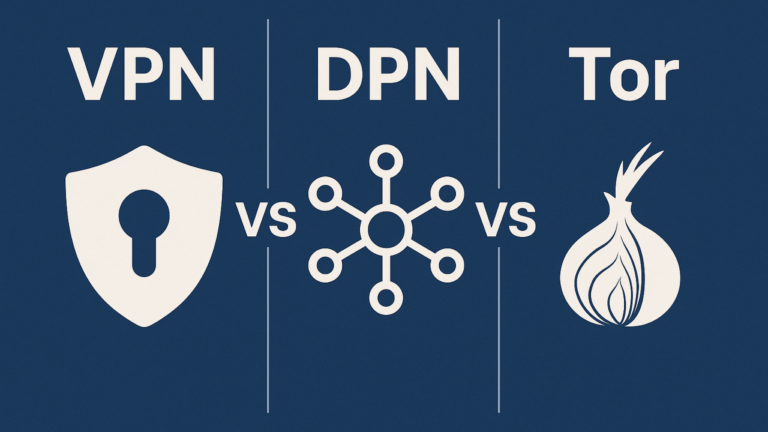
Kodachi has emerged as the most complete privacy distribution. It routes all traffic through a VPN and then Tor by default, includes VeraCrypt, KeePassXC, and the Metadata Anonymization Toolkit pre-installed, and offers a “Panic Room” feature that can wipe sensitive data instantly .
The trade-off: It’s not the most beginner-friendly. The default workflow assumes you understand VPNs, Tor, and encrypted containers.
🏆 Winner (Extreme Security): Qubes OS
Qubes is not a Linux distribution in the traditional sense—it’s an Xen-based hypervisor that runs Linux (and other) VMs. Its security-by-isolation model means your banking happens in one virtual machine, your web browsing in another, and your work documents in a third. If one is compromised, the others remain unaffected .
Who uses it? Edward Snowden. That’s the recommendation.
The trade-off: Hardware compatibility is limited, and you must fundamentally change how you think about computing.
🏆 Winner (Beginners): Tails
The Amnesiac Incognito Live System is the easiest path to operational security. Boot from a USB, do your sensitive work, shut down, and no trace remains. All traffic is forced through Tor. It’s not designed as a daily driver—it’s a tool for specific, high-stakes tasks .
Honorable Mentions: Whonix (for virtualization) and Septor (tool-packed Debian derivative) .
2024 Linux Distro Cheat Sheet
The 2024 Trends You Should Watch
1. Immutable/Atomic Distributions Are the Future
Fedora Silverblue, OpenSUSE MicroOS, Vanilla OS 2, and SteamOS represent a paradigm shift: the operating system is a read-only image; applications run in containers. Updates are atomic (all-or-nothing) and trivially rollbackable. This eliminates “dependency hell” and “broken update” scenarios. In 2024, immutability is ready for enthusiasts, not yet for mainstream users. But watch this space.
2. The Snap vs. Flatpak War Has a Clear Winner (Among Enthusiasts)
Flatpak has won the mindshare of the Linux community. Flathub is universally recognized as the go source for desktop applications. Ubuntu remains committed to Snap, creating a growing philosophical divide between Canonical and the broader ecosystem. If you dislike Snap, avoid Ubuntu.
3. Wayland Is Finally Default for NVIDIA
With Ubuntu 24.10, NVIDIA users on supported hardware now default to Wayland rather than X11, thanks to the open-source NVIDIA 560 kernel modules . This has been a decade in the making and signals that Wayland’s remaining rough edges are finally being smoothed.
How to Choose: A Practical Framework
Stop reading reviews. Do this instead:
Download three ISOs that match your profile from the table above.
Create a bootable USB (use Ventoy—it lets you put multiple ISOs on one drive).
Boot each one live without installing.
Ask yourself three questions:
Does the default desktop make sense to me without reading a manual?
Can I connect to Wi-Fi and play a YouTube video without Googling?
Do I feel comfortable or frustrated navigating the system?
The distro that passes this test is the right distro for you. Not because it’s “objectively best,” but because it fits your brain.
The Final Verdict
There is no best Linux distribution. There is only the best Linux distribution for you.
If you want beauty and simplicity, choose elementary OS 8.
If you want stability and professional tools, choose Ubuntu 24.04 LTS.
If you want cutting-edge and freedom, choose Fedora.
If you want control and customization, choose Arch.
If you want gaming without headaches, choose Pop!_OS.
If you want privacy by design, choose Kodachi or Tails.
If you want absolute security, choose Qubes OS.
Linux in 2024 has never been more accessible, more powerful, or more varied in its offerings. The “difficult” reputation is a decade out of date. Your perfect distro is out there, ready to be downloaded, installed, and made your own.
The only wrong move is staying with an operating system that doesn’t respect you. The right move is picking one—any one—and starting your journey.
Welcome to Linux.