Mobile Gaming Hardware 2026: What Specs Actually Matter for Gaming?
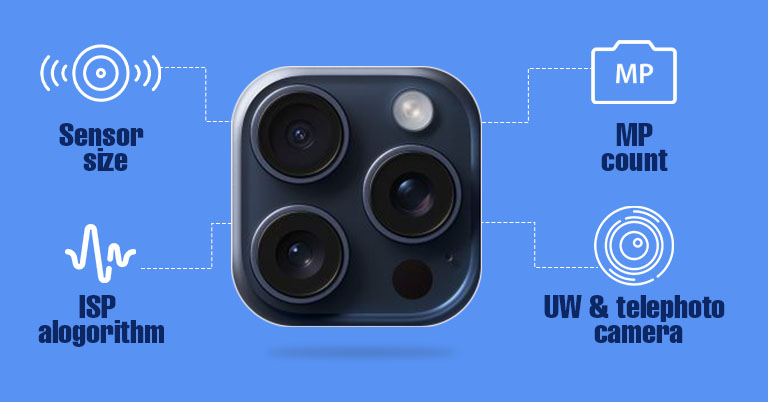
Walk into any phone store, and the sales pitch is predictable: “Eight cores! 200MP camera! 16GB of RAM!” But if you’re buying a phone for gaming, these specs are mostly marketing noise. After testing countless devices and spending hundreds of hours with demanding titles like Zenless Zone Zero and Genshin Impact, one truth has become clear: raw power isn’t enough anymore .
The Snapdragon 8 Elite and other flagship chips are so powerful that they generate massive heat. Without proper cooling, your phone will throttle performance right when you need it most—during the final circle of a ranked match . This guide cuts through the marketing to explain what actually matters for mobile gaming in 2026.
Part 1: The Processor Paradox – Why Chipsets Alone Don’t Win
The Raw Power Reality
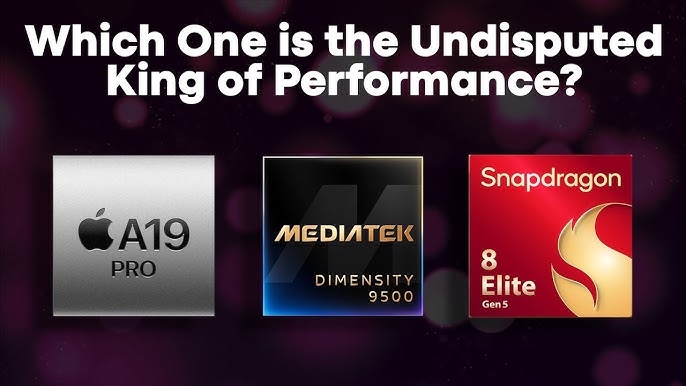
Today’s flagship processors are genuinely impressive. The Snapdragon 8 Elite Gen 5, found in devices like the RedMagic 11 Pro and iQOO 15, delivers benchmark scores approaching 4 million on AnTuTu v10 . The MediaTek Dimensity 9500 and Apple A19 Pro are equally formidable .
But here’s the catch: these chips generate unprecedented heat. The Snapdragon 8 Elite is so powerful that without active cooling, even premium flagships struggle to maintain performance .
The Throttling Problem
When a phone without proper cooling runs a demanding game, it eventually hits a “thermal wall.” The processor slows down to protect itself, and your smooth 120 FPS experience degrades into stutters and frame drops .
Testing reveals dramatic differences:
The realme GT8 Pro provided “wildly inconsistent results under stress”
The OnePlus 15 actually shut down mid-benchmark (though later updates fixed this)
The RedMagic 11 Pro maintained stable performance thanks to active cooling, though it still reached peak temperatures of 56.0°C
The bottom line: A processor is only as good as the cooling system that tames it.
Part 2: Cooling – The True Differentiator in 2026
Passive Cooling: The Traditional Flagship Approach
Most premium phones, including the Samsung Galaxy S25 Ultra, rely on passive cooling—heat pipes, graphite sheets, and vapor chambers that radiate heat through the glass back and metal frame . This works for everyday tasks, but for sustained gaming, it’s insufficient.
These devices can absorb heat, but they cannot actively remove it. The result is inevitable throttling during extended play sessions . What starts as 120 FPS can quickly degrade, and the phone becomes uncomfortably hot—”the glass back saturates with heat, and your hands become the heatsink” .
Active Cooling: The Gaming Phone Advantage
Active cooling uses a built-in fan to expel hot air from the chassis. The RedMagic 11 Pro leads this category with its Reinforced AquaCore Cooling System, combining liquid cooling with a turbofan spinning up to 24,000 RPM .
The results speak for themselves:
Stable frame rates during hour-long gaming sessions
No thermal throttling when you need it most
The only phone tested that can fully handle the Snapdragon 8 Elite’s thermal load
The new RedMagic 11 Air brings active cooling to a slimmer form factor, introducing Turbo Fan 4.0 that promises improved airflow and noise reduction .
The Hybrid Compromise
Phones like the ASUS ROG Phone 9 Pro acknowledge the heat problem but solve it awkwardly. To get peak performance, you must attach a bulky external cooler—sold separately for over $100 . Once attached, the phone becomes heavy, unbalanced, and difficult to hold .
Part 3: Battery Capacity – The Endurance Factor
Why 5,000mAh Isn’t Enough Anymore
Games in 2026 are power-hungry. A 5,000mAh battery—once considered large—is now the bare minimum. Serious gaming phones have moved decisively upward.
The RedMagic 11 Pro packs a massive 7,500mAh battery, allowing hours of extended play . The RedMagic 11 Air follows closely with 7,000mAh in a slimmer package .
Fast Charging and Bypass Technology
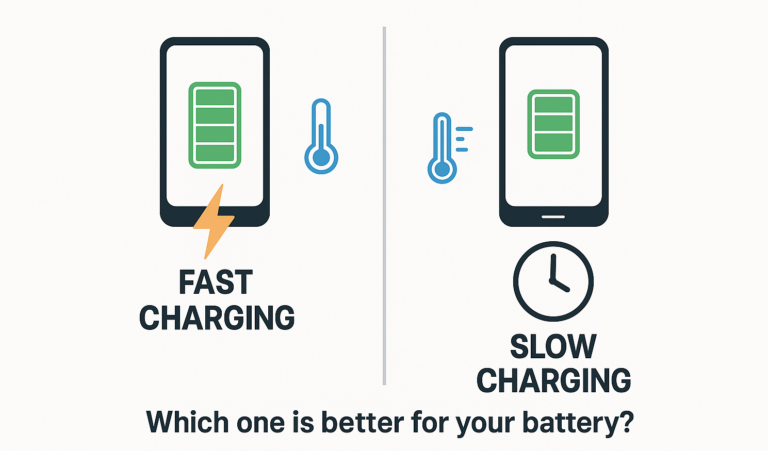
Large batteries need fast refueling. The Tecno Pova 5 Pro’s 68W Ultra Charge can reach 50% in just 15 minutes . But more important for gamers is bypass charging.
When enabled, bypass charging powers the phone directly while plugged in, rather than charging the battery. This prevents heat buildup and battery wear during long gaming sessions . The Tecno Pova 5 Pro offers this feature, and it’s becoming standard on dedicated gaming devices.
The 2026 Battery Checklist:
6,000mAh minimum for serious gaming
7,000mAh+ preferred for all-day play
Bypass charging for plugged-in sessions
80W+ fast charging for quick top-ups
Part 4: Display – Refresh Rate, Response, and Visibility
Refresh Rate Realities
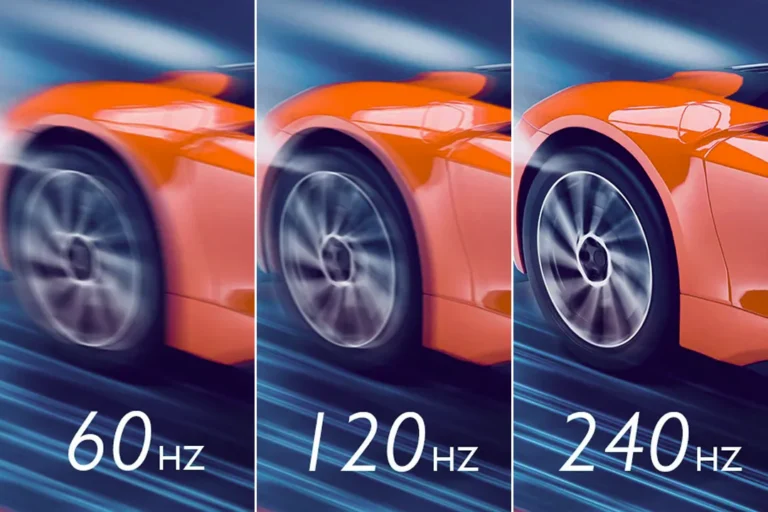
High refresh rates genuinely matter for gaming. The difference between 60Hz and 120Hz is immediately noticeable—scrolling is smoother, animations are fluid, and games feel more responsive.
Today’s gaming phones offer:
RedMagic 11 Pro: 6.85-inch 144Hz AMOLED
ASUS ROG Phone 9: 120Hz+ displays
AYANEO Pocket PLAY: 6.8-inch OLED with switchable 120/144/165Hz
The RedMagic 11 Air features a 1.5K 144Hz display with ultra-narrow 1.25mm bezels and a 95.1% screen-to-body ratio .
Touch Response and Sampling Rate
Refresh rate is half the story. Touch sampling rate determines how quickly the screen registers your inputs. Gaming phones now offer rates up to 2500Hz instant sampling, ensuring your taps translate to actions with minimal latency .
Eye Strain Protection
Long gaming sessions demand eye comfort. The RedMagic 11 Air incorporates high-frequency PWM and DC dimming to reduce flicker and eye strain . This matters more than raw brightness numbers for gamers who play for hours.
The “No Notch” Advantage
The AYANEO Pocket PLAY features a 6.8-inch无挖孔 (no-hole) OLED screen, eliminating any camera cutout that might distract during gameplay . For competitive players, every pixel counts.
Part 5: RAM and Storage – What’s Actually Enough?
RAM: The Point of Diminishing Returns
Gaming phones now offer enormous RAM configurations:
But do you need 16GB for mobile gaming? For most titles, 12GB is plenty. The extra RAM helps with:
Keeping multiple games suspended in memory
Smoother multitasking between gaming and other apps
Future-proofing for more demanding titles
Storage Speed Matters More Than Capacity
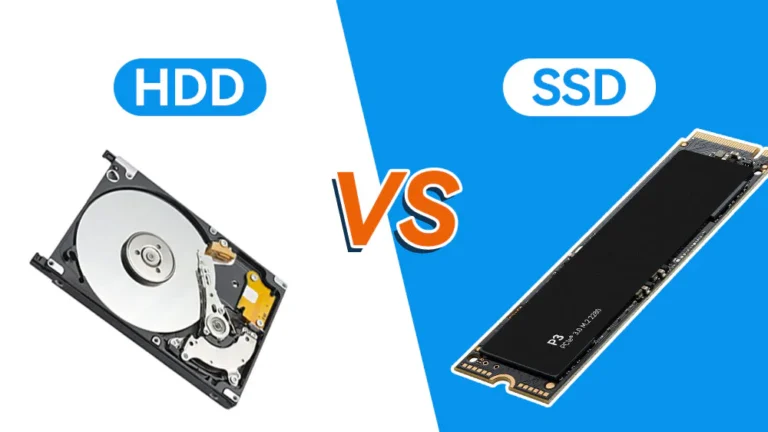
While capacity is important (256GB recommended for serious gamers), speed matters more. UFS 4.1 and UFS 3.1 storage dramatically reduce loading times compared to older eMMC storage found in budget devices .
The iQOO 15’s UFS 4.1 storage contributes to its impressive 3.77 million AnTuTu score . Budget phones still using eMMC will load games significantly slower, even if their processors are capable.
Part 6: Physical Controls – The Unsung Advantage
Shoulder Triggers
Physical triggers transform mobile gaming. The RedMagic 11 Pro includes physical shoulder triggers that provide console-like input for competitive titles . No more fumbling with on-screen buttons—you get actual tactile feedback.
The AYANEO Pocket PLAY goes further with a classic side-slide design that reveals a full gamepad when you need it .
Haptics and Feedback
The AYANEO Pocket PLAY features an 0815 X-axis linear motor supporting “four-mode vibration,” providing nuanced haptic feedback across different game scenarios . This immersion factor is often overlooked but genuinely enhances gameplay.
Advanced Control Components
The Mangmi Pocket Max handheld (a dedicated gaming device) includes:
TMR analog sticks (more precise than standard joysticks)
Hall effect trigger buttons (longer-lasting, more accurate)
6-axis gyroscope for motion controls
Two customizable rear buttons
These components are slowly migrating to gaming phones, offering serious advantages for competitive play.
Part 7: Budget Reality – Gaming on a Limited Budget
You don’t need a $1,000 phone to enjoy mobile gaming. The entry-level market in 2026 offers surprising capability.
Top Budget Gaming Phones (Under $120 USD / Rp 2 Juta)
Sources:
Key Budget Insights
Nubia Neo 5G offers the rawest performance with its Unisoc T820 chip, scoring 420,000-450,000 on AnTuTu—competitive with mid-range phones costing twice as much
Tecno Pova 5 Pro brings premium features to budget: 68W fast charging and bypass charging prevent heat during plugged-in gaming
itel P55 5G is the cheapest 5G phone available, making future connectivity accessible
Samsung A05s trades raw performance for build quality, software support, and resale value
The Helio G99 remains a legend for its efficiency, while newer Dimensity 6080 chips add 5G connectivity without sacrificing gaming capability .
Part 8: The 2026 Gaming Phone Comparison Matrix
Here’s how the top contenders stack up based on what actually matters for gaming:
Part 9: The 2026 Checklist – What to Look For
Before buying any phone for gaming, ask these questions. If the answer is “No,” look elsewhere .
1. Does it have ACTIVE cooling built-in?
The Snapdragon 8 Elite is too powerful for passive cooling. If the phone doesn’t have a fan inside, it will throttle during extended sessions .
2. Is the battery over 6,000mAh?
Games are becoming more demanding. A 5,000mAh battery is the 2023 standard, not 2026. Look for 6,500mAh or higher .
3. Does it have a high-refresh display (120Hz+)?
The smoothness difference is real. 90Hz is acceptable for casual play, but 120Hz+ is essential for competitive gaming .
4. Does it offer physical triggers or advanced haptics?
Shoulder triggers transform competitive gaming. Look for them if you play shooters or action titles .
5. Are you paying for performance or a logo?
If two phones have the same processor and similar specs, but one costs $600 more because of the brand name, you’re not buying better gaming performance—you’re buying marketing .
Conclusion: The New Reality of Mobile Gaming
The mobile gaming landscape has fundamentally shifted. In 2024, the conversation was about which phone had the fastest processor. In 2026, the conversation is about which phone can sustain that performance.
The winners share common traits:
Active cooling systems that prevent thermal throttling
Massive batteries (7,000mAh+) for extended play
High-refresh displays with rapid touch response
Physical controls that transform competitive gaming
For budget gamers, smart compromises that prioritize what matters
The RedMagic 11 Pro stands alone as the only phone with truly integrated active cooling that tames the Snapdragon 8 Elite without requiring external accessories . It’s not the prettiest phone, and its cameras won’t win awards, but for gaming, it’s unmatched.
The ASUS ROG Phone 9 offers similar potential if you’re willing to carry an external cooler . The Samsung Galaxy S25 Ultra and iPhone 17 Pro remain excellent all-around devices, but for serious gaming, their passive cooling is a genuine limitation .
For budget-conscious gamers, the Nubia Neo 5G proves that you don’t need to spend $1,000 to enjoy smooth gameplay . The Helio G99 and Dimensity 6080 chips deliver respectable performance at a fraction of the price.
The bottom line: In 2026, the best gaming phone isn’t the one with the highest benchmark score on a cold start. It’s the one that stays fast after 30 minutes of chaos . Choose accordingly.