Quantum Computing for the Layperson: Hype vs. Reality in 2026
The Quantum Paradox
If you follow technology news, you have encountered two conflicting narratives about quantum computing. One declares it a revolutionary breakthrough just around the corner, poised to crack our encryption, cure all diseases, and render today’s supercomputers obsolete. The other dismisses it as a perpetually distant dream—always ten years away and destined to remain there.
Both narratives are wrong.
The truth, as revealed by the actual scientific and industrial progress of early 2026, is far more interesting. Quantum computing is neither an imminent apocalypse nor a fantasy. It is a complex, capital-intensive infrastructure project that has, in the past eighteen months, crossed several genuine thresholds. We are not witnessing the arrival of useful quantum computers. We are witnessing the moment when their eventual arrival shifted from speculative possibility to probable certainty .
This guide is written for the intelligent non-expert. It will explain what quantum computers actually do, why they have been so difficult to build, what has recently changed, and—most importantly—what you should reasonably expect in the coming decade. No physics PhD required.
Part 1: The Basics – What Quantum Computers Actually Are
Let us begin with a crucial reframing. A quantum computer is not a faster version of your laptop. It is not an “extreme supercomputer” that simply does everything quicker. It is a fundamentally different kind of machine, suited to a fundamentally different kind of problem.
1.1 The Qubit: Beyond Zero and One
Your classical computer operates on bits. Each bit is either a 0 or a 1. Every piece of data, every instruction, every pixel on your screen is ultimately reducible to vast sequences of these binary decisions.
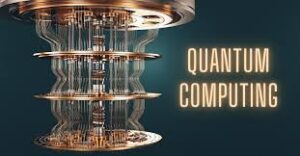
A quantum computer operates on qubits. A qubit can be 0, or 1, or—crucially—both simultaneously in a condition called superposition .
This is not merely an interesting technical detail. It is the entire source of quantum computing’s potential power. A register of 50 classical bits can represent one of 2⁵⁰ possible numbers at any given moment. A register of 50 qubits in superposition can represent all 2⁵⁰ numbers simultaneously .
The exponential scaling is staggering:
10 qubits: 1,024 simultaneous states
20 qubits: 1,048,576 simultaneous states
30 qubits: 1,073,741,824 simultaneous states
50 qubits: 1,125,899,906,842,624 simultaneous states
This is the “quantum parallelism” that underpins everything. A quantum computer does not run one calculation; it runs an astronomical number of calculations at once, on the same hardware, in the same instant.
1.2 Entanglement: “Spooky Action at a Distance”
Superposition gives quantum computers their parallelism. Entanglement gives them their correlation.
When qubits become entangled, their fates are linked. Measuring one instantly determines the state of the other, regardless of the physical distance between them. Einstein famously called this “spooky action at a distance,” and spent decades refusing to accept it. He was wrong; it is real, experimentally verified, and essential to quantum computation .
Entanglement is what allows quantum algorithms to extract meaningful answers from the fog of superposition. Without it, a quantum computer would be merely a very noisy random number generator.
1.3 The Catch: Measurement Destroys the Magic
Here is the cruel irony of quantum computing. To use superposition and entanglement, you must eventually measure the qubits. And measurement forces the quantum state to collapse into a definite classical state—either 0 or 1 .
You do not get to see the full vector of 2ⁿ amplitudes. You get one binary string, sampled according to a probability distribution determined by those amplitudes. The art of quantum algorithm design is arranging the computation so that this sampled answer is very likely to be the correct one.
This is not a bug; it is the fundamental constraint of the physical universe. It is why quantum computers cannot simply “try every password at once” in any straightforward sense. The challenge is coaxing the probability to land on the right answer.
Part 2: The Hype – What You’ve Heard (and Why It’s Misleading)
The popular narrative around quantum computing is not entirely fabricated, but it is severely compressed and exaggerated. Let us examine the primary sources of hype.
2.1 “Quantum Computers Will Break All Encryption Tomorrow”
This is the most persistent and fear-driven quantum narrative. It is based on a real algorithm—Shor’s algorithm—which can factor large numbers exponentially faster than any known classical method. Since RSA encryption relies on the difficulty of factoring, a sufficiently large quantum computer would break it .
The reality: Shor’s algorithm requires millions of high-quality, error-corrected qubits. In early 2026, the largest quantum processors have a few thousand physical qubits, and these are still too error-prone to run Shor on any cryptographically relevant key size. Prediction markets, which aggregate the judgment of thousands of informed participants, assign extremely low probability to RSA-2048 being broken before 2030 .
The paradoxical consequence: Because the threat is distant but the migration is slow, governments and enterprises are accelerating their adoption of post-quantum cryptography standards—not in panic, but in prudent preparation. Less hype, more planning .
2.2 “Quantum Computers Will Cure All Diseases”
This narrative arises from the genuine promise of quantum simulation. Simulating molecular interactions exactly is exponentially hard for classical computers; quantum computers, being themselves quantum systems, can simulate other quantum systems naturally .
The reality: This is actually one of the most plausible long-term applications. The U.S. Department of Energy’s NERSC facility analyzed its workload and found that over 50% of its supercomputing time is spent on materials science, quantum chemistry, and high-energy physics—all domains where quantum simulation could provide major advances .
However: “Major advances” does not mean “instant cures.” Drug discovery is a decade-long process involving clinical trials, regulatory approval, and manufacturing. Quantum computers will accelerate the early research phase, but they will not replace biologists or physicians.
2.3 “Quantum Supremacy Has Already Been Achieved”
In 2019, Google claimed “quantum supremacy”—performing a calculation on a quantum processor that would be infeasible on a classical supercomputer. The calculation was generating a specific random-looking distribution from a noisy quantum circuit .
The reality: This was a genuine scientific milestone, but it was also promptly reinterpreted. Classical algorithms improved, and the gap narrowed. More importantly, the task itself had no practical value. It was a demonstration of capability, not utility. The field has largely moved away from the term “quantum supremacy” toward more meaningful metrics like logical qubit fidelity and error correction thresholds .
Part 3: The Reality – What Actually Happened in 2024–2026
If the hype is overblown, the genuine progress of the past eighteen months is arguably more significant—and certainly more concrete. We are witnessing the transition from “will this ever work?” to “how efficiently can we make it work?”
3.1 The Error Correction Breakthrough
For decades, the central problem of quantum computing was error correction. Qubits are fragile. They interact with their environment, lose their quantum state (decoherence), and introduce errors. Gates—the operations that manipulate qubits—are never perfectly precise.
The threshold theorem proved in the 1990s that if you could reduce errors below a certain level, you could apply error correction recursively and achieve arbitrarily low error rates. The catch was that no one knew if physical qubits could ever meet that threshold .
In the past year, four independent teams have demonstrated that they have crossed it.
Google Quantum AI and the University of Science and Technology of China demonstrated error correction with superconducting qubits.
Quantinuum achieved the threshold with trapped-ion qubits.
Harvard and QuEra did so with neutral atoms .
This is not merely incremental progress. This is the watershed moment that many physicists doubted they would see in their careers. “At this point, I am much more certain that quantum computation will be realized, and that the timeline is much shorter than people thought,” said Dorit Aharonov, a computer scientist at Hebrew University .
What this means: Large-scale, fault-tolerant quantum computing is no longer a question of if, but when and with what overhead.
3.2 The Overhead Challenge – From 1,000:1 to 100:1
Error correction comes with a massive cost. Early estimates suggested that protecting a single logical qubit (the reliable, error-corrected unit) might require 1,000 physical qubits (the noisy raw hardware). A useful algorithm might need thousands of logical qubits—implying millions of physical qubits .
This overhead is now falling rapidly.
IBM has demonstrated techniques that could reduce the ratio to approximately 100:1.
QuEra’s neutral-atom approach, which allows qubits to be physically moved and reconfigured, also projects 100:1 overhead once its two-qubit gate fidelity reaches “three nines” (99.9%), which its founder considers feasible .
Google researcher Craig Gidney recently showed he could cut the estimated qubit requirement for factoring a 2048-bit RSA key from 20 million to 1 million physical qubits, primarily through cleverer geometric arrangement of gate operations .
The trend is clear: algorithmic and hardware improvements are reducing the required qubit count by roughly an order of magnitude every five years. This is precisely the kind of sustained progress that transforms an exotic research project into an engineering discipline.
3.3 Scaling Technologies – The Path to 100,000+ Qubits
Even with improved overhead, useful quantum computers will need many qubits. The current state of the art is a few thousand physical qubits. How do we get to hundreds of thousands?
A breakthrough announced in February 2026 offers a plausible path. Researchers at Columbia University demonstrated a method using optical metasurfaces—flat, pixelated surfaces with nanoscale features—to generate tens of thousands of optical tweezers for trapping neutral atoms .
Why this matters:
Current methods (spatial light modulators, acousto-optic deflectors) cap out at around 10,000 traps.
Metasurfaces can theoretically support 600 × 600 arrays—over 360,000 traps.
The approach is resilient to high laser power, which will be necessary to actually fill those traps with atoms.
The team has already demonstrated trapping single atoms in arrays of over 1,000 sites with high fidelity .
This is not a working 100,000-qubit computer. It is a blueprint for scalability that addresses one of the major physical bottlenecks. The Columbia team acknowledges they need more powerful lasers and further refinement, but the direction is clear and the physics is sound.
3.4 Real-World Applications – The First Targeted Deployments
While general-purpose fault-tolerant quantum computers remain years away, targeted applications are already moving into real-world testing.
NASA is preparing to fly a 2U CubeSat equipped with a 30-qubit quantum simulator on a high-altitude balloon, with the goal of demonstrating onboard quantum machine learning for Earth observation. The project aims to reduce downlink requirements by processing data at the edge—on the spacecraft itself .
The U.S. Department of Energy’s ARPA-E has awarded Infleqtion a $6.2 million contract for the ENCODE project, which will use neutral-atom quantum processors to optimize electricity grid dispatch and resource allocation. Classical optimization solvers are hitting computational ceilings as grids become more complex due to renewables and AI-driven data centers .
These are not speculative research grants. These are mission-oriented deployments by organizations with specific operational pain points. They are early experiments, not production systems, but they represent the first tangible integration of quantum hardware into real-world infrastructure.
Part 4: The Timeline – What Experts Actually Predict
A review of prediction markets and expert surveys reveals a tempered, disciplined consensus .
What Will NOT Happen in the Next Five Years
Breaking RSA-2048 or other widely used public-key cryptography. This requires millions of high-fidelity logical qubits. We are not close.
General-purpose quantum computers replacing classical servers. Quantum machines are specialized accelerators, not general CPUs.
Consumer quantum devices. Quantum computers require extreme isolation, cryogenics, or ultrahigh vacuum. They will remain in data centers, accessed via cloud APIs.
A single “quantum advantage” moment that ends the debate. Progress will be incremental, with quantum systems gradually solving problems that classical systems find increasingly difficult.
What WILL Happen in the Next Five to Ten Years
Continued exponential growth in qubit counts and fidelity. Vendors’ public roadmaps predict up to nine orders of magnitude improvement in capability over the decade .
First useful quantum advantage in a narrow, commercially relevant domain. Candidates include quantum chemistry for battery or catalyst design, optimization for logistics or grid management, and materials science.
Widespread adoption of post-quantum cryptography standards. The migration is already beginning.
Integration of quantum processors as accelerators within classical HPC systems. NERSC explicitly anticipates that “future NERSC systems may have quantum computing components” .
Expert Voices
The consensus: Useful, fault-tolerant quantum computing is now expected within ten years—not thirty, not never. This is a significant acceleration from the prevailing view as recently as 2022.
Part 5: The Investment Frenzy – Hype Meets Capital
No discussion of hype versus reality is complete without addressing the stock market. Pure-play quantum computing companies—IonQ, Rigetti Computing, D-Wave Quantum—have seen their share prices appreciate by quadruple-digit percentages over the past three years .
The reality check:
These companies are generating revenue, but it is modest. They primarily offer cloud access to their existing quantum hardware for research and experimentation.
The valuations reflect option value—investors are betting on a future that has not yet arrived.
NVIDIA CEO Jensen Huang’s comments about a 20-year timeline caused significant volatility, demonstrating how sensitive these stocks are to sentiment shifts .
The sober view: Investing in quantum computing in 2026 requires patience measured in years, not months. The technology will improve; the revenue will grow; but the mass-market adoption that justifies current hype-adjacent valuations is likely a decade away. This does not mean the sector is a bubble—but it does mean investors should understand they are buying future optionality, not current earnings.
Part 6: How You Can Engage – Quantum Computing Is Not Just for Physicists
A final reality: you can learn and experiment with quantum computing today. The barriers have collapsed.
6.1 Free Cloud Access to Real Quantum Hardware
IBM Quantum Experience: Free access to real superconducting quantum processors. The Qiskit textbook provides a complete, code-first introduction .
Amazon Braket, Microsoft Azure Quantum, Google Cirq: Cloud platforms that aggregate multiple quantum hardware providers.
Origin Quantum: Python SDK with access to cloud quantum hardware and extensive tutorials .
6.2 What You Need to Start
Basic Python. All major quantum SDKs are Python-based.
Elementary linear algebra. Vectors, matrices, complex numbers. You do not need to be a mathematician.
Curiosity and patience. Your first programs will run on simulators, then on real hardware where you will encounter noise and errors .
6.3 Your First Quantum Program: The Bell State
The “Hello, World” of quantum computing is creating an entangled Bell state:
Start with two qubits in state |00⟩.
Apply a Hadamard gate to the first qubit, putting it in superposition.
Apply a CNOT gate, entangling the two qubits.
Measure both qubits.
When run on a perfect simulator, you get “00” and “11” with equal probability—never “01” or “10”. On real quantum hardware, you will see noise, but the correlation remains clear .
This is not theory. This is code you can write, submit, and run today.
Conclusion: The Long Game, Now in Sight
Quantum computing in early 2026 occupies an unusual and perhaps unprecedented position in the history of technology. It is no longer speculative. The fundamental physical and mathematical barriers that caused decades of doubt have been crossed. Error correction works. Scaling paths exist. Major governments and corporations are treating it as a strategic imperative, not a research curiosity.
Yet it is also not here. The machines that exist today cannot yet solve commercially valuable problems that classical computers cannot. The timeline has compressed from “maybe never” to “within a decade,” but a decade is still a long time in technology.
This is the mature, disciplined reality beneath the hype.
The hype says: “Quantum computers will break everything, cure everything, and make everything obsolete—tomorrow.”
The reality says: “We have finally proven we can build these machines. Now we must learn to build them efficiently, reliably, and at scale. We have cleared the threshold. The race has shifted from ‘if’ to ‘how.'”
For the layperson, the appropriate response is neither fear nor dismissal. It is informed patience. Watch the error correction milestones. Watch the qubit counts, but also watch the gate fidelities and coherence times. Watch the DOE and NASA deployment experiments. Watch the cryptography migration.
The quantum future is not arriving tomorrow. But for the first time, we can see its shape clearly on the horizon—and we know, with reasonable confidence, that we are walking toward it, not away.
Further Reading and Resources