The Governance of the Root: A Comprehensive Examination of DNS Root Zone Management
Introduction: The Internet’s Ultimate Directory
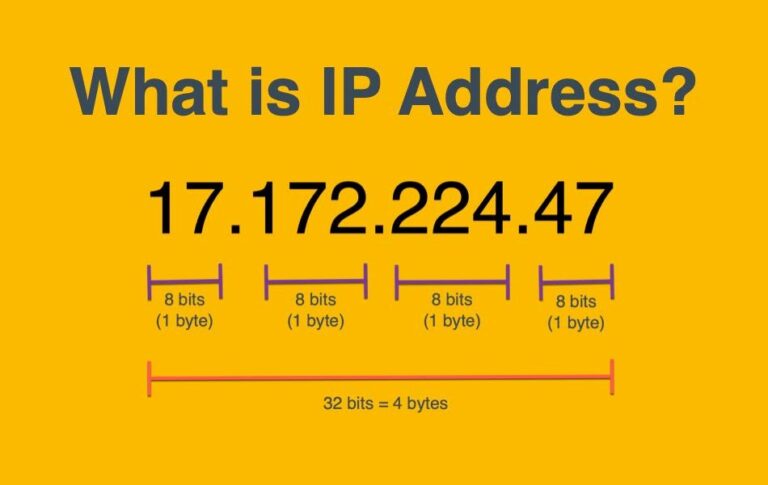
At the heart of the Internet’s functionality lies a surprisingly fragile yet critically important system: the Domain Name System (DNS) Root Zone. This digital equivalent of the world’s ultimate phone directory—matching human-readable domain names to machine-readable IP addresses—is governed through one of the Internet’s most complex and carefully balanced stewardship arrangements. The governance of the DNS root represents both a remarkable success in global technical coordination and an ongoing geopolitical battleground.
As Dr. Paul Twomey, former ICANN CEO, noted: “The root zone is where the rubber meets the road in internet governance. It’s where technical coordination meets political reality.” This article examines the intricate architecture of DNS root governance, its evolution, key players, operational mechanisms, and the profound implications of this system for global connectivity.
1. Understanding the DNS Root: Technical Foundations
1.1 What is the DNS Root Zone?
The DNS root zone is the top-level of the Domain Name System hierarchy. It contains:
Root servers: 13 logical server clusters (designated A through M) with over 1,700 physical instances worldwide
Top-Level Domain (TLD) delegations: Authoritative records for all TLDs (.com, .org, .uk, .中国, etc.)
Start of Authority (SOA) record: Contains administrative information about the zone
Root hints file: Bootstrap information for DNS resolvers
Technical Characteristics:
Maximum size: Approximately 2 MB (as of 2024)
Contains roughly 1,500 TLDs (gTLDs, ccTLDs, and special TLDs)
Updated through a carefully controlled process
Any single root server has identical content (with temporary caching exceptions)
1.2 The Root Server System
Architecture:
Governance Diversity:
Operated by 12 independent organizations (Verisign operates both A and J)
Geographic distribution across North America, Europe, and Asia
Mixed funding models (government, academic, commercial, non-profit)
2. Historical Evolution of Root Governance
2.1 The Pioneering Era (1983-1998)
Jon Postel’s Stewardship:
Single individual (Jon Postel at USC/ISI) maintained root zone
“Requests for Comments” (RFCs) served as de facto governance
Controversial 1998 incident: Postel briefly redirected root servers, demonstrating vulnerability of centralized control
Informal “rough consensus” among technical community
IANA Function:
Initially performed by Postel at USC under U.S. government contracts
IP address allocation, protocol parameter assignment, and DNS root management
Funded by U.S. Defense Advanced Research Projects Agency (DARPA)
2.2 The Birth of ICANN (1998-2000)
The White Paper Process:
U.S. Department of Commerce initiates privatization of DNS management
Criteria: Private, non-profit, internationally representative, competitive
Result: Formation of ICANN through Memorandum of Understanding with NTIA
Initial Criticisms:
Perceived U.S. control through contractual arrangements
Limited global representation in early board
Tension between technical community and commercial interests
2.3 The WSIS Challenge (2003-2005)
UN Intervention:
World Summit on Information Society debates internet governance
Developing countries question U.S. oversight
Proposal for ITU control defeated in favor of enhanced cooperation
WGIG Recommendations:
Four governance models proposed, ranging from status quo to UN agency control
Compromise: Creation of IGF while maintaining ICANN with improvements
2.4 The IANA Transition (2014-2016)
The Snowden Effect:
Transition Process:
ICANN community develops proposal through Cross-Community Working Group
Key elements: Enhance ICANN accountability, maintain security/stability
Final transition: October 1, 2016
Result: U.S. government relinquishes contractual oversight but maintains informal influence
3. Current Governance Architecture
3.1 The Three-Layer Model
Layer 1: Policy Development
Layer 2: Implementation and Oversight
ICANN Board: Final approval of policy recommendations
Public Technical Identifiers (PTI): IANA functions operator (ICANN affiliate)
Root Zone Maintainer: Verisign (under contract with PTI)
Layer 3: Operations
Root Server Operators: Independent organizations operating root servers
Registry Operators: TLD managers
DNSSEC Signing: Cryptographic signing of root zone
3.2 The Root Zone Management Process
Change Workflow:
1. Request Submission → 2. IANA Evaluation → 3. Designated Check → 4. Implementation
    (TLD operator)         (Technical review)   (Verisign review)   (Root update)
Key Documents:
RFC 1591: Domain Name System Structure and Delegation (informational)
ICP-1: ccTLD delegation and redelegation guidelines
ICANN Bylaws: Governance framework
Root Zone KSK Operator Agreement: DNSSEC signing arrangements
3.3 The Special Role of ccTLDs
Delegation Principles:
Operated according to local policies
Relationship with ICANN through accountability frameworks
Two-letter country codes: .us, .uk, .de, .cn, etc.
Internationalized Domain Names (IDNs): .中国, .рф, .இலங்கை
Sovereignty Issues:
Governments often assert policy authority over national domains
ICANN’s role limited to technical coordination (in theory)
Tension between local autonomy and global interoperability
4. Key Controversies and Challenges
4.1 Sovereignty vs. Global Coordination
The .xxx Debate (2000-2011):
10-year battle over adult content TLD
Government objections through GAC consensus advice
ICANN Board approval despite objections (raising questions about GAC authority)
Precedent: Demonstrated limits of governmental influence in ICANN process
New gTLD Program Controversies:
Expansion from 22 to over 1,200 gTLDs
Objections based on morality/public order (e.g., .gay, .islam)
Trademark protection mechanisms (Trademark Clearinghouse)
Geographic names: .amazon dispute with Amazon Inc. vs. Amazonian countries
4.2 Security and Stability Imperatives
DNSSEC Implementation (2010):
Cryptographic signing of root zone
Key Signing Key (KSK) ceremonies
2017 KSK Rollover Crisis: Technical issues delayed planned rollover
Trust anchor distribution: Critical for global DNSSEC validation
Root Server Attack Resilience:
DDoS attack mitigation through anycast distribution
October 2016 attack: Mirai botnet attack on Dyn (not root servers directly)
Ongoing threats: NXDOMAIN attacks, cache poisoning attempts
4.3 Jurisdictional Conflicts
ICANN’s California Jurisdiction:
Subject to U.S. law despite global function
.ir sanctions case: U.S. Treasury restrictions affecting Iranian domain management
GDPR compliance: European privacy law vs. WHOIS data collection requirements
Alternative Root Systems:
Historic examples: AlterNIC, Open Root Server Network
Current: China’s domestic root mirrors (for censorship/resilience)
Risk: Fragmentation of global namespace (the “Splinternet”)
5. The Geopolitics of Root Governance
5.1 Competing Visions
U.S.-Led Multistakeholder Model:
ICANN as private sector-led with government advisory role
Emphasizes technical community authority
Supported by most democracies and technical organizations
ITU-Centered Multilateral Model:
Favored by China, Russia, and some developing nations
Governments as primary decision-makers
Argues for equal sovereignty in cyberspace
Hybrid Approaches:
European Union: Supports multistakeholderism with enhanced government role
India: Seeks “multi-stakeholder plus” with stronger UN involvement
Brazil: NETmundial principles emphasizing human rights framework
5.2 Power Dynamics in Practice
U.S. Continuing Influence:
Verisign’s contract as root zone maintainer
10 of 13 root server operators based in U.S.
.com registry agreement (Verisign) renewable with U.S. government approval
California jurisdiction over ICANN
Chinese Counter-Approach:
Domestic root server instances
Promotion of internationalized domain names (IDNs)
Active participation in ICANN while advocating for ITU role
Digital Silk Road: Infrastructure development with governance implications
6. Critical Analysis: Governance Effectiveness
6.1 Successes
Operational Stability:
No significant root zone outage in history
Successful DNSSEC implementation
Geographic diversification of root servers
Policy Evolution:
Transition from U.S. control to multistakeholder stewardship
New gTLD program implementation (despite controversies)
Enhanced accountability mechanisms post-transition
Security Improvements:
6.2 Persistent Challenges
Legitimacy Deficits:
Perceived Western dominance despite formal neutrality
Limited Global South participation in policy development
Complex processes favoring well-resourced stakeholders
Accountability Gaps:
Limited mechanisms for appealing ICANN decisions
GAC advice sometimes ignored by Board
Whois/GDPR compliance struggles
Technical Governance Tensions:
Balance between stability and innovation
Slow response to emerging threats
Coordination with other internet governance bodies
7. Emerging Issues and Future Scenarios
7.1 Technological Evolution Challenges
Quantum Computing Threats:
Potential to break current DNSSEC cryptography
Need for quantum-resistant algorithms
Coordination challenges for global cryptographic transition
Decentralized Alternatives:
Blockchain-based naming systems (Handshake, ENS)
Potential disruption to centralized root model
Key question: Will these complement or compete with DNS?
Internet of Things (IoT) Scale:
Billions of new devices needing names/addresses
Potential pressure on root server capacity
New security vulnerabilities
7.2 Governance Evolution Scenarios
Scenario 1: Incremental Reform
Enhanced accountability mechanisms
Improved Global South participation
Continued U.S. informal leadership
Scenario 2: Regional Fragmentation
National/regional root server prioritization
Divergent naming policies
Degraded global interoperability
Scenario 3: New Multilateral Framework
UN treaty on digital infrastructure
Formal intergovernmental oversight
Reduced private sector/technical community influence
Scenario 4: Technological Disruption
Decentralized systems replace hierarchical DNS
New governance models emergent from technology
Reduced relevance of current institutions
7.3 The “Splinternet” Risk
Evidence of Fragmentation:
China’s Great Firewall and domestic root instances
Russian Sovereign Internet Law
European data localization requirements
National internet shutdowns (increasingly common)
Root-Level Implications:
Potential for competing root zones
Selective interoperability between networks
Geopolitically-aligned technical standards
8. Principles for Future Root Governance
8.1 Essential Requirements
Security and Stability:
Must remain the paramount consideration
Requires global technical cooperation
Continual investment in resilience
Global Interoperability:
Single, authoritative root as public good
Universal resolvability as core principle
Resistance to fragmentation pressures
Legitimate Governance:
Inclusive, transparent, accountable processes
Balance of stakeholder interests
Respect for national sovereignty where possible
8.2 Recommended Reforms
Enhanced Accountability:
Independent review mechanisms with binding authority
Clearer appeal processes for affected parties
Regular external audits of governance performance
Improved Inclusivity:
Funding for developing country participation
Language accessibility improvements
Capacity building for underrepresented regions
Strengthened Coordination:
Formal liaison relationships with other governance bodies
Clearer division of responsibilities between institutions
Regular joint exercises for security incident response
Conclusion: The Root as Mirror
The governance of the DNS root zone serves as a mirror reflecting broader tensions in global internet governance: between national sovereignty and global commons, between technical expertise and democratic accountability, between stability and innovation, between Western leadership and multipolar reality.
As Dr. Nii Quaynor, father of African internet, observes: “The root zone is both a technical artifact and a political construct. Its governance reveals who has power in the digital age, and who does not.”
The remarkable achievement of DNS root governance has been maintaining a single, authoritative root zone for nearly four decades despite profound geopolitical shifts and technological transformations. This success rests on an uneasy but functional balance between:
Technical community authority (operational control)
Private sector leadership (contractual arrangements)
Governmental advisory role (GAC influence)
Civil society participation (watchdog function)
The 2016 IANA transition represented not an end point but a milestone in an ongoing evolution. The future of root governance will be shaped by how well this multistakeholder system can address legitimate concerns about representation and accountability while maintaining the technical stability upon which the entire internet depends.
Ultimately, the governance of the DNS root matters precisely because the root matters. It is the foundational layer of the internet’s logical infrastructure—the point where local becomes global, where technical coordination enables human connection. Its governance represents perhaps the purest test case of whether humanity can develop effective global institutions for managing shared digital resources in an increasingly fragmented world.
Essential Resources for Further Study
Key Documents:
ICANN Bylaws: Governance framework
RFC 1591: Informal delegation principles (still influential)
IANA Functions Contract: Historical documents of U.S. oversight
CSTD Report on Enhanced Cooperation: UN analysis of governance options
Monitoring Organizations:
ICANN: Primary governing body
Root Server System Advisory Committee: Technical coordination
Internet Governance Project: Academic analysis
DiploFoundation: Policy research and capacity building
Current Issues to Watch:
Root KSK Rollover: Next planned cryptographic transition
New gTLD Round 2: Next expansion of namespace
UN IGF Leadership Panel: Potential new directions
GAC Evolution: Increasing governmental coordination
The governance of the DNS root remains one of the internet’s most significant yet least visible achievements—a testament to what global cooperation can accomplish, and a warning of what might be lost if that cooperation falters.