What Is an Ad Network? A Simple Breakdown for Beginners
The Middleman That Makes the Internet Work
Every time you visit a website and see a banner ad for a product you were just shopping for, or a podcast host reads a sponsorship spot, or a video plays before your YouTube content, you are witnessing the result of a complex, invisible transaction. Behind that single ad impression lies a chain of technology and relationships designed to connect someone with something to sell to someone with space to show it.
At the center of this chain—historically and still today—is the ad network.
If you have ever felt confused by terms like DSP, SSP, RTB, or programmatic, you are not alone. The digital advertising ecosystem is notoriously dense, filled with acronyms and overlapping definitions . But every beginner must start with one foundational concept. Understanding the ad network is the key that unlocks everything else.
This guide will give you a complete, beginner-friendly breakdown of what ad networks are, how they work, why they matter, and how they differ from the newer technologies that are reshaping the industry.
Part 1: The Core Problem That Created Ad Networks
To understand ad networks, you must first understand the problem they were built to solve.
The Fragmented Internet
In the early days of digital advertising (the mid-1990s), publishers—websites with content to offer—had ad space to sell. Advertisers—brands with products to promote—wanted to buy that space. Simple enough.
But there was a massive friction point.
Imagine you are an advertiser who wants your ads to appear on 100 different websites. In a world without ad networks, you must:
Identify and contact each website individually.
Negotiate a separate contract and price with each one.
Set up separate tracking and payment systems for every site.
Manage 100 different relationships, insertion orders, and invoices.
Now imagine you are a publisher. You have ad space on your site, but you do not know which advertisers might be interested. You cannot afford a sales team to call every potential buyer. You often end up with unsold inventory—ad space that generates zero revenue .
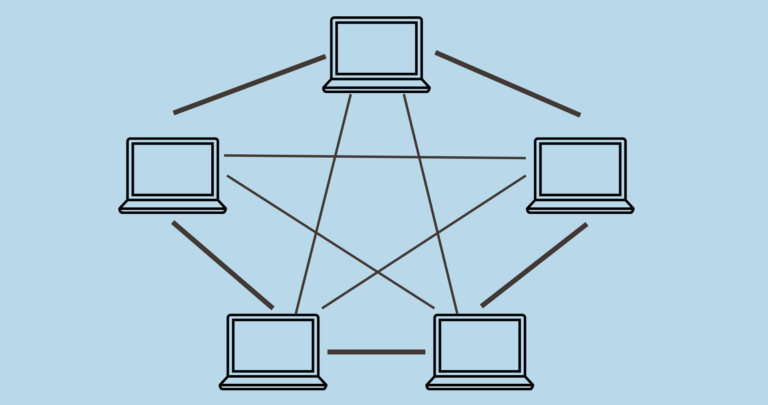
This is the problem of the fragmented audience. Unlike television, where a single broadcaster reaches millions of viewers at a predictable time, internet audiences are spread across millions of sites, large and small, visited at all hours of the day and night . Direct, one-to-one deals between every advertiser and every publisher are impossibly inefficient.
The solution was the ad network: a middleman that aggregates supply and demand.
Part 2: What Is an Ad Network? The Simple Definition
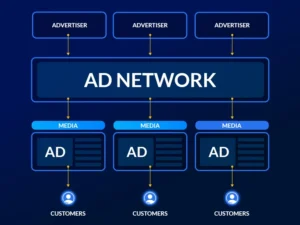
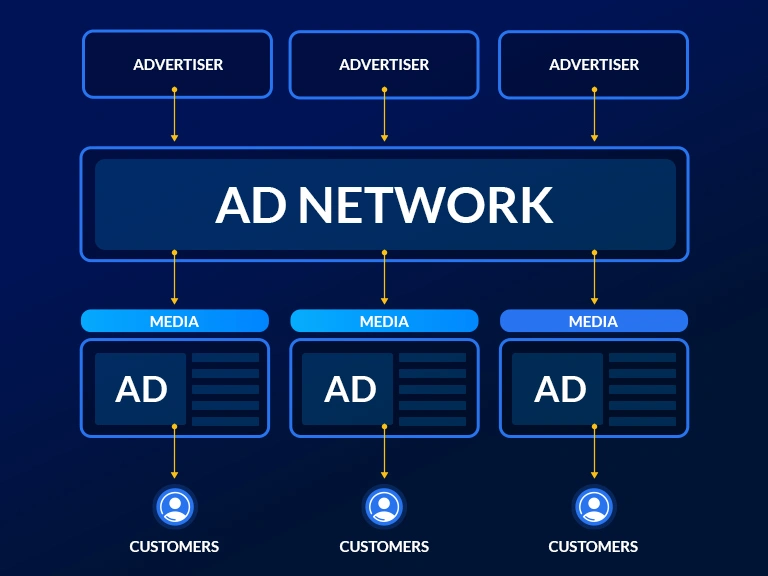
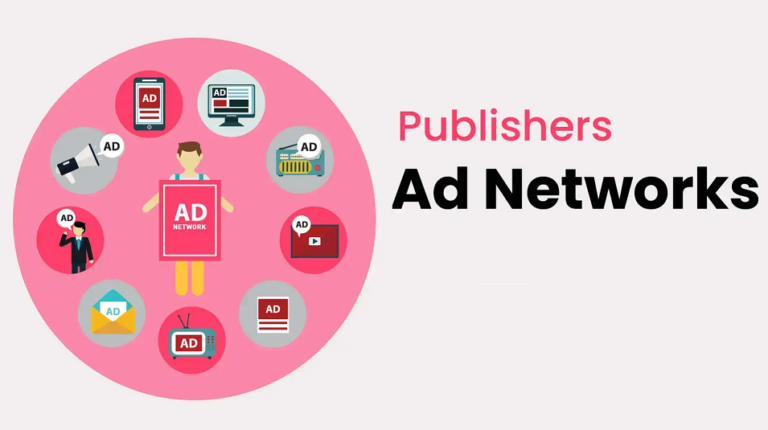
An ad network is a digital platform that acts as an intermediary between two groups:
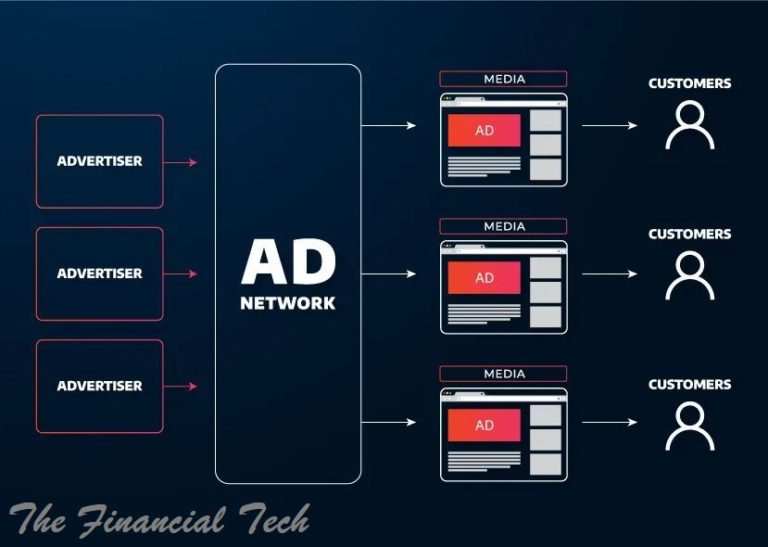
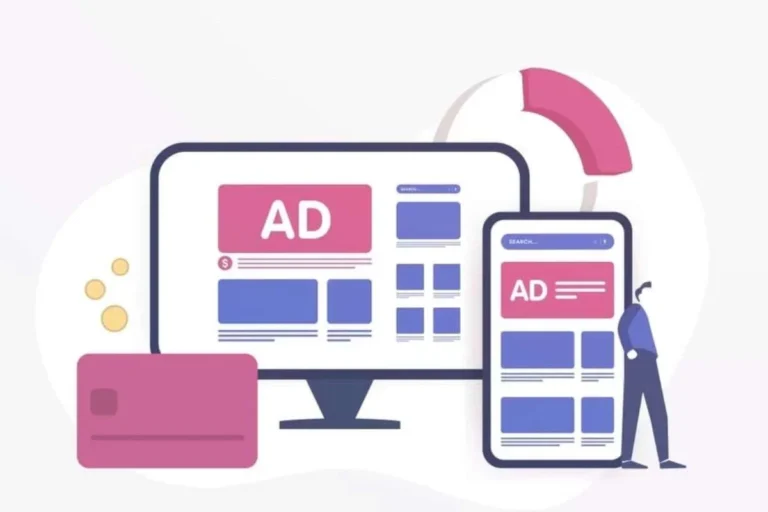
In plain English: An ad network collects unsold ad space from many publishers, bundles that inventory together, and sells it to advertisers through a single, unified interface .
Think of it like a wholesale marketplace. Publishers bring their products (ad impressions) to the network. Advertisers come to the network to shop. The network handles the logistics, the pricing, the technology, and the payments. Neither side has to manage dozens or hundreds of individual relationships .
The broker analogy: An ad network is to digital advertising what a real estate agent is to housing. The agent does not own the houses; they connect buyers with sellers, handle the paperwork, and take a commission. Similarly, ad networks do not typically own the websites; they connect advertisers to publisher inventory and take a cut of the revenue .
Part 3: How Does an Ad Network Actually Work?
The process can be broken down into four clear stages.
Step 1: Inventory Aggregation
Publishers sign up with an ad network and integrate the network’s code tags into their websites or apps . This code tells the network, “I have ad space available right now.” The network aggregates this available inventory from thousands or even millions of publishers into a single, massive pool .
Why publishers do this: Instead of hunting for advertisers themselves, they let the network’s demand come to them. This dramatically increases their fill rate—the percentage of available ad space that actually gets sold .
Step 2: Campaign Setup
Advertisers log into the ad network’s platform. They use a control panel to design their campaign . This includes:
Creative assets: The actual ads (banners, videos, native placements, audio spots).
Targeting parameters: Who should see the ad? (Location, device, demographics, interests, browsing behavior).
Budget: How much they are willing to spend.
Pricing model: How they will pay (more on this below).
Schedule: When the campaign should run.
The network takes these requirements and prepares to match them against available publisher inventory.
Step 3: Matching and Delivery
When a user visits a publisher’s site that is part of the network, the network’s technology evaluates that impression against all active advertiser campaigns. If there is a match—the user fits the targeting criteria, the budget is available, the ad format is compatible—the network serves the advertiser’s creative to the publisher’s site .
This happens in milliseconds. The user loads the page, and the ad appears. They never see the complex auction or matching process occurring behind the scenes.
Step 4: Tracking, Reporting, and Payment
The network tracks every impression, click, and conversion. Advertisers get real-time dashboards showing campaign performance . Publishers get reports showing how much revenue their inventory generated.
At the end of the month (or according to the payment schedule), the network:
Collects payment from advertisers.
Takes its predetermined cut (a percentage of spend, a markup on inventory, or a flat fee) .
Pays the publishers their share .
This is the engine that powers a massive portion of the commercial internet.
Part 4: The Key Terminology Every Beginner Must Know
Ad networks operate using specific pricing models and metrics. Understanding these is essential.
Pricing Models: How Advertisers Pay
Sources:
The trend: Advertisers increasingly prefer CPA/CPL/CPI models because they pay only for tangible results. Publishers often prefer CPM because it provides predictable revenue regardless of user behavior .
Key Metrics: How Performance Is Measured
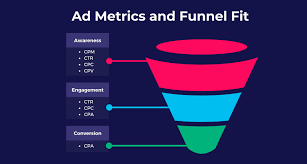
Impressions: The number of times an ad is displayed.
Clicks: The number of times users click on the ad.
CTR (Click-Through Rate): Clicks ÷ Impressions. Measures how compelling the ad is.
eCPM (Effective CPM): Total earnings ÷ (Impressions ÷ 1000). A standardized metric to compare revenue across campaigns and networks.
Fill Rate: The percentage of ad requests that actually receive an ad. Higher is better for publishers .
Part 5: The Different Types of Ad Networks
Not all ad networks are the same. They specialize in different areas. Understanding the categories helps you choose the right network for your goals—whether you are buying ads or selling inventory.
1. Vertical Networks
These networks focus on a specific industry or topic. Examples include networks specializing in automotive, health, fashion, finance, or pets .
Why they exist: A car brand advertising on a general news site reaches some potential buyers. That same brand advertising through an automotive vertical network reaches only visitors who are actively consuming car-related content. The targeting is built into the inventory itself.
Examples: Gourmet Ads (food), Dogtime Media (pets), Fidelity Media (finance) .
2. Premium Networks
These networks broker deals with the most popular, high-quality publishers. They offer “prime real estate”—homepage takeovers, top-of-fold placements, exclusive sponsorships .
Why they exist: Major brands want to associate themselves with trusted, prestigious media properties. Premium networks curate this inventory and sell it at a higher price point.
3. Targeted / Performance Networks
These networks emphasize advanced targeting capabilities built directly into their ad-serving technology . They use data to match ads to specific user profiles, regardless of which site the user is on.
Why they exist: An advertiser may not care whether their ad appears on a news site or a gaming site. They care that it appears to 28-year-old males interested in sneakers. Targeted networks deliver this audience-based buying.
Examples: Google AdSense, Conversant, Casale Media .
4. Inventory-Specific Networks
These networks focus on a particular ad format or device type .
Examples:
Video ad networks (pre-roll, mid-roll, connected TV)
Mobile ad networks (in-app advertising)
Native ad networks (ads that match the look and feel of the surrounding content)
Digital audio networks (podcast and streaming radio ads)
5. Representative Networks
These networks effectively buy all the inventory from a select group of publishers and resell it exclusively . They act as the publisher’s dedicated sales force.
Examples: Glam, Federated Media, Gorilla Nation .
Part 6: The Benefits of Ad Networks (By Role)
Ad networks persist because they deliver clear, measurable value to both sides of the marketplace.
For Publishers
The bottom line for publishers: An ad network turns your traffic into predictable, automated income .
For Advertisers
The bottom line for advertisers: An ad network gives you massive reach without massive operational complexity.
Part 7: The Evolution – Ad Networks vs. The Programmatic Ecosystem
Here is where many beginners get confused.
The ad network model described above was revolutionary in the 1990s and 2000s. But it has a fundamental limitation: it requires human intervention and advance forecasting .
Ad networks negotiate rates and inventory volumes in advance. They predict how many impressions will be available and agree to a price.
If they underestimate, they cannot meet demand. If they overestimate, they are stuck with unsold inventory they must sell at a discount .
The process involves manual steps: ad operations (AdOps) managers receive ads, set up campaigns, and monitor delivery .
This is efficient compared to one-to-one deals. But it is not efficient enough.
Enter Programmatic Advertising
Programmatic advertising is the automated buying and selling of ad inventory using software and algorithms . It eliminates the manual forecasting and negotiation.
The programmatic ecosystem introduces several new players:
The critical difference: Ad networks operate on forecasted, pre-purchased inventory. Ad exchanges operate on real-time, auctioned inventory .
In an ad exchange, publishers do not have to predict how much space they will have next month. When a user visits a page, that impression is offered to hundreds of potential buyers simultaneously. The highest bidder wins, and the price reflects the true market value at that exact moment .
This is more efficient, more transparent, and generally yields higher prices for publishers and better targeting for advertisers .
Part 8: Ad Networks in 2025 – Are They Obsolete?
Given the rise of programmatic, you might ask: Do ad networks still matter?
The answer is yes—but they have evolved.
Many ad networks have adapted. They no longer simply resell remnant inventory at fixed prices. They now:
Integrate with ad exchanges. When a network’s own direct-sold inventory runs out, it can send excess impressions to an exchange to be auctioned programmatically .
Offer programmatic capabilities. The Google Display Network (GDN) is an ad network, but it also offers automated bidding and audience targeting that function programmatically .
Become private marketplaces (PMPs). Vertical and premium networks often create invite-only, high-quality inventory pools that operate on exchange technology but retain the curated, exclusive feel of a network .
The distinction is blurring. Some sources argue that most ad networks now function technologically like ad exchanges . Others maintain that the key difference remains: networks provide more curation and human account management, while exchanges provide pure, automated marketplaces .
For the beginner, the important takeaway is this: The ad network was the original solution to the fragmented internet. The programmatic ecosystem is the modern, automated evolution. Both coexist today, and both serve the same fundamental purpose—connecting advertisers with publishers .
Part 9: Choosing an Ad Network – A Beginner’s Decision Framework
Whether you are a publisher looking to monetize or an advertiser seeking reach, here is a simplified framework for choosing a network.
If You Are a Publisher:
Start with the giants. Google AdSense and Media.net are the largest networks and accept most sites. They provide a baseline revenue stream.
Add vertical specialists. Once you have baseline revenue, layer in networks specific to your niche. A cooking blog will earn higher CPMs from Gourmet Ads than from a general network.
Consider a header bidding wrapper or unified yield partner. Solutions like Ezoic, AdThrive, or Mediavine aggregate demand from dozens of networks and exchanges, running auctions to ensure every impression earns its maximum price.
Evaluate based on eCPM, fill rate, and payment terms. Do not look only at CPM; look at how much you actually earn per thousand impressions after all factors.
If You Are an Advertiser:
Define your objective. Brand awareness campaigns can use broad CPM networks. Direct-response campaigns require CPC or CPA networks with strong conversion tracking.
Understand your audience. Are they general consumers (Google/Facebook) or niche enthusiasts (vertical networks)?
Start small, test, and scale. Run small campaigns across several networks. Let the data—CTR, conversion rate, cost per acquisition—tell you where to invest.
Prioritize transparency. Some networks hide which sites your ads appear on. If brand safety matters, insist on transparent reporting .
Part 10: Common Beginner Questions (Quick Answers)
Q: Are ad networks and affiliate networks the same thing?
A: Not exactly. Affiliate networks are a specific type of performance-based ad network where publishers are paid only when a specific action (usually a sale) occurs. All affiliate networks are ad networks, but not all ad networks are affiliate networks .
Q: Can a publisher also be an advertiser?
A: Yes. A publisher might buy traffic to promote their own content or products, acting as an advertiser. This is common .
Q: Do I need a website to use an ad network as a publisher?
A: Traditionally, yes. However, some networks now accept social media traffic or allow publishers to use landing pages without full websites .
Q: How do ad networks know which ads to show me?
A: They use cookies, device IDs, and user data combined with advertiser targeting settings. When you visit a site, the network checks its active campaigns and shows you an ad that matches your profile and the site’s context.
Q: What is the difference between an ad server and an ad network?
A: An ad server is technology that delivers ads and tracks performance. An ad network is a business that uses ad servers (and other tools) to connect buyers and sellers .
Conclusion: The Matchmaker That Grew Up
The ad network began as a simple solution to a simple problem: too many publishers, too many advertisers, and no efficient way to connect them. It was the digital advertising industry’s first true intermediary—a matchmaker that let both sides stop hunting for each other and start focusing on their core businesses.
Three decades later, the ad network has not disappeared. It has evolved, diversified, and integrated with technologies that did not exist when it was born. It now shares the stage with exchanges, DSPs, SSPs, and platforms that execute billions of real-time auctions every day.
But the fundamental role remains unchanged. Whether it is a 1995 dial-up banner network or a 2025 AI-powered omnichannel platform, the ad network exists to answer one question:
“You have something to sell. You have space to show it. How do we bring you together?”
Understanding the ad network is understanding the DNA of the entire digital advertising ecosystem. Master this, and every other acronym and platform becomes far less intimidating.
You now know what an ad network is, how it works, and why it matters. You are no longer a beginner.