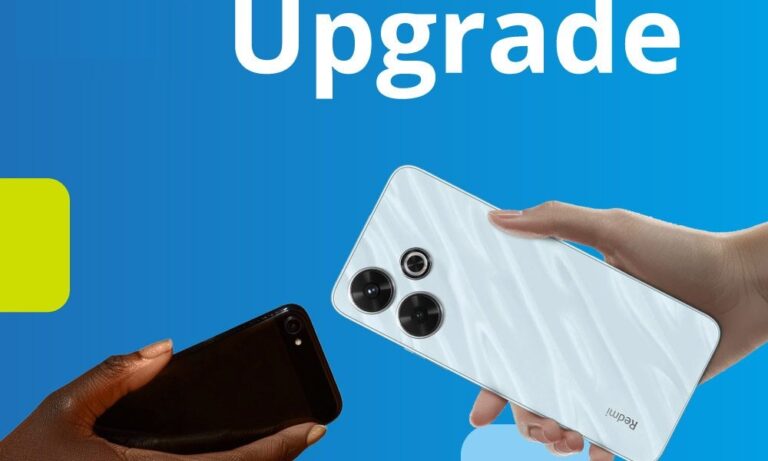
When to Upgrade: Understanding the Phone Upgrade Cycle and Diminishing Returns in 2026
Introduction: The End of the Annual Upgrade Era
For nearly two decades, the smartphone industry operated on a predictable rhythm: every year, a new iPhone, a new Galaxy, a new Pixel—and millions of consumers dutifully lined up to buy them. This annual cycle was so ingrained that questioning it seemed almost heretical. But in 2026, that rhythm is faltering.
Consumer habits are shifting dramatically. According to a new survey from Allstate Protection Plans, only 22% of consumers now upgrade their phones within 12 months, while 27% upgrade every two years, 23% stretch devices to 3-4 years, and 21% delay upgrading until their current phone breaks . The era of chasing the latest device is “fading fast,” as consumers take a “more thoughtful approach to smartphone ownership” .
This isn’t just about tighter budgets—it’s about a fundamental recognition that smartphones have matured. The improvements from one generation to the next have shrunk to minor tweaks, and the law of diminishing returns has finally caught up with the industry . This guide will help you understand when you actually need to upgrade, how to recognize the signals that matter, and why holding onto your phone longer might be the smartest move you can make.
Part 1: The Diminishing Returns Reality – Why New Phones Feel Boring
The Hardware Plateau
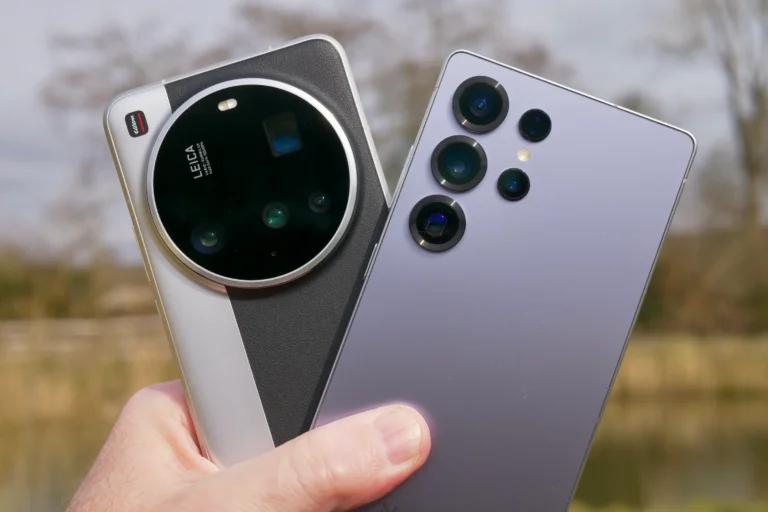
Smartphones are now a mature product. After 15+ years of experimentation, manufacturers know what works, what doesn’t, and—crucially—what consumers actually care about . The result is that year-over-year upgrades have become increasingly incremental.
Take a look at any smartphone series over the past five years. While a phone from 2020 looks dramatically different from a 2026 model, the difference between 2025 and 2026 models is often indistinguishable . Samsung’s Galaxy S series has been “stuck in the same basic template for the past 4-5 generations,” and Google’s Pixel line has settled into a “tick-tock” release cycle where major upgrades arrive only every other year .
What’s actually improving:
The hard truth is that “the difference between the two flagship processors is negligible for 99% of users. Apps open instantly on any smartphone, the photos look great, and the general usability doesn’t leave you wanting more, unless you’re a nitpicker” .
The Spec War Is Over
For years, manufacturers competed on specifications—more megapixels, higher benchmark scores, thinner bezels. But that war has reached its natural conclusion. “Specifications have kind of saturated and we have been seeing mostly incremental upgrades for the past couple of years,” according to TechInsights analysts .
The industry is shifting toward “human-centric design over specification-based marketing,” emphasizing value propositions rather than spec sheets . Features like PWM Dimming displays for eye comfort are becoming more important than chasing the next meaningless benchmark .
This is why battery life has overtaken price as the top driver of purchase decisions for the first time, according to Allstate’s survey . Consumers want longevity and durability, not experimental features.
Part 2: The Economic Reality – Why Upgrading Costs More Than Ever
Rising Component Prices
Paradoxically, just as phones have stopped improving dramatically, they’ve started getting more expensive. A global shortage of memory chips is driving up costs across the industry .
Memory manufacturers are prioritizing datacenter, AI acceleration, and enterprise server applications—segments that offer the highest revenue potential. Smartphones come next, followed by PCs and tablets, with consumer memory receiving the lowest allocation and therefore experiencing “the most substantial price volatility” .
The impact is significant:
Entry-level segment (under $200): Component costs have risen 20-30% year-over-year
Mid-range segment: Prices increased 10-15%
High-end segment: 10% cost increases
“The industry’s decade-long trend of democratizing specs by bringing flagship features to affordable smartphones is reversing,” IDC warned in a late 2025 analysis . Android vendors including TCL, Transsion, Realme, Xiaomi, Lenovo, Oppo, Vivo, Honor, and Huawei may all increase prices in 2026 .
The RAM and Storage Squeeze
The AI datacenter boom is directly affecting your next phone. Reports from late 2025 indicated that smartphone memory prices may have increased by 50% last year, with continued pressure expected .
This means:
Mid-range handsets may top out at 8GB of RAM instead of 12GB
Entry-level devices may ship with 4GB instead of 8GB, or cost significantly more
Storage upgrades may be limited, with fewer devices offering 1TB options
Some manufacturers are better shielded than others. Apple reportedly secured RAM from Samsung’s semiconductor division to ensure steady supply for the iPhone 18 series . Samsung, ironically, failed to obtain preferential RAM pricing from its own chip division for the Galaxy S26 series .
Market Decline
These pressures are already affecting the market. Global smartphone shipments are projected to decline 1% in 2026, with the US flat, and China and India declining 2% year-over-year . Counterpoint Research projects a 2.1% decline, revising their forecast downward by 2.6 percentage points .
For consumers, this means that upgrading is not only less compelling from a features perspective—it’s also more expensive at a time when budgets are tight.
Part 3: The Software Longevity Revolution – Why You Can Keep Your Phone Longer
The Seven-Year Promise
The single most important trend in the smartphone industry is the dramatic extension of software support. What was once a differentiator has become table stakes.
Google’s bombshell announcement of seven years of OS upgrades for the Pixel 8 series transformed software support from a hidden spec into a headline feature . Samsung quickly matched with seven OS upgrades and seven years of security fixes for the Galaxy S24 series .
For consumers, this level of support fundamentally changes the upgrade equation. You can now afford to skip a year—or two, or three—without getting stuck on outdated software .
Why Software Support Matters
You might not care about the latest Android features. You might be okay with an old design or missing out on AI gimmicks. But apps care.
“After a friend reached out to me for a phone recommendation for his father because the SBI app no longer works on Android 13 or below smartphones, it put things in perspective,” writes one tech journalist . Banking apps will eventually flag outdated operating systems as security risks and refuse to run .
Smartphones are our authentication keys. They hold our most sensitive information. Once a phone stops receiving security patches, it becomes a liability .
The utilitarian truth: A phone with a 200MP camera that’s no longer receiving updates is just a high-resolution paperweight.
The Resale Value Cliff
The used market has fundamentally changed. Buyers aren’t just looking for good screens anymore—they’re looking for longevity .
“I have been flipping smartphones as a side hustle, and I’ve noticed a massive shift in the used market,” writes one observer. “Adding ‘updates till Android 25’ in the listing is a bigger selling point than the camera specs” .
A phone with expired support is effectively a paperweight. Compare that to a three-year-old iPhone, which commands a high resale price precisely because the buyer knows they still have years of support left .
Short update cycles kill the used market. When a phone loses support quickly, it cannot be passed down or resold. Extended support creates a safety net that allows phones to have a second life—keeping money in your pocket and phones out of landfills .
Part 4: When Should You Actually Upgrade? A Decision Framework
The Signals That Matter
Instead of upgrading on a calendar schedule, watch for these genuine triggers:
Battery Degradation
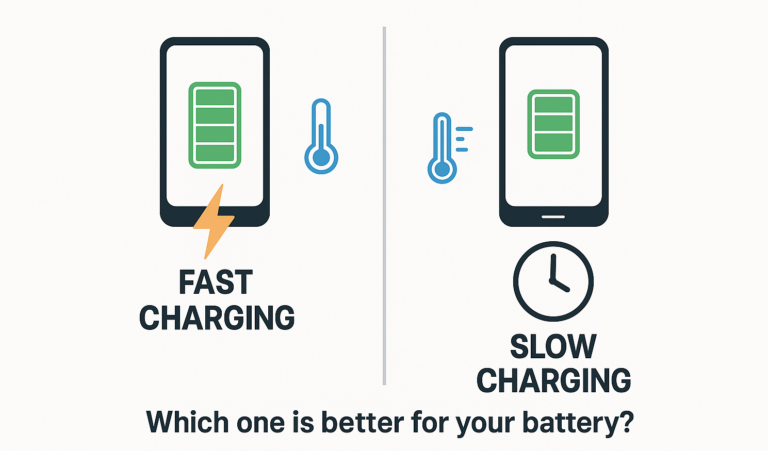
Lithium-ion batteries are consumable components. After 500-800 charge cycles, they typically retain only 80% of their original capacity. If you’re charging multiple times daily or your phone dies before your day ends, it’s time to consider a replacement.
Many manufacturers now offer battery replacement services. Before upgrading the whole phone, check how much a fresh battery would cost.
Performance Bottlenecks
Does your phone struggle with the tasks you actually perform? Does it lag when switching between apps? Does it overheat during video calls? If your daily experience is genuinely frustrating, an upgrade makes sense.
But be honest: is the phone actually slow, or are you just comparing it to benchmark scores you don’t need?
Security Support Expiration
This is the non-negotiable line. Once your phone stops receiving security updates, it’s time to upgrade—not because you need new features, but because continuing to use an unsupported device is a genuine security risk .
Check your device’s update policy. If you’re approaching the end of support, start planning your next purchase.
Physical Damage
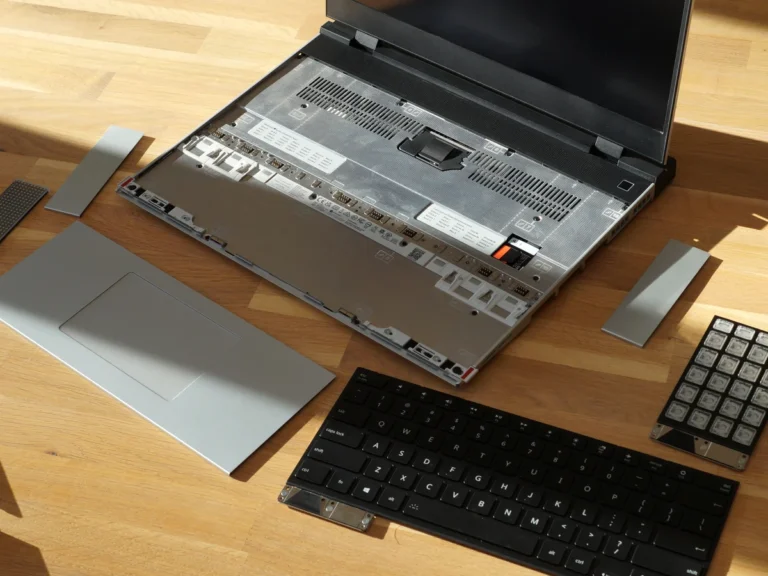
A cracked screen, a failing charging port, or water damage can make a phone unusable. Before replacing the entire device, get a repair quote. Many modern phones are surprisingly repairable, and a screen replacement is almost always cheaper than a new phone.
Genuine New Capabilities
Occasionally, a genuinely new capability emerges that matters to you. The first telephoto cameras enabled optical zoom. The first high-refresh-rate displays transformed scrolling. Foldables offer new form factors. AI features are beginning to deliver real utility.
If a new capability would genuinely change how you use your phone, that’s a legitimate reason to upgrade. But these moments are becoming rarer.
When NOT to Upgrade
The Math of Ownership
When you could pick up a solid performer for $200, a two-year lifespan was forgivable. Those phones were practically disposable .
But as the baseline for a no-compromise experience pushes past Rs 25,000 (approximately $300) and flagship phones regularly exceed $1,000, the math changes.
A $1,000 phone that lasts three years costs you $333 per year. A $1,000 phone that lasts six years costs $167 per year. Extended support transforms an expensive purchase into a justifiable long-term investment .
Part 5: The 2026 Landscape – What’s Actually New This Year
Battery Technology: The Real Innovation
The most exciting hardware development in 2026 isn’t faster processors—it’s better batteries. Silicon-carbon batteries are going mainstream, offering higher energy density without increasing thickness .
The Chinese version of the Honor Magic 8 Pro features a massive 7,200 mAh battery
The global variant still offers an impressive 6,270 mAh with 100W wired and 80W wireless charging
Phones with 8,000 mAh batteries may be just around the corner
Samsung’s Galaxy S26 series may bring two battery innovations: 60W wired charging (up from 45W) and Qi2 wireless charging enabling magnetic accessories and 25W wireless charging .
Foldables: The Apple Effect
Apple is widely rumored to introduce the iPhone Fold in late 2026, which could be a catalyst for the entire foldable market . IDC projects foldable shipments will grow 34.5% year-over-year in 2026, driven largely by Apple’s entry .
Two innovations may arrive with or ahead of Apple’s device:
Creaseless displays: Samsung Display showcased a creaseless foldable display at CES 2026
Improved aspect ratios: Apple’s foldable is rumored to be shorter and wider, delivering an iPad-mini-like experience when unfolded
AI: The New Software Frontier
Artificial intelligence continues to be the major selling point, with features moving from gimmicks to genuine utility .
AI agents can now perform photo edits via voice commands
AI settings agents let you manage phone settings through natural language
Google’s Gemini models are being integrated across Android devices
However, these features often come to older phones through software updates. The Honor Magic 8 Pro’s AI capabilities, for example, run on the Snapdragon 8 Elite Gen 5, but similar features may appear on previous generations .
The Nothing Experiment
Nothing CEO Carl Pei made waves by announcing that the company won’t release a Nothing Phone 4 in 2026 . His explanation: “We’re not just going to churn out a flagship phone every year just for the sake of it. We want every upgrade to feel significant” .
This is a radical departure from industry norms, but it raises an important question: if every upgrade felt significant, would we need annual releases?
Pei acknowledges the industry pressure: “Just because the rest of the industry does things a certain way, doesn’t mean we’re going to do it the same way—if it were that case, why did we start this company to begin with?”
Part 6: The Environmental Argument – Upgrading Less Helps the Planet
Of all the annual emissions generated by smartphones, approximately 83% are estimated to come from manufacture, shipping, and first-year usage . In other words, the vast majority of a phone’s environmental impact happens before you even take it out of the box.
Fewer new phones each year would lead to fewer emissions. Extended support creates a safety net that allows phones to have a second life, keeping them out of landfills .
This isn’t just about being green—it’s about recognizing that the most environmentally friendly phone is the one you already own.
Part 7: The Bottom Line – A New Framework for Upgrade Decisions
The Old Model
Upgrade every 2 years (or when your contract ends)
Chase the latest specifications
Trade in for marginal improvements
Treat phones as disposable
The 2026 Model
Upgrade when your current phone no longer meets your needs
Prioritize battery health and security support over specs
Consider repair before replacement
Choose phones with 5-7 year update commitments
Calculate cost-per-year, not upfront price
The Questions to Ask Yourself
Before buying a new phone, ask:
Does my current phone still do everything I need? If yes, keep it.
Is the battery life genuinely insufficient? Consider a replacement battery first.
Is performance truly frustrating? Or am I just comparing to benchmarks?
When does security support expire? This is your non-negotiable deadline.
What would a new phone actually do better? List the specific improvements that matter to you.
Is that worth the cost-per-year difference? Calculate honestly.
Conclusion: The Smartest Upgrade Is Sometimes No Upgrade at All
The smartphone industry built itself on the premise of constant consumption—new phones every year, with improvements just compelling enough to justify the purchase. That model is finally breaking down, not because manufacturers want it to, but because consumers have realized something fundamental: phones are good enough.
The hardware plateau is real. The difference between a 2025 flagship and a 2026 flagship is negligible for almost everyone. Software support now extends to seven years, meaning your phone will stay secure and up-to-date for nearly a decade. And component shortages are driving prices up just as improvements level off.
This doesn’t mean you should never upgrade. When your battery truly fails, when your phone no longer receives security updates, when physical damage makes repair impractical—those are legitimate triggers. But they’re measured in years, not months.
The smartest consumers in 2026 aren’t those who buy the latest device. They’re those who understand what they actually need, who recognize diminishing returns, and who invest in phones built to last—then actually keep them.
The annual upgrade cycle isn’t dead yet, but it’s on life support. And that’s good news for your wallet, your peace of mind, and the planet.